







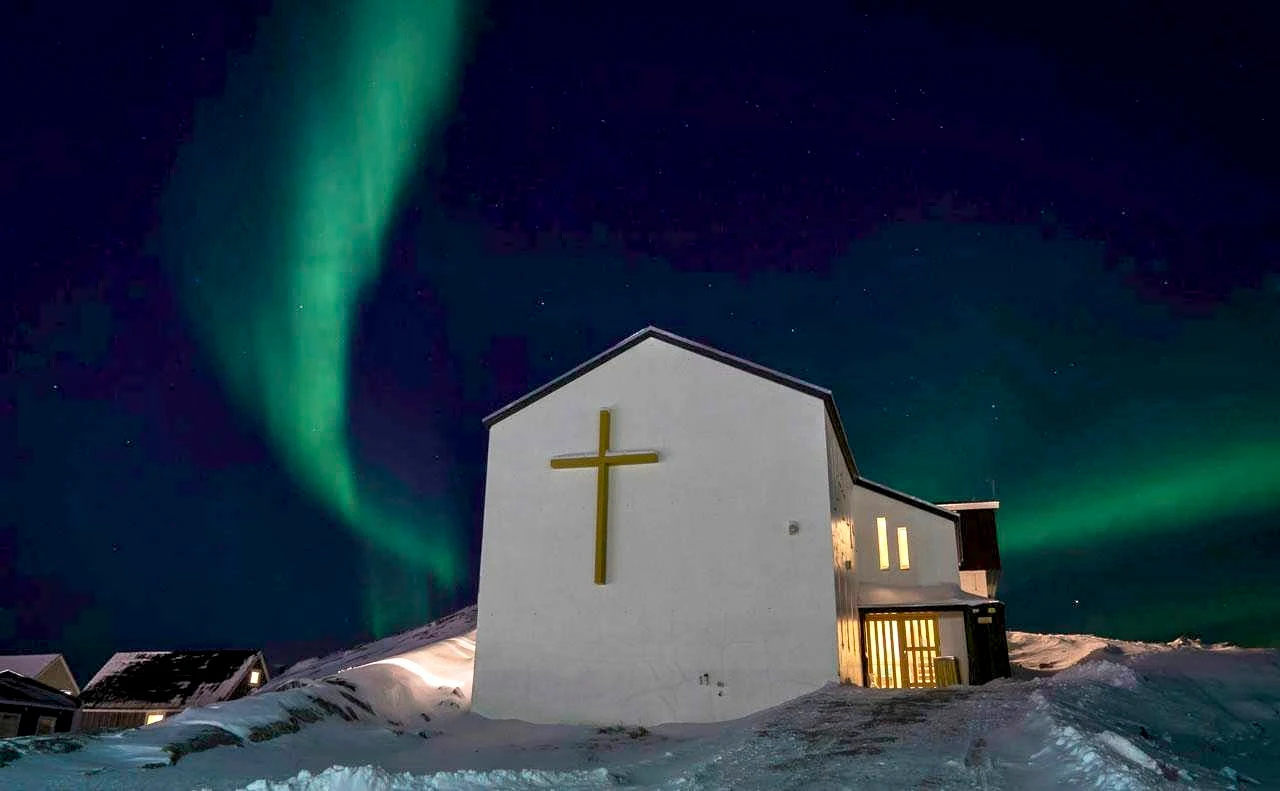
Cardinal Parolin declined to sign a Greenland sovereignty statement, emphasizing neutrality and dialogue during tense Denmark-U.S. relations.
Newsroom (05/02/2026 Gaudium Press ) When Cardinal Pietro Parolin, the Vatican’s secretary of state, arrived in Denmark in late January, expectations ran high that the visit would touch on Europe’s widening geopolitical unease. But his refusal to sign a joint declaration on Greenland’s sovereignty revealed the Holy See’s enduring preference for diplomacy over confrontation.
Bishop Czeslaw Kozon of Copenhagen confirmed in a Feb. 4 telephone interview with OSV News that efforts had been made during the Jan. 24–26 visit to secure Parolin’s signature on a strong statement asserting Danish sovereignty over Greenland. “There were some attempts to have the cardinal, together with others, sign a strong declaration regarding Greenland,” he said. The Vatican’s top diplomat, however, “chose not to sign that sort of declaration,” and, as a result, “no declaration [was] proposed after that.”
According to Bishop Kozon, the Holy See’s stance was deliberate: a signal of Vatican neutrality and its readiness to serve as a bridge-builder at a moment of mounting tension between Denmark and the United States. The visit, though primarily pastoral, unfolded against the backdrop of U.S. President Donald Trump’s revived ambition to acquire Greenland—a proposal that continues to stir anxiety on both sides of the Atlantic.
A Tense Geopolitical Climate
Trump’s push to secure influence over the territory—an autonomous part of the Kingdom of Denmark—has unsettled Greenlanders, who already face complex questions of self-determination and national identity. In a Feb. 2 report, Reuters quoted Greenland’s Prime Minister Jens-Frederik Nielsen warning Parliament that Washington’s renewed interest heightened “constant uncertainty about what may happen tomorrow.”
That sense of insecurity resonates across the church’s presence in Greenland. Bishop Kozon, whose diocese includes the icy expanse, said the Catholic community there—largely immigrants—shares the “deep concerns of Greenlanders in general.” For many, he added, it is “a very tense and … very insecure situation.”
Balancing Religion and Realpolitik
While Cardinal Parolin’s main mission was to commemorate the 1,200th anniversary of St. Ansgar’s evangelization of Denmark, his meetings with King Frederik X and Foreign Minister Lars Løkke Rasmussen underscored the Vatican’s enduring geopolitical leverage. “It wasn’t the intention of the cardinal to express explicit criticism” of U.S. ambitions, Bishop Kozon explained, “but to underline that international law has to be kept.”
That message echoed days later when the Commission of the Bishops’ Conferences of the European Union (COMECE), where Bishop Kozon serves as vice president, issued a statement affirming solidarity with the people of Greenland. The bishops underscored that the territory’s fate “must be decided by the people of Greenland themselves,” anchored in respect for “their rights, dignity and aspirations.”
COMECE urged the European Union “to remain a united, responsible, firm and trust-building force,” upholding a rules-based international order and the principles of the U.N. Charter.
Faith, Mission, and Modernity
Beyond diplomacy, Parolin’s visit had a distinctly spiritual tone. Speaking on the Diocese of Copenhagen’s website on Jan. 27, the cardinal reflected that even twelve centuries after St. Ansgar first brought Christianity to the North, Europe still faces a mission field—this time of indifference rather than paganism. “It is difficult to talk about God because many are simply not interested in him,” he said. “We have to find new ways to reach people … It’s not just about preaching, but about creating a relationship.”
Bishop Kozon echoed the sentiment, invoking St. Ansgar’s “resilience” as a model for believers navigating an increasingly secular continent. “As Christians, regardless of denomination, we have to try to acquire this resilience to keep the faith ourselves,” he said. “Religion should not be reserved to a private space, but is something that you can—and should—go public with.”
In declining to sign a geopolitical statement, Cardinal Parolin may have chosen the quieter path of neutrality. Yet his restraint spoke volumes about the Vatican’s diplomatic philosophy: that peace often begins not with declarations, but with dialogue.
- Raju Hasmukh with files from UCA News and OSV News
Related Images:


