



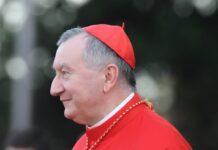







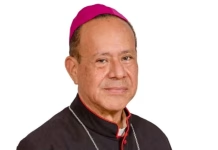



Fr. Roberto Pasolini opens the Lenten Sermons urging humility and conversion as paths to peace, with Pope Leo XIV in attendance.
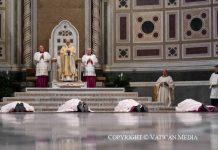
Newsroom (06/03/2026 Gaudium Press ) At the Vatican’s Paul VI Audience Hall on March 6, Pope Leo XIV attended the first Lenten Sermon delivered by Fr. Roberto Pasolini, the Preacher of the Papal Household. Opening a four-part series titled “If anyone is in Christ, they are a new creation (2 Cor 5:17): Conversion to the Gospel according to Saint Francis,” Fr. Pasolini urged believers to rediscover humility as the heart of true conversion.
The Capuchin friar’s first meditation, “Conversion: Following the Lord Jesus on the Path of Humility,” centered on the paradoxical power of smallness in a world deeply scarred by conflict and pride. “To speak of smallness might seem a spiritual luxury,” he admitted, “yet it is a practical responsibility, linked to the destiny of the world.”
Peace, he emphasized, is not achieved through military might or diplomatic maneuvers, but through human hearts willing to take a step back, renounce violence, and cultivate dialogue even in the face of hostility. “Peace,” Fr. Pasolini said, “comes from men and women who find the courage to be small.”
Conversion as a Living Response to Grace
Drawing inspiration from St. Francis of Assisi, Fr. Pasolini described conversion as awakening the divine image etched in human nature—a transformation initiated by God but requiring our free participation. “Evangelical conversion,” he said, “is first and foremost God’s initiative,” an inner event in which grace reshapes how one perceives, judges, and desires.
For St. Francis, “doing penance” was not about punishment but a “change of sensitivity,” learning to see others through mercy and the Gospel’s light. This process, the preacher suggested, is less about self-correction than about surrendering to grace, allowing God to redefine our sense of value and freedom.
Rediscovering Sin and Responsibility
Fr. Pasolini also addressed a modern aversion to the concept of sin. “In the collective consciousness—and at times, even within the Church—everything is explained as fragility or limitation,” he warned. Reducing sin to weaknesses, he said, risks erasing the moral weight of human freedom. “If sin disappears, so does holiness. Without the possibility of evil, there can be no true good.”
Recognizing sin, he argued, means acknowledging our real capacity to build or destroy—ourselves, others, and the world. True conversion, therefore, demands “deep healing,” a willing return to love and freedom amid hardship.
Humility as the Way Back to Truth
St. Francis, long celebrated for his poverty, was also the prophet of humility. Both qualities, Fr. Pasolini noted, flow from the Incarnation itself—the mystery of God choosing littleness. For Christians, humility is not self-erasure but restoration to truth: “It does not lessen man, but restores him to his true greatness.”
This humility is, above all, “a gift of the Spirit before it is an ascetic exercise,” Fr. Pasolini said. It challenges believers to shed inflated self-images and embrace dependence on God. The rejection of humility, he suggested, lies at the root of original sin; thus, conversion must always involve returning to humility.
The Strength of the Childlike Heart
Echoing St. Francis, Fr. Pasolini reflected on how greatness arises through smallness. Those who choose littleness mirror Christ’s own vulnerability. “The little ones,” he said, “with their fragility, awaken mercy—the most precious energy in the world.” In becoming small, one discovers strength: the strength to inspire goodness, welcome others, and live out childlike trust in the Father.
This “choice to become—not remain—small” is not regression but renewal, he added. It marks the emergence of the “new man,” restored through Baptism and animated by divine love.
Conversion as a Lifelong Journey
Concluding his meditation, Fr. Pasolini reminded the faithful that conversion is never complete. It is an ongoing movement of the heart toward God’s grace, a continuous renewal marked by humility and service. Citing St. Paul, he noted that weakness itself becomes the form of Christian life—“the very shape of baptismal existence.”
True smallness, he said, is tested not in comfort but in conflict. “It is precisely when darkness reigns that light proves its strength,” he observed. In moments of tension—when the instinct is to dominate—the Gospel invites believers to take the smaller, quieter road, the one that leads to peace.
The meditation closed with a prayer by St. Francis and a heartfelt invocation: “To follow in the footsteps of your beloved Son, our Lord Jesus Christ.”
- Raju Hasmukh with files form Vatican News
Related Images: