


















Cardinal Parolin urges peace and conscience at Military Ordinariate’s centenary Mass, calling for faith-driven service amid global conflict.
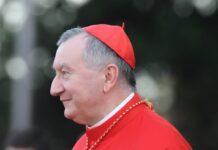
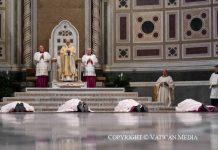
Newsroom (04/03/2026 Gaudium Press ) “May the Lord silence the weapons and reconcile humanity.” With this heartfelt invocation for peace, Cardinal Pietro Parolin, Vatican Secretary of State, celebrated Mass on March 3 at the Basilica of Saint Paul Outside the Walls, marking the centenary of the Italian Military Ordinariate.
Founded in 1926 to provide spiritual care for soldiers and their families, the Ordinariate’s mission remains a cornerstone of pastoral outreach in often challenging environments. Representatives from Italy’s armed forces—the Carabinieri, Army, Navy, Air Force, and Guardia di Finanza—gathered for the solemn occasion, symbolizing a century-long bond between faith and service.
Service Guided by the Cross
In his homily, Cardinal Parolin drew from the Gospel of Matthew, reflecting on the behavior of the Pharisees as a mirror for Christian authority. “The Gospel’s stern word,” he noted, “does not remain an indictment against others but becomes a standard of conduct for each of us.”
He emphasized that genuine authority is rooted not in power, but in service and humility: “It is a presence that neither oppresses nor seeks attention, but accompanies and guides.” The Cross, he said, stands as “the paradigm of every Christian authority,” offering a moral compass amid the complexities of modern geopolitics and warfare.
Parolin underscored the Church’s duty to promote “a culture of peace,” one grounded not in naïve idealism but in the “patient construction of justice, dialogue, and the protection of rights.”
The Quiet Strength of Listening
Turning to the mission of military chaplains, Cardinal Parolin warned against inconsistency and harsh legalism—failings he saw mirrored in the Pharisees’ approach to the law. “In contexts already marked by discipline and heavy responsibility,” he said, “the Church’s presence cannot add burdens to burdens.” Instead, chaplains must embody “a space for breathing,” offering moral discernment that prevents obedience from becoming blind conformity.
They are, Parolin added, called to “silent consistency—the ability to listen without judging, to support without intruding, to speak of God without moralism.”
The Sacred Space of Conscience
Citing the Second Vatican Council’s Gaudium et Spes, the Secretary of State reminded the faithful that conscience remains “the most secret core and sanctuary of the person, where she or he is alone with God.” The Church’s mission, he said, is to “safeguard and enlighten this inviolable space,” especially for soldiers who live amid “the hardship of absence,” “the fear of danger,” and “the wound of sacrifice.”
For them, the chaplain’s “discreet and faithful presence” becomes “a concrete sign of the Church’s motherhood,” nurturing both responsibility and inner freedom.
A Call Against Ostentation
Cardinal Parolin also warned against the temptation of self-importance: “Everything they do is done to be admired by others,” he quoted from Scripture, cautioning chaplains not to seek visibility or prestige. True leadership, he affirmed, “is expressed in service—the greatest among you must be your servant.”
This servant-leadership model, Parolin said, must shape the Ordinariate’s mission: to strengthen discernment rather than structures, to harmonize loyalty to the State with unwavering respect for every person’s dignity.
“In war scenarios,” he added pointedly, “it is vital to preserve and care for the military conscience—where the respect for human dignity is tested even in the heart of conflict.”
Victory Over Violence
Concluding his homily, the Secretary of State prayed that “the Lord, who in Easter conquered all violence and reconciled the world to Himself, make your service a credible sign of justice and peace.”
Archbishop Gian Franco Saba, appointed Military Ordinary for Italy in April 2025, added words of gratitude. He voiced solidarity with soldiers serving abroad and their families: “As we witness the conflicts of the world, our voice becomes prayer—for the wounded, for those on mission, and for the leaders of nations.”
Under the vast arches of Saint Paul Outside the Walls, Cardinal Parolin’s message resonated as both a spiritual reflection and a diplomatic appeal. In an age still shadowed by warfare, it was, above all, a plea — that faith might once again silence the weapons and reconcile a divided humanity.
- Raju Hasmukh with files form Vatican News
Related Images: