













In 2050, Cardinal Robert Sarah warns the West that silence on family, faith, and life issues is betrayal, urging holiness over strategy.
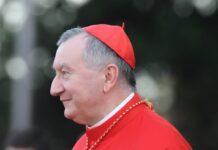
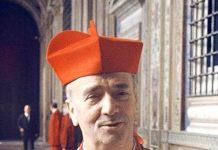
Newsroom (05/03/2026 Gaudium Press ) In 2050, his new book published by Fayard, Cardinal Robert Sarah delivers a searing moral and spiritual assessment of the West. Written as a dialogue with French writer Nicolas Diat, the volume unfolds as a meditation on the identity and mission of the Church in a culture he deems increasingly hostile to faith and family.
“The Church does not need to be rebuilt; it needs saints,” Sarah insists. His warning is uncompromising: Christians must not remain silent in the face of what he describes as “a war being waged against the family by media and legislative forces.” For the Prefect Emeritus of the Congregation for Divine Worship, silence, in such a moment, “would be a betrayal.”
A Pontificate That Places God at the Center
The Guinean cardinal expresses deep joy at the beginning of Pope Leo XIV’s pontificate—not out of sentimentality, but because he sees theological renewal in its focus. “A pontificate is not measured primarily by disciplinary decisions or pastoral shifts, but by its capacity to put God at the center,” Sarah notes.
He sees the Pope’s insistence on worship before organization and conversion before strategy as a vital reprioritization: “Where God is placed back at the center, peace is reborn. Where doctrine is expressed without ambiguity, troubled souls find their compass again.”
For Sarah, this clarity encapsulates the essence of reform. The Church’s crisis, he argues, is not structural but spiritual, rooted in the temptation to judge herself by worldly categories—effectiveness, inclusion, governance. “The Church did not arise from the world but was sent to save it,” he writes. “It will always be a sign of contradiction. We don’t need yet another worldly institution.”
The Vocabulary of Faith
Among the book’s most forceful sections is Sarah’s reflection on what he terms a “vocabulary crisis.” When the language of faith becomes blurred, he warns, belief itself erodes. “To name the essence is to safeguard the substance,” he writes. “Confusion is never pastoral: it is always destructive.”
In interreligious dialogue, Sarah cautions against conflating respect with relativism. The Church recognizes truths present in other traditions, he affirms, but “proclaims that the fullness of Revelation is in Jesus Christ.” For him, dialogue cannot become silence about Christ: “To remain silent about Christ would be an act of infidelity.”
The same exactness, he stresses, is vital to ecclesial unity. Local churches that interpret doctrine through ideological or national lenses, he says, weaken catholicity itself. “Unity is weakened by doctrinal relativism. When difference is exalted at the expense of communion, catholicity is fragmented.”
The Value of Every Life
Cardinal Sarah also addresses the growing movement to legalize euthanasia and assisted suicide, particularly in Europe. He sees these measures as symptomatic of a deeper arrogance—humanity claiming authority over life itself. “Euthanasia manifests humanity’s shameless pretension to decide the value of a life,” he declares. “No human life can be considered unworthy.”
His words cut sharply against the logic of modern utilitarian compassion: “The sick need compassion, not elimination. What can be said of a culture that offers them only the horrific and cold injection of poison?” For believers, death is not an end, he reminds. “If Christ has risen, death is a step. It is up to us to help our brothers and sisters cross it.”
Defending the Family
Perhaps no subject in 2050 draws greater urgency from Sarah than the defense of the family. He laments what he calls the Church’s “strange silence” in the face of legislative and cultural shifts that threaten the integrity of natural family life. “The family is inscribed in creation,” he writes. “It is not an arbitrary construct.”
Christians, then, are called to speak with “gentleness, but without ambiguity.” For Sarah, truth spoken with love is not intolerance but the highest form of charity. “Catholics must bear witness with gentleness, but without ambiguity. Truth spoken with love is the only authentic charity.”
The Crisis Beneath the Demographic Collapse
In its final chapters, 2050 shifts toward Europe’s demographic winter. The falling birthrate, in Sarah’s eyes, is less a sociological event than a spiritual diagnosis. “Only hearts that trust in Providence and are freed from the dictatorship of materialism can desire to transmit life,” he writes. “A civilization that renounces God renounces life, because it no longer knows why it should endure.”
Holiness, Not Strategy
Cardinal Sarah’s conclusion resonates with the fundamental conviction that frames his entire public ministry: the future of the Church does not rest on new institutions or administrative plans. “The future of the Church depends not on strategies, but on our holiness.”
In a time when the faith risks dilution through compromise, 2050 reads as both a lament and a rallying cry. For the cardinal, what is at stake is not merely religion, but civilization itself—and he reminds a weary West that rebuilding begins, always, within the human soul.
- Raju Hasmukh with files from Infocatholica
Related Images: