













He died in abandonment, looking towards China, dreaming of a converted China, but with his eyes fixed on God, and counting on His sustenance.
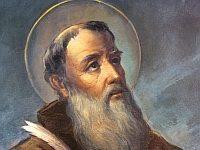
Newsdesk (04/03/2025, Gaudium Press) Saint Francis Xavier was a remarkable man whom God demanded renounce what was perhaps his greatest desire.
Before becoming a son of Saint Ignatius, he had been a son of the nobles of Xavier, in whose castle in Navarre he was born in 1506. He was the youngest of the brothers.
When he was 18, he went to study at the University of Paris, where he obtained his degree. He shared his university room with another figure who would become almost as famous as he was, Pedro Fabro, another of the first Jesuits.
One day they met a special student who seemed out of place to them, as he was a little too old to be an ordinary student: Iñigo López de Loyola, also from those regions of northern Spain, the great St. Ignatius, who immediately felt, through supernatural inspiration, that the young man from Xavier would follow him.
San Francisco lost the whole world and gained his soul
At first, Francisco de Jasu y Xavier fled from Iñigo’s influence, but little by little he was drawn to the man who would become his father, lord, and teacher. A repeated question from Saint Ignatius struck a chord with him: “What good is it for a man to gain the whole world if he loses his soul?”
After persistent work by grace, St. Francis made the spiritual retreat that the Virgin had dictated to St. Ignatius, and was completely transformed.
Together with six others, he consecrated himself to God in Montmartre in 1534, becoming one of the first Jesuits. They took a vow of poverty, promised to go to the Holy Land, and to place themselves at the service of the Pope.
They were ordained priests in Venice, and instead of going to the Holy Land, they made their way to Rome. He helped draft the Constitutions of the Society.
At the initiative of the King of Portugal, he was chosen as a missionary and papal delegate to the Portuguese colonies in the East Indies.
In India, he made Goa his missionary centre. In ten years of missionary work, he travelled throughout India, Malaysia, the Moluccas, and other islands. ‘If I can’t find a boat, I’ll swim,’ he said, revealing his missionary zeal.
The conquistadors no longer had the pristine purity of the medieval religious spirit, and they were greatly motivated to discover new lands for the profit that could be derived from them. Some, or much, of that was happening in Goa. But the saint changed that reality, placing faith where it should be, in first place.
‘So great is the multitude of those who have converted to the faith of Christ in this land where I walk that my arms often tire from baptizing so much,’ St. Francis wrote to his brothers in 1544.
‘In one month, I baptized more than 10,000 people,’ he wrote a year later. ‘After baptizing them, I order the houses where they kept their idols to be demolished and the images of the idols to be broken into small pieces. Once I have finished doing this in one place, I move on to another, and in this way I go from place to place making Christians.’
One day, while in Malacca, he was introduced to a man from another land, with almond-shaped eyes, who had travelled hundreds of miles to meet the Westerner who forgave sins. His name was Hashiro and he came from Japan.
Struggling against many adversities, he embarked for this country and remained there for two years. He returned to India to make the necessary arrangements and prepare for his journey to China, his great dream of evangelization.
A Portuguese man donated his fortune to rent a ship. They wanted to find a Chinese man to take them to Canton, but everyone refused, as imperial laws prohibited them from doing so. In the end, one agreed for 200 cruzados.
However, this merchant abandoned the saint on the island of Sanciao. There, his strength began to fail him, he came down with a fever, and he died in abandonment, looking towards China, dreaming of a converted China, but with his eyes fixed on God, and counting on His sustenance.
This happened in the early hours of December 3rd, 1552.
His last words were: ‘I hope in You, Lord. Do not abandon me forever!’.
With information from Arautos.org
The post Saint Francis Xavier: He Dreamed of a Christian China appeared first on Gaudium Press
Compiled by Roberta MacEwan