
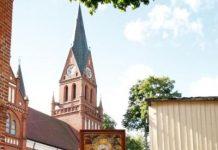









Turkey plans to convert the historic Armenian Cathedral of Ani, a centuries-old Christian site in Kars, into a mosque. Built in the 10th century, the church is considered a significant examples of medieval Armenian architecture.
News Desk (14/07/2025, Gaudium Press ) Reports that Turkey plans to convert the historic Armenian Cathedral of Ani, a centuries-old Christian site in Kars, into a mosque have sparked concerns about the preservation of the country’s multicultural heritage. The move follows the controversial repurposing of Istanbul’s Hagia Sophia and Chora, two former Christian basilicas turned museums, into mosques under President Recep Tayyip Erdogan’s administration.
George Aslan, an Assyrian (Syriac) Member of Parliament for the pro-Kurdish Peoples’ Equality and Democracy Party (Dem Party), raised the issue in a parliamentary inquiry directed at Culture and Tourism Minister Mehmet Nuri Ersoy. Citing media reports, Aslan questioned whether the Ani Cathedral, also known as Surp Asdvadzadzin (Holy Mother of God), will reopen as a mosque after ongoing restoration work. He asked for justification of the decision, whether it aligns with Turkey’s multi-religious and multicultural identity, and if the government would reconsider preserving the cathedral’s original religious and cultural significance.
“Is it true that after the restoration of Ani Cathedral, it will be opened as a mosque?” Aslan asked. “Would the decision to change the religious identity of this historical structure and convert it into a mosque not contradict Turkey’s multi-religious and multicultural character?”
The state-run Anadolu Agency reported on July 3 that the “Fethiye (Conquest) Mosque” in Ani, where “the first Friday prayer in Anatolia was held,” is under restoration. The article omitted the site’s Christian origins and its historical name, referring to it solely as a mosque and framing its conversion within the “Turkish conquest tradition.” No mention was made of its cultural significance to the Armenian people or its relevance to Armenian-Turkish relations.
A Historical and Cultural Treasure
Located near the Armenian border in Turkey’s northeastern Kars province, the Ani Cathedral is a masterpiece of medieval Armenian architecture. Built between 987 and 1001 or 1010 under the Armenian Bagratid kingdom, the cathedral was designed by the renowned architect Trdat, who also restored the dome of Hagia Sophia in Constantinople (modern-day Istanbul). Commissioned by King Smbat II and completed by Queen Katramida, wife of Gagik I, the cathedral served as the religious heart of Ani, the capital of the Bagratid kingdom.
The cathedral, part of the UNESCO World Heritage-listed Ani archaeological site, briefly functioned as a mosque after the Seljuk conquest in 1064, named “Fethiye.” It reverted to Christian use in 1199 under the Georgian-Armenian Zakarids. Earthquakes in 1319 and 1988 caused significant damage, collapsing the dome and leaving deep cracks in the structure.
A Pattern of Conversions
The potential repurposing of Ani Cathedral follows the high-profile conversions of Hagia Sophia and Chora, both former Byzantine basilicas, into mosques in 2020 and 2024, respectively. Originally Christian sites, they were converted to mosques after the Ottoman conquest, then designated as museums in the 20th century under Mustafa Kemal Atatürk’s secular reforms. Under Erdogan’s leadership, their return to mosque status has been framed as a reclamation of Islamic heritage, though critics argue it reflects an Islamo-nationalist agenda to bolster political support amid Turkey’s economic challenges.
In Hagia Sophia, Muslim authorities covered Christian frescoes, icons, and images of Jesus with white fabric to obscure the building’s Christian roots, which date back to the 6th century. Similar concerns now surround Ani Cathedral, with fears that its Armenian and Christian heritage could be erased.
Aslan’s inquiry also pressed the government on the broader trend of converting churches and monasteries into mosques, asking how many such transformations have occurred over the past 20 years and during Ersoy’s tenure as minister.
Religious Freedom Under Scrutiny
While Turkey’s constitution guarantees freedom of worship, the past two decades have seen incidents that challenge this commitment, including the 2006 murder of Father Andrea Santoro and the 2010 killing of Bishop Luigi Padovese. The conversions of historic Christian sites into mosques have further strained Turkey’s reputation for religious tolerance.
Aslan’s questions underscore growing unease about the erosion of Turkey’s multicultural fabric. The Ani Cathedral, a symbol of Armenian heritage, stands at a crossroads, with its fate potentially tied to broader political and ideological currents. As restoration work continues, the government’s response to these inquiries will signal its commitment to preserving the country’s diverse cultural legacy.
- Raju Hasmukh with files from Asianews.it
Related Images: