









Bojayá marks 24 years since tragedy with consecration of Mutilated Christ monstrance, urging peace, memory, and justice in Colombia.
Newsroom (08/05/2026 Gaudium Press ) In a solemn act of memory and faith, the consecration of a monstrance representing the Mutilated Christ became the central moment in commemorating the 24th anniversary of the Bojayá tragedy, renewing calls to defend peace and human life in Colombia.
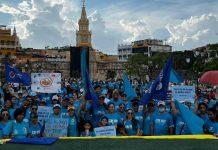
The initiative, led by the Colombian office of Aid to the Church in Need (ACN), formed part of a broader “day of reconciliation and memory in the Colombian Pacific,” honoring victims of one of the country’s most devastating episodes of violence.
The Bojayá tragedy unfolded on May 2, 2002, when clashes between the FARC guerrillas and paramilitary forces forced residents to seek refuge inside the San Pablo Apóstol church. A cylinder bomb launched by the guerrillas struck the building, killing 119 people—71 adults and 48 children—who had gathered there seeking safety.
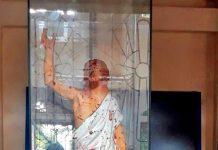
Amid the destruction, rescuers discovered a shattered image of Christ, missing its arms and legs. The figure endured as a powerful symbol of both the brutality of the attack and the enduring need for national reconciliation.
A Symbol Reborn
Twenty-four years later, that symbol has been transformed into a liturgical object of profound significance. Crafted by goldsmith artisan Francisco Javier Martínez Vargas with support from ACN, the new monstrance takes the form of the mutilated Christ. At its center lies the ostensorium, where the consecrated host is displayed.
The base of the monstrance bears high-relief figures—48 angels and 71 flowers—each representing one of the victims of the massacre. The piece serves not only as a sacred object but also as a memorial rooted in collective grief and hope.
The consecration ceremony took place on the anniversary itself. The monstrance was later carried in procession along the Atrato River from the San Pablo Apóstol church to Quibdó, where it arrived on May 3.
A Call to Reject Violence
In Quibdó, Bishop Winston Mosquera Moreno presided over Eucharistic adoration and Mass, framing the commemoration as both remembrance and moral appeal.
“This is an opportunity to say that war should never again appear in these territories and that as a people we must be able to live in peace,” he said. He also called for the rejection of “all violence” and condemned human rights violations committed both by armed groups and by the State when it fails to protect its citizens.
Invoking the example of the Apostle Paul, the bishop urged renewed courage in defending life and peace. He also remembered the victims, stating that they “enjoy the presence of the Lord” and intercede for those still working toward reconciliation.
Global Context of Persecution
The commemoration also connected local memory with global realities. During the event, attendees were shown religious objects desecrated in the Middle East, brought by ACN Colombia to illustrate the ongoing suffering of persecuted Christians.
Among them were the Qaraqosh chalice, marked by a bullet hole after the destruction of a church by the Islamic State in Iraq in 2014; the damaged Teleskuf cross from the Chaldean Church in Tesqopa; and the Bakhdeda monstrance, a fragment bearing scars from attacks on churches in Iraq and Syria in 2016.
ACN cited findings from its 2025 Religious Freedom Report, noting that nearly two-thirds of the global population—more than 5.4 billion people—live in 62 countries where religious freedom is seriously violated, with 24 experiencing extreme persecution. The organization also highlighted increasing threats in Latin America, including the قتل of religious leaders and missionaries between 2023 and 2024.
Through the fusion of memory, liturgy, and testimony, the Bojayá anniversary underscored a message that extends beyond Colombia: that remembrance must be paired with action, and that peace remains a responsibility shared by all.
- Raju Hasmukh with files from ACI Prensa
Related Images: