



















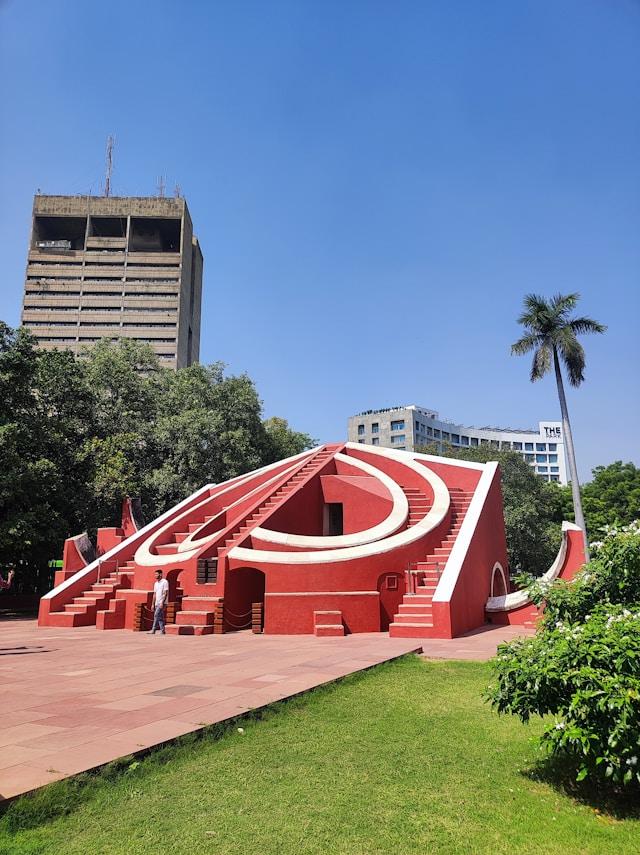
Student protests expand across India after a police crackdown at Jantar Mantar, fueling demands for accountability and democratic reforms.
Newsroom (22/07/2026 Gaudium Press) Thousands of young supporters of the Cockroach Janta Party (CJP) movement continue to occupy New Delhi’s Jantar Mantar protest site despite heavy rain and a police crackdown that has intensified national debate over democratic freedoms, government accountability, and the condition of India’s education system.
The demonstrations, which began as a student-led campaign highlighting alleged examination irregularities and paper leaks, have now evolved into a broader political confrontation. The protests have drawn support beyond the student community and are spreading to major cities, including Mumbai, Bengaluru, Hyderabad, and Ahmedabad.
The growing unrest has also attracted the attention of India’s principal opposition party. On Tuesday, leaders of the Indian National Congress, led by Rahul Gandhi and party president Mallikarjun Kharge, staged a demonstration outside Prime Minister Narendra Modi’s residence. The opposition demanded the resignation of Education Minister Dharmendra Pradhan, Home Minister Amit Shah, and the prime minister himself.
Police detained Gandhi and several lawmakers during the protest before releasing them a few hours later. The detentions added to concerns about the government’s handling of dissent at a time of mounting public frustration.
Against this backdrop, Bishop Savio Fernandes, Auxiliary Bishop of the Archdiocese of Bombay, has issued a strongly worded reflection describing the events at Jantar Mantar as a “black day for democracy.” His statement frames the controversy not merely as a dispute over examinations but as a critical test of India’s democratic institutions.
According to Fernandes, videos circulating from the protest site appear to show police using force against young demonstrators who seemed to be participating in a peaceful, Gandhian-style protest. While acknowledging that the full context of the footage requires careful examination, he argues that the images raise serious questions about whether the response was proportionate and consistent with constitutional protections.
The bishop emphasizes that the protesters were exercising what they believed to be their democratic right to assemble and voice grievances over perceived failures in the education system. He notes that many students have reported enduring prolonged uncertainty, anxiety, and emotional distress caused by repeated allegations of examination irregularities and paper leaks.
At the heart of the movement, Fernandes argues, is a deeper human crisis. Years of preparation for competitive examinations have, according to many students, been undermined by recurring controversies that have disrupted academic and professional aspirations. He points to reports of students taking their own lives amid the pressure and uncertainty generated by repeated disruptions to examination schedules and outcomes.
While he stops short of directly attributing every tragedy to exam-related controversies, Fernandes states that few would dispute the severe psychological impact these incidents have had on young people. In his view, any use of force against peaceful protesters risks aggravating rather than easing that collective distress.
A central theme of the bishop’s reflection is the role of dissent within a democratic society. He argues that a confident democracy should not fear peaceful protest but should instead engage with citizens, address difficult questions, and accept responsibility when institutions fail. If peaceful demonstrations are met with disproportionate force, he warns, it creates the perception that dissent is being suppressed rather than heard.
Fernandes also calls attention to allegations that attempts may have been made to provoke sections of the gathering or undermine the demonstration’s peaceful character. He stresses that such claims require an independent and impartial investigation and insists that any individuals responsible for violence or provocation should be held accountable regardless of political affiliation.
Among the most controversial moments highlighted in his statement is the detention of activist Sonam Wangchuk. Images showing Wangchuk being carried away by police personnel while white sheets reportedly obscured public view have circulated widely. Although Fernandes acknowledges that the reasons behind these actions cannot be determined solely from publicly available footage, he argues that the images have raised troubling questions about transparency and public accountability.
The bishop contends that the government’s response should have prioritized dialogue over confrontation. Rather than allowing tensions to escalate, he argues that authorities should have engaged directly with representatives of the protesters. According to Fernandes, public trust is restored through openness and engagement, not through efforts to control the narrative.
He further suggests that the events at Jantar Mantar reflect a broader concern among citizens about institutional failures and insufficient accountability. When examination systems break down, he writes, students bear the consequences. When recruitment processes are delayed, young people lose valuable years of opportunity. And when peaceful protests are perceived to be met with force, confidence in democratic institutions can be weakened.
Calling for concrete action, Fernandes argues that the government owes the public more than explanations. If excessive force was used, he says, those responsible should be identified and held accountable through a transparent process. He advocates an independent inquiry into the events and urges authorities to address any violations of law or policing standards openly.
The bishop also calls on the government to recognize the pain and uncertainty experienced by students and to reaffirm its commitment to protecting peaceful democratic expression. In his assessment, electoral success does not exempt governments from scrutiny, nor should criticism be treated as disloyalty.
Concluding his reflection, Fernandes describes the current moment as a defining test for India’s democratic institutions. He argues that democracies are strengthened, not weakened, by peaceful dissent and that protecting constitutional freedoms is a responsibility shared across generations.
For Fernandes, the central issue extends beyond a single protest or a single episode of unrest. It concerns whether institutions are willing to acknowledge shortcomings, accept responsibility, and respond transparently to public grievances. The youth of India, he argues, deserve a credible education system, trustworthy institutions, and a government that views their voices as an essential part of democratic life rather than a challenge to authority.
As demonstrations continue in New Delhi and gain momentum across the country, the debate triggered by the events at Jantar Mantar is increasingly becoming a broader discussion about accountability, civic rights, and the future relationship between India’s youth and its governing institutions.
- Raju Hasmukh with files form Asianews.it
Related Images: