










Catholic communities in the Gulf face uncertainty as tensions persist, relying on faith, unity, and pastoral support to endure hardship.
Newsroom (25/06/2026 Gaudium Press ) Despite renewed efforts to ease tensions across the Middle East and Gulf region, a fragile geopolitical landscape continues to weigh heavily on millions of residents and migrant workers. Among them are vast Catholic communities, many living far from their homelands, seeking stability amid uncertainty.
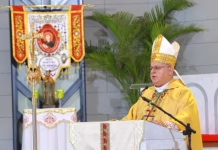
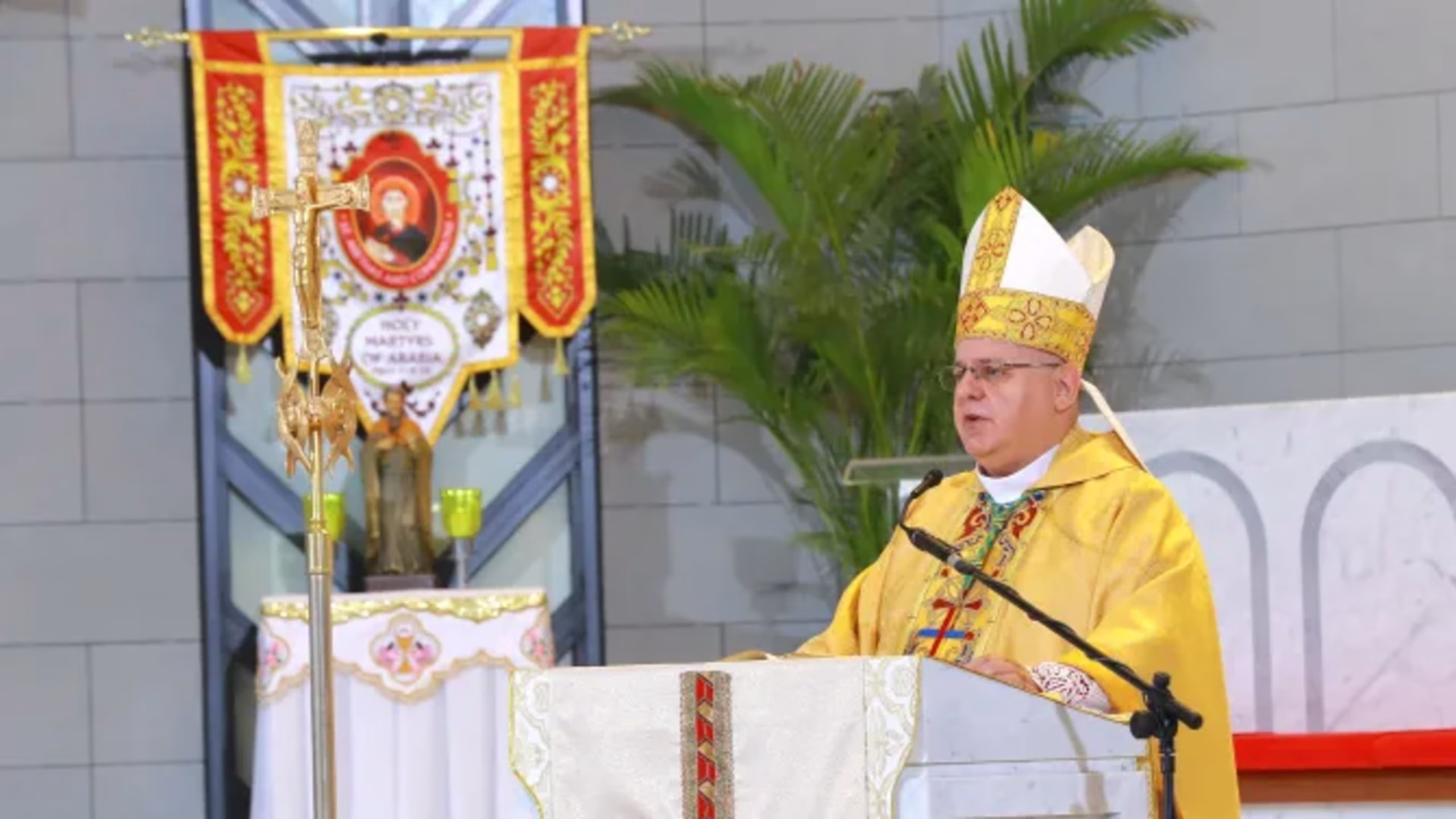
The Catholic Church in the Apostolic Vicariate of Northern Arabia — covering Kuwait, Saudi Arabia, Qatar, and Bahrain — has remained a steady presence for the faithful during these turbulent months. Bishop Aldo Berardi, the apostolic vicar, emphasizes that the Church’s priority is to accompany believers both spiritually and pastorally as they navigate fear and disruption.
A Community Tested by Conflict
The conflict that erupted in late February introduced sudden and profound challenges to the vicariate. For a population deeply rooted in communal worship, the suspension of church gatherings struck at the very heart of their spiritual life.
“For a community that draws its strength from gathering together for Mass and communal prayer, the suspension of Church activities was a deep wound,” Berardi said.
The timing of the crisis coincided with two significant religious seasons — Lent for Christians and Ramadan for Muslims. For the bishop, this convergence carried deeper meaning.
“It was not only painful, but it also reminded us that fasting and prayer are not merely religious practices; they are acts of solidarity with all who suffer,” he explained, noting that such moments reinforce shared human vulnerability and spiritual resilience.
Even at the height of restrictions, churches remained open for private prayer, offering a quiet refuge. Over time, public Masses and parish activities resumed in a gradual return to normalcy.
The Human Cost of Uncertainty
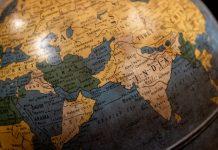
Beyond political and economic disruption, the bishop highlights the emotional toll of the crisis, particularly on migrant communities. The vicariate is home to approximately 2.2 million Catholics, most of whom are expatriates from countries such as Lebanon, the Philippines, India, and Kenya.
Each individual, Berardi noted, carries a personal story shaped by migration, sacrifice, and hope.
“Conflict does not only damage infrastructure. The first thing it wounds is the human heart,” he said.
Communication with families back home has become a source of anxiety rather than comfort. Loved ones closely follow regional developments, fearing for the safety of those abroad. Many workers also worry about losing jobs, being forced to evacuate, or losing the ability to send vital financial support to their families.
“For many of our faithful, the money they earn in the Gulf supports entire families back home,” Berardi added.
In response, the bishop has sought to provide reassurance, even without definitive answers.
“I never claimed to have all the answers,” he said. “But my role as a father is to remind them of a deeper truth: They are not alone.”
Faith as an Anchor
From the earliest days of the crisis, Berardi encouraged calm, unity in prayer, and mutual care among the faithful. He acknowledged fear as a natural human response, emphasizing that faith does not erase fear but transforms it.
“Fear is not a sin,” he said. “Faith does not eliminate fear; it transforms it, gives it meaning, and enables us to cling to hope.”
That hope, he stressed, is not mere optimism but a deeper spiritual assurance that sustains believers through hardship.
“I am truly filled with hope,” he said. “Christian hope is more than simple optimism. It is a gift from God that helps us persevere even in difficult times.”
Mission Continues Despite Disruption
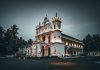
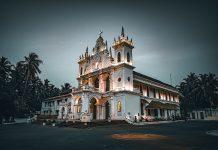
Earlier this year, the vicariate marked a milestone with the elevation of the Church of Our Lady of Arabia in Kuwait to a minor basilica — a symbol of the Catholic Church’s vitality and growth in the region.
“Our journey has not stopped,” Berardi said. “It has only been temporarily interrupted.”
He underscored that peace and stability are not luxuries but essential conditions for the Church’s mission, which includes evangelization, education, charitable service, and interfaith dialogue.
“Every sincere effort to build lasting peace helps the Church carry out its mission,” he said.
A Unifying Diversity
One of the defining features of the Apostolic Vicariate of Northern Arabia is its remarkable diversity. Catholics gather from across continents, worshipping in multiple liturgical traditions — Latin, Maronite, Syro-Malabar, Syro-Malankara, and Coptic Catholic rites.
“People of different nationalities, languages, and cultures come together in prayer,” Berardi noted. “In our vicariate, we experience a new Pentecost every day.”
This unity is reflected not only in worship but also in acts of everyday solidarity: families helping one another find housing, multicultural choirs singing together, and clergy ministering across traditions.
“This diversity is a living witness that we belong to one Church — holy, catholic, and universal,” he said.
Devotion and Hope
During times of crisis, many Catholics have turned to their patroness, Our Lady of Arabia, seeking comfort and strength.
“She is our mother, our protector, and the companion of millions of Catholics living far from their homelands,” Berardi said, recalling Mary’s own experience of displacement and suffering as a source of spiritual connection.
Her example, he added, offers a powerful reminder of perseverance in the face of uncertainty.
Looking Ahead
A preliminary ceasefire agreement between Iran and the United States, welcomed by Gulf Cooperation Council states, has offered cautious hope for stability. Yet the situation remains delicate.
“We follow these developments closely, not from a political perspective but from a pastoral one,” Berardi said.
For now, the Church continues its mission — accompanying, consoling, and uniting a diverse and vulnerable flock — while holding fast to the belief that even the smallest step toward peace is a gift worth embracing.
“We remain convinced that every step toward peace is a gift from God,” he said, “and we receive it with gratitude.”
- Raju Hasmukh with files from EWTN News
Related Images: