

















These are the children of Israel’s war in Gaza, cynically labeled “fortunate” by some because they survived
Newsroom (10/10/2025, Gaudium Press ) The conflict in Gaza has left an indelible mark on its youngest victims, robbing them of innocence amid relentless violence. On this World Mental Health Day, October 10, 2025, the plight of these children underscores a deepening humanitarian crisis, as highlighted by medical experts and amplified by urgent appeals from the Holy See and its senior leaders. Roberta Vallone, a psychologist and psychotherapist at Rome’s Bambino Gesù Pediatric Hospital, shares her firsthand account of treating minors evacuated from the war-torn Strip. “Their minds were frozen in a state of constant alarm,” she says, “stripped of any sense of stability or reference points.”
Their eyes are dull, their gazes lost in the void, their smiles nonexistent. These children move like automatons, as if the spark of life has been extinguished—perhaps forever snuffed out by the bombs, drone strikes, and killings at crowded markets where they stood in endless lines for a scrap of bread.
Suspended in a Limbo
These are the children of Israel’s war in Gaza, cynically labeled “fortunate” by some because they survived. Yet calling them children feels inaccurate. Their existence is suspended in a dark limbo, their childhoods shattered. Even as fragile peace talks kindle faint hope, the trauma of nearly two grueling years of conflict lingers. “They’ve lost their sense of identity,” Vallone explains. “Their family ties, their homes—symbols of safety—have been obliterated. They’ve become utterly depersonalized.”
Vallone met many of these “ghosts” when they arrived in Rome through humanitarian corridors at Bambino Gesù, one of Italy’s leading pediatric hospitals. A hospital press release issued today underscores the broader crisis: neuropsychiatric consultations at the emergency department have surged from 155 in 2011 to 1,844 in 2024—a staggering 1,000% increase. From one consultation every two days to five daily, the numbers reflect a global mental health emergency, amplified in conflict zones like Gaza.
In a poignant September 10, 2025, general audience, Pope Leo XIV issued a heartfelt plea on behalf of Gaza’s youth, urging the faithful “not to forget the children who suffer in conflicts” and calling for their inclusion in prayers and concrete humanitarian actions. The pontiff emphasized solidarity with the vulnerable in Ukraine, Gaza, and other war zones, reinforcing his ongoing commitment to peace amid human suffering. This message, delivered during his Jubilee 2025 catechesis on hope, painted a vivid picture of children enduring unimaginable hardships, their futures imperiled by violence and neglect.
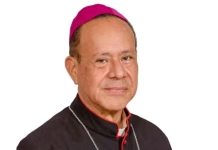
Echoing the pope’s urgency, Cardinal Pierbattista Pizzaballa, the Latin Patriarch of Jerusalem, issued a joint statement with Greek Orthodox Patriarch Theophilos III on September 27, 2025, decrying the “deliberate and forcible mass displacement of civilians” in Gaza as utterly unjustifiable. Pizzaballa, a steadfast advocate for the region’s beleaguered families, highlighted the psychological devastation mirroring Vallone’s observations: “These children, once vibrant with hope, now carry the weight of a war that has silenced their laughter and stolen their dreams.” He demanded immediate international mediation to avert the “erasure of an entire generation’s future,” framing the crisis as a moral imperative for global conscience.
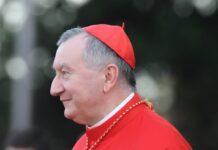
Cardinal Pietro Parolin, Vatican Secretary of State, lent diplomatic weight to these calls in a September 17, 2025, telegram to a moral theology congress. Signing on behalf of Pope Leo XIV, Parolin invoked the ethical imperative to address “changes and conflicts in society,” explicitly linking the Gaza emergency to broader themes of integral ecology and human dignity. He decried the “unacceptable conditions” in Gaza—where an Israeli ground offensive has trapped some 600,000 civilians—and urged the swift release of hostages alongside unhindered aid delivery. Parolin’s intervention underscored the Church’s role in fostering dialogue, warning that failure to act risks deepening the mental health catastrophe among the young.
This chorus of voices from the Vatican hierarchy builds on a September 17 appeal by Pope Leo XIV himself, who expressed direct solidarity with Gaza’s parish priest, Father Gabriel Romanelli, and lamented the enclave’s dire straits. The pontiff called for respect of international humanitarian law, a permanent ceasefire, and protection for civilians, particularly children facing starvation and displacement. Together, these September statements form a unified front, pressing world leaders to prioritize mental health support and humanitarian corridors before the scars of war become indelible.
A State of Constant Alarm
In the shadow of Gaza’s protracted war, the trauma these children endure is profound. Vallone, a seasoned psychologist, was struck by their vacant expressions upon first meeting them. “Some were sick, others wounded from attacks,” she recalls. “Their bodies were in pain, but their minds were trapped in a state of perpetual alert, having lost all anchors.” Clinically, many suffer from prolonged post-traumatic stress disorder, a condition exacerbated by the relentless nature of the conflict. The immediate need, Vallone says, was to restore calm and empathy to break the vicious cycle of fear and alarm. “Not just me,” she adds. “At Bambino Gesù, doctors, nurses, and psychologists all worked to create a safe, welcoming environment.”
Pushed to the Brink
Despite her expertise in the nuances of the human psyche, Vallone found it challenging to process the story of a 14-year-old girl with a severe hematological condition who endured an arduous journey for treatment. “She and her sister crossed Gaza’s desert under bombardment to reach a hospital,” Vallone recounts. “They had nothing—no water, no food. Just before arriving, she misstepped, fell, and suffered internal bleeding. Thankfully, they saved her in time.” The terror and lack of protection this girl experienced will likely haunt her forever. Vallone confirms: “She was pushed to the very edge of human endurance. Her story conveyed a relentless state of fear, a hallmark of these children’s psychological damage. The conflict’s brutality has driven them to the brink of survival.”
The scars of such trauma run deep, etched into their life stories. “What can be done?” Vallone asks. “They need help to rebuild trust, identity, and connections. The international community must act before it’s too late—before an entire generation is lost forever.”
Pope Leo XIV’s September exhortations align seamlessly with this plea, framing prayer as a catalyst for action: “Let our supplications rise not in vain, but as a force to dismantle the barriers of hatred and rebuild the bridges of humanity in Gaza and beyond.” Cardinals Pizzaballa and Parolin, in their respective interventions, amplified this call, with Pizzaballa decrying the moral catastrophe of displacement and Parolin advocating for ethical resolutions rooted in divine revelation. As these church leaders have long maintained, fostering such efforts requires not only spiritual solidarity but concrete steps toward de-escalation, lest the cycle of violence claim yet more young lives.
- Raju Hasmukh with files from Vatican News and Gaudium Press
Related Images: