









Vatican Secretary Parolin marks Oct. 7’s 2nd anniversary: Hamas attack ‘inhuman’; Gaza’s ‘disastrous’ toll unacceptable. Calls for hostage release, peace, end to antisemitism.
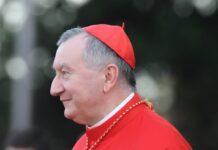
Newsroom (06/10/2025, Gaudium Press ) Vatican Secretary of State Cardinal Parolin speaks with Vatican media on the second anniversary of Hamas’s “inhuman” attack on Israel, which unleashed the devastation of the Strip: We demand the release of hostages and an end to the spiral of violence. Gaza faces “inhuman” consequences; it’s not enough for the international community to declare the situation unacceptable while allowing it to continue. Participation in peace rallies is striking. Antisemitism is a cancer that must be eradicated.
Two years have passed since that terrible day—the terrorist attack carried out by Hamas against Israel and the onset of what has become a full-scale war that has leveled the Gaza Strip. We reflect on those events and their aftermath with Cardinal Secretary of State Pietro Parolin.
Eminence, we are entering the third year since the tragic October 7 attack. How do you recall that moment, and what do you believe it signified for the State of Israel and Jewish communities worldwide?
I repeat what I said in those initial days: The terrorist attack carried out by Hamas and other militias against thousands of Israelis and migrant residents—many of them civilians—who were about to celebrate Simchat Torah at the end of the Sukkot holiday week was inhuman and unjustifiable. The brutal violence inflicted on children, women, young people, and the elderly can have no justification. It was an unworthy massacre—inhuman, I repeat. The Holy See immediately expressed its total and firm condemnation, calling right away for the release of the hostages and offering closeness to the affected families during the terrorist attack. We prayed—and continue to do so—just as we continue to demand an end to this perverse spiral of hatred and violence that risks dragging us into an abyss from which there is no return.
What do you feel compelled to say to the families of the Israeli hostages still held by Hamas?
Unfortunately, two years have already passed; some of them have died, while others were released after lengthy negotiations. I am deeply struck and saddened by the images of these people held captive in tunnels and reduced to starvation. We cannot and must not forget them. I recall that Pope Francis, in the last year and a half of his life, issued 21 public appeals calling for the release of the hostages and met with some of their families. His successor, Pope Leo XIV, has continued these appeals. I express my full closeness to them, in our daily prayers for their suffering, while assuring them of our complete availability to do whatever is possible so that they may embrace their loved ones healthy and safe—or at least recover the bodies of those who were killed, so they may be given a dignified burial.
In commemorating the first anniversary of the October 7 attack, Pope Francis spoke of the “shameful inability of the international community and the most powerful countries to silence the weapons and end the tragedy of war.” What is needed for peace?
Today, the situation in Gaza is even more grave and tragic than it was a year ago, following a devastating war that has claimed tens of thousands of lives. It is necessary to recover a sense of reason, to abandon the blind logic of hatred and revenge, and to reject violence as a solution. Those who are attacked have the right to defend themselves, but even legitimate defense must respect the principle of proportionality. Unfortunately, the war that ensued has had disastrous and inhuman consequences… I am struck and afflicted by the daily tally of deaths in Palestine—dozens, sometimes hundreds per day, many of them children whose only apparent fault is having been born there: We risk becoming numb to this carnage! People killed while trying to obtain a piece of bread, people buried under the rubble of their homes, people bombed in hospitals, in tent camps, displaced persons forced to move from one end to the other of that narrow, overcrowded territory… It is unacceptable and unjustifiable to reduce human persons to mere “collateral victims.”
How should we judge the sharp rise in antisemitic incidents in various parts of the world in recent months?
They are a sad and equally unjustified consequence: We live in an era of fake news and oversimplifications of reality. This leads those who feed on such distortions to attribute to Jews as a whole the responsibility for what is happening today in Gaza. We know this is not the case: There are also many strong voices of dissent rising from the Jewish world against the manner in which the current Israeli government has operated—and continues to operate—in Gaza and the rest of Palestine, where—let us not forget—the often violent expansionism of settlers seeks to make the birth of a Palestinian state impossible. We see the public testimony of the hostages’ families. Antisemitism is a cancer to be fought and eradicated: We need people of goodwill, educators who help others to understand and, above all, to distinguish… We cannot forget what happened in the heart of Europe with the Shoah; we must commit all our forces to ensure this evil does not raise its head again. At the same time, we must ensure that acts of inhumanity and violations of humanitarian law are never justified: No Jew should be attacked or discriminated against simply for being Jewish; no Palestinian should be attacked or discriminated against for being such—because, as we unfortunately hear, they are a “potential terrorist.” The perverse chain of hatred is destined to generate a spiral that can bring nothing good. It is regrettable that we fail to learn from history—even recent history—which remains a teacher of life.
You have spoken of an unsustainable situation and alluded to the many interests at play that prevent the war from ending. What are these interests?
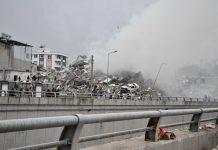
It seems evident that the war waged by the Israeli army to defeat Hamas militants does not account for the fact that it faces a mostly defenseless population reduced to utter exhaustion, in an area littered with homes and buildings razed to the ground: Aerial images alone suffice to grasp what Gaza looks like today. It seems equally evident that the international community remains unfortunately powerless, and that the countries truly capable of exerting influence have, up to now, failed to stop the ongoing carnage. I can only repeat the crystal-clear words spoken on this matter by Pope Leo XIV on July 20: “To the international community, I address the appeal to observe humanitarian law and to respect the obligation to protect civilians, as well as the prohibition of collective punishment, indiscriminate use of force, and forced displacement of populations.” Words that still await being heeded and understood.
What, then, can the international community do?
It can certainly do much more than it is doing. It is not enough to say that what is happening is unacceptable and then continue to allow it to happen. Serious questions must be asked about the legality, for example, of continuing to supply arms that are used to the detriment of the civilian population. Unfortunately, as we have seen, the United Nations has so far been unable to halt what is occurring. But there are international actors who could exert far greater influence to end this tragedy, and a path must be found to give the United Nations a more effective role in ending the many fratricidal wars raging in the world.
What do you think of the plan presented by President Trump to achieve a ceasefire and end the war?
Any plan that involves the Palestinian people in decisions about their own future and allows this slaughter to end—releasing the hostages and stopping the daily killing of hundreds of people—is one to be welcomed and supported. The Holy Father himself has expressed hope that the parties will accept it and that a path to peace can finally begin.
How do you view the positions taken by civil society groups expressing themselves—even in Israel—against the Israeli government’s war policies and in favor of peace?
Even if these initiatives sometimes risk, due to the violence of a few troublemakers, conveying a distorted message in the media, I am positively struck by the participation in the demonstrations and the commitment of so many young people. It is a sign that we are not condemned to indifference. We must take seriously that desire for peace, that desire for engagement… The future of our world depends on it.
Some argue, even within the Church, that in the face of all this, we must first and foremost pray, rather than take to the streets to avoid playing into the hands of the violent…
I am a baptized believer, a priest: For me, ceaseless prayer before God—that He assist us, help us, and intervene to end all this, supporting the efforts of people of goodwill—is essential, daily, fundamental. Pope Leo has once again invited us to recite a Rosary for peace on October 11. But I would also recall that Christian faith is either incarnated or it is not… We follow a God who became Man, assuming our humanity, and who testified that we cannot be indifferent to what happens around us—or even far from us. For this reason, prayer will never be enough, but neither will concrete commitment, the mobilization of consciences, peace initiatives, and awareness-raising ever be enough—even at the cost of appearing “out of touch with the world,” even at the risk of danger: There is a silent majority— including many young people—that does not surrender to this inhumanity. They too are called to pray. I find it profoundly wrong to think that our role as Christians is to shut ourselves away in sacristies. Prayer also calls us to commitment, to witness, to concrete choices.
Pope Leo never tires of calling for peace. What can the Holy See do in this situation? What contribution can you and the entire Church make?
The Holy See—sometimes misunderstood—continues to call for peace, to invite dialogue, to use the words “negotiation” and “talks,” and it does so based on profound realism: The alternative to diplomacy is perpetual war, the abyss of hatred and the self-destruction of the world. We must cry out forcefully: Let us stop before it is too late. And we must act, do everything possible so that it is not too late. Everything possible.
Why is recognizing the State of Palestine important at this stage?
The Holy See officially recognized the State of Palestine ten years ago with the Comprehensive Agreement between the Holy See and the State of Palestine. The Preamble of that international agreement fully supports a just, comprehensive, and peaceful resolution of the question of Palestine in all its aspects, in conformity with international law and all relevant UN resolutions. At the same time, it supports a Palestinian state that is independent, sovereign, democratic, and viable, encompassing the West Bank, East Jerusalem, and Gaza. The same agreement envisions this state not in opposition to others, but capable of living side by side with its neighbors in peace and security. We look with satisfaction at the fact that several countries in the world have recognized the State of Palestine. But we cannot fail to note with concern that Israeli declarations and decisions are moving in the opposite direction, aiming to forever prevent the possible birth of a true Palestinian state. This solution—the birth of a Palestinian state—after what has happened in the last two years, seems even more valid to me. It is the path of two peoples in two states that the Holy See has pursued from the beginning. The fates of the two peoples and the two states are interconnected.
How is the Christian community on the ground faring after the harsh attack on the Holy Family, and why is its role in the Middle Eastern landscape important?
The Christians of Gaza, as we have seen, have also come under attack… It moves me to think of these people who are determined to stay and who pray daily for peace and for the victims. It is an increasingly precarious situation. We seek to be close to them in every way, through the activities of the Latin Patriarchate of Jerusalem and Caritas; we thank the governments and all institutions that work to deliver aid and to allow seriously wounded individuals to receive care. The role of Christians in the Middle East has been and remains fundamental, even as their numbers dwindle. I would recall that they fully share in the fortunes of their tormented Palestinian people, with whom they share the sufferings.
- Raju Hasmukh with files from Vatican News
Related Images: