












Intensifying Middle East conflict endangers civilians and Christian communities from Iran to Lebanon, sparking global concern and calls for peace.
Newsroom (03/03/2026 Gaudium Press ) The Middle East is once again convulsed by violence as renewed conflict sweeps through the region, expanding across multiple borders with no sign of resolution. A wave of airstrikes on Tehran and other Iranian cities has heightened global alarm, reviving fears of regional escalation and new humanitarian crises. The hostilities have placed Iran’s Christian minority in a particularly vulnerable position amid ongoing political turmoil and state repression.
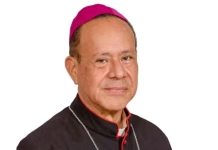
Recent protests in Iran—sparked by economic grievances—have evolved into widespread demonstrations against the ruling regime, resulting in heavy casualties. Against this volatile backdrop, Christian converts face mounting risk. Open Doors, a global watchdog on religious freedom, has long warned that Iranian Christians endure constant surveillance and persecution, with only historic churches such as the Armenian, Assyrian, and Chaldean denominations officially recognized by the state. The Latin Archbishop of Tehran, Cardinal Dominique Matthieu, spoke briefly to “Asia Mena,” yet the country’s broader church hierarchy has remained silent as communication networks collapse under government-imposed blackouts.
Iraq Under Fire
Across the border, Iraq finds itself scorched by the flames of regional war. Despite the National Security Council’s affirmation of neutrality and its pledge to prevent Iraqi territory from being used as a battlefield, several areas have suffered strikes by unidentified actors. Erbil, in particular, faces relentless assaults. The Christian-majority district of Ankawa lies uncomfortably close to both the American base at Erbil International Airport and the newly built U.S. consulate—sites that have repeatedly drawn enemy fire.
Witnesses report missiles and drones intercepted above Ankawa’s skies, with debris damaging nearby homes and businesses. In Bartella, a historically Syriac town, a drone attack hit a facility used by the Popular Mobilization Forces, deepening local fears. As the violence spreads, religious leaders across Iraq have issued appeals for peace. Chaldean Patriarch Cardinal Louis Raphael Sako called on churches to “pray for peace amid the escalating war in our neighborhood,” while the Assyrian Church of the East urged all parties to protect civilians and asked the global Christian community to join in prayer.
Tensions in Syria and Lebanon
The war’s reach now grips Syria and Lebanon. In southern Syria, an Iranian missile intercepted by Israeli defense systems veered off course, killing and injuring residents in As-Suwayda. In neighboring Lebanon, Israeli aircraft have targeted Beirut’s southern districts, southern Lebanon, and the Bekaa Valley following missile barrages launched by Hezbollah. The militant group framed its assault as “revenge for the blood of Imam Khamenei” and a defense of Lebanon, sparking sharp rebukes from Lebanese political leaders determined to avoid dragging their country into another full-scale war.
Displacement convoys now move northward as residents flee bombed neighborhoods and shattered infrastructure. Christian villages in the south are among those emptied by fear. Maronite Patriarch Cardinal Bechara Boutros al-Rahi addressed a shaken congregation last Sunday, reminding citizens that “the nation cannot be healed by slogans alone, but by a touch of faith and renewal.” His words echoed across churches struggling to maintain compassion amid catastrophe.
The Holy Land and Jordan Under Threat
In the Holy Land, missile and drone attacks have taken a rising toll, with at least twelve dead and hundreds wounded in Israel. Jordan, too, has reported interception of inbound missiles by its air defense systems. Officials reassured the public that the kingdom’s armed forces remain capable of defending its airspace and urged citizens to rely solely on official information to prevent panic. Nevertheless, fear ripples through the region as the prospect of widening confrontation looms.
Gulf States Targeted in Rare Attacks
Further south, the Gulf—long considered a bastion of stability—has become an unexpected front. Iran’s recent attacks on targets in Kuwait, the UAE, and Bahrain have drawn sharp condemnation from Gulf capitals and international partners, including the United States. The strikes damaged infrastructure and claimed the lives of five foreign workers: one in Kuwait, three in the UAE, and one in Bahrain. Archbishop Eugene Nugent, the Vatican’s representative in the region, described the situation as “increasingly dangerous” and unprecedented for nations once seen as safe havens.
The Apostolic Vicariates of Northern and Southern Arabia have urged Christians to remain calm, adhere to safety guidelines, and unite in prayer. Churches across the Gulf echoed the appeal, balancing faith with resilience in the face of uncertainty.
Calls for Peace from the Vatican
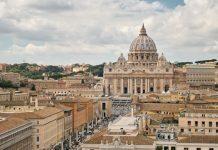
At the Vatican, Pope Leo XIV expressed profound concern for the turmoil engulfing the Middle East and Iran. Speaking after the Angelus prayer in St. Peter’s Square, he warned that “stability and peace are not built through threats or weapons that sow destruction, pain, and death, but through rational and honest dialogue.” His appeal for negotiation and mutual respect was widely interpreted as a plea for the region’s leaders to step back from the brink.
As missiles continue to fall and new frontlines emerge, the struggle for peace in the Middle East appears both urgent and elusive. The region’s Christian minorities, together with millions of other civilians, remain caught in a storm of forces far beyond their control—left to cling to faith, resilience, and the hope that diplomacy can still triumph over devastation.
- Raju Hasmukh with files form ACI Mena
Related Images: