



















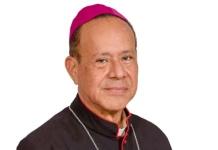







Monsignor Elias Adas reflects on the Maronites fading presence in Syria, its deep roots, and the enduring mission of faith despite devastation.
Newsroom (03/03/2026 Gaudium Press) On March 2, the feast day of the first Maronite Patriarch, Mar John Maron, a solemn question reverberates across the ancient lands of Syria: what remains of the Maronites in the birthplace of both Mar John Maron and his predecessor, Mar Maron—the father and patron of the Maronite Church?
In a region once vibrant with Christian tradition, the Maronite community now faces the realities of historical erosion. Between the Arab conquests that redrew the region’s identity, the political fractures following World War II, and the ravages of the Syrian war since 2011, the Maronite footprint in its original homeland has thinned to near disappearance.
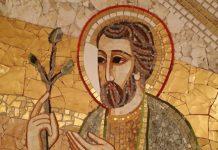
Monsignor Elias Adas, Vicar General of the Maronite Archdiocese of Aleppo, acknowledges this decline but insists the real issue is not numerical. “The question,” he told Assi Mina, “is not about numbers but about meaning—the meaning of presence and role.” Syria, he explained, holds an irreplaceable place in Maronite memory. It was here that Saint Maron lived, taught, and was buried, and from this soil grew the ascetic movement that would one day anchor the Maronite Patriarchate of Mount Lebanon.
For Adas, Aleppo’s remaining Maronites carry a spiritual inheritance rather than a demographic one. “We are called to be disciples of Maron,” he said, “continuing the spirit his first followers carried across new horizons. Our heritage is a trust, not just a name.”
A Fading but Faithful Community
The Maronite presence today survives mainly in three Syrian dioceses—Damascus, Latakia, and Aleppo, which also administers communities as far as Antioch and into Turkey. Yet, the war’s toll has been unrelenting. In Aleppo, where once 150,000 Christians lived, only 20,000 to 25,000 remain, including a mere 400 to 500 Maronite families.
Still, Adas insists that spiritual mission outweighs numerical decline. “If the Church loses its apostolic mission, what reason does it have to exist?” he asked pointedly. That mission, he explained, faces formidable headwinds—social, economic, and cultural.
Religious freedom, while formally protected, lacks deep cultural roots in civic life. Economically, over 95% of Christians live below the poverty line. Many young people have emigrated or dream of leaving, propelled by the lack of opportunity and fears of possible future legal constraints on non-Muslim minorities.
“If any country opened its doors widely to receive Syrians,” Adas said soberly, “I believe 90% of Aleppo’s Christians would leave. The pressures are too great to sustain hope easily.” Yet, he clarified that systematic persecution does not currently exist; rather, the danger lies in economic despair and gradual dissolution.
A Craving for Connection from Leadership
Adas also voiced quiet frustration toward the Maronite Patriarchate’s prolonged absence from Syria. The faithful, he said, have felt neglected. “The Patriarch has not visited Aleppo in more than a decade—indeed, no Maronite Patriarch has ever visited this city,” Adas reflected.
He revealed that three planned visits by Patriarch Bechara Boutros al-Rahi had been prepared and canceled for reasons never made clear. “In these hard years—during war, pandemic, earthquake, and blockade—we needed the Patriarch’s presence more than ever. It was not a formality, but a necessity.”
A Call to Witness Beyond Borders
Despite the prevailing sorrow, Adas ended his remarks with a message of purpose addressed to the Maronite diaspora. He urged those abroad to remember their spiritual roots in the “Holy Land of Syria,” and to live as “leaven in the heart of the dough”—a biblical metaphor for transformation through faithful presence.
“The Maronites who left must not forget those who stayed,” he said. “Our heritage is not confined to geography—it is a mission, now entrusted to every Maronite wherever they are.”
- Raju Hasmukh with files from ACI Mena