
















Indian Redemptorists in Beirut remain amid war, offering solace and aid as their mission of presence restores hope among the forgotten.
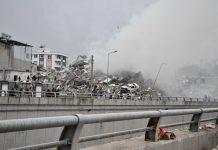
Newsroom (17/03/2026 Gaudium Press ) As Israel’s ground offensive pushes deeper into southern Lebanon, the thrum of war grows louder across Beirut’s battered skyline. Buildings bear fresh scars from airstrikes, and families flood the streets in search of safety. Yet in the midst of fear, a quiet defiance endures — a group of Indian Redemptorist priests who have chosen not to flee.
“Our presence is our mission,” Father Shinto Moongathottathil writes from Lebanon, a simple statement that carries the weight of conviction. Together with Fathers Binoy and Lijo, members of the Congregation of the Most Holy Redeemer (CSsR), these men of faith stand as witnesses among those most affected by a conflict that shows no sign of abating.
A Mission Written in Faith
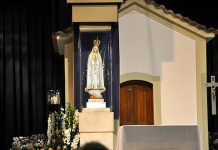
In a small chapel in Beirut, the priests kneel before the Blessed Sacrament. Outside, artillery echoes across the hills. But within those walls, time slows. “In that quiet hour before the Blessed Sacrament, the noise of the war fades away, and we find the peace that only Christ can give,” Father Shinto reflects.
The Redemptorists, in collaboration with the Missionaries of Charity, have anchored themselves among the city’s displaced. Their daily life merges prayer with service — celebrating Mass with the Sisters, organizing recollections, hearing confessions, and offering Adoration for the sick and imprisoned. In these humble acts, they recreate a fragile sanctuary of peace amid devastation.
Father Poly Kannampuzha, superior of the Liguorini in Kerala, India, urges solidarity. “The situation in Lebanon is alarming,” he notes. “Our confreres are not panicking, but they need our prayers and support.” His message, sent on the feast of St. Clement, resonates like a call across borders — a plea for compassion in the face of chaos.
The Ministry of Staying
To outsiders, remaining in a war zone seems almost reckless. But the Redemptorists see their presence as essential. “Sometimes people think missionaries must always be doing big things,” Father Shinto says. “But simply staying is the most powerful thing we can do. When the people see that we have not run away, it gives them courage. It tells them, ‘You are not alone. God has not forgotten you.’”
Their days are spent visiting those unable to flee: the elderly, the infirm, the widowed. Many survive in isolation, surrounded by silence and debris. The priests bring Holy Communion, but also listening ears and prayerful companionship. Through their visits, faith takes flesh — a reminder that even amid suffering, grace abides.
This “mission of presence,” as they call it, lives out the charism of their founder, St. Alphonsus Liguori: to stay close to the most abandoned. Despite the uncertainty, the Redemptorists’ message is unwavering — “We belong here, with the broken-hearted, continuing the mission of plentiful redemption.”
Compassion That Heals
Their ministry is not limited to words or sacraments. It reaches into the shadows where human suffering goes unseen. Father Binoy Uppumackal, the mission superior, recalls one encounter that tested both courage and compassion. Two weeks ago, the missionaries discovered a man hiding in a toilet — too weak to move, his body ravaged by wounds, his mind consumed by fear. Rats had gnawed at his flesh; the stench of decay filled the air.
“His condition was unimaginable,” Father Binoy recounts. “The doctors refused to admit him, saying his illness was contagious. But we could not abandon him.”
What followed was a battle for dignity. With the help of the Missionary Sisters and several volunteers, the priests fought for his treatment. He was finally operated on and later welcomed into the Sisters’ “Home of Peace.” When Father Binoy visited him again days later, he found not the same broken man, but a survivor reborn. “He can now sit properly, he smiles, and above all, he is deeply grateful,” the priest says.
It is a moment that encapsulates the mission’s essence — where society saw danger, faith saw a brother; where medicine hesitated, compassion persevered. In the Redemptorists’ hands, the wounded man found not only healing but the restoration of his humanity.
Hope Among the Ruins
Lebanon’s war-scarred present mirrors its long history of endurance. For the Indian Redemptorists, that endurance has taken the shape of steadfast faith. They are not soldiers, but their resistance is no less profound — a quiet defiance built on love, prayer, and the unyielding belief that peace begins with presence.
“The destruction around us is great,” Father Shinto admits, “but the grace of God is greater.” In the midst of bombs and broken walls, their witness stands as a living parable of hope — the kind that survives even when everything else falls silent.
- Raju Hasmukh with files from Aisanews.it
Related Images: