















Pope Leo XIV urges unified global action on drugs and organized crime, emphasizing rule of law, prevention, and rehabilitation support.
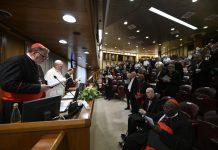
Newsroom (15/05/2026 Gaudium Press ) Pope Leo XIV on Friday addressed participants of the Second Inter-parliamentary Conference on the Fight against Drugs and Organized Crime, an event organized by the Organization for Security and Co-operation in Europe (OSCE), which brings together 57 member states spanning Europe, North America, and Central Asia.
The Pope underscored the urgency of confronting what he described as “the scourge of illicit drugs” and the powerful criminal networks behind them—forces he warned threaten “the very future of our societies.” His remarks framed the issue not merely as a legal or political challenge, but as a deeply human crisis requiring coordinated moral and institutional responses.
Rule of Law as the Cornerstone
At the heart of Pope Leo XIV’s message was a strong defense of the rule of law. He emphasized that any just society must be grounded in legal systems that are impartial and universally applied, rather than subject to the whims of individuals or powerful groups.
“No truly just society can endure unless the law—and not the arbitrary will of individuals—remains sovereign,” he stated. He further warned that no one, regardless of status or influence, should consider themselves above the law or entitled to violate the rights and dignity of others.
The Pope described the rule of law, crime prevention, and criminal justice systems as interconnected pillars that must function in unity. Together, he said, they serve as essential components of what he called “integral human development,” linking public policy to broader ethical and social goals.
Beyond Punishment: A Humane Vision of Justice
While acknowledging the importance of law enforcement, the Pope stressed that justice must extend beyond punishment. True justice, he argued, requires both perseverance and mercy, especially when it comes to reintegrating offenders into society.
He firmly rejected punitive practices that undermine human dignity, stating that respect for every person—including those who have committed crimes—rules out the use of the death penalty, torture, or any form of cruel or degrading punishment.
This perspective aligns with a broader emphasis on restorative justice, in which rehabilitation and social reintegration are seen as essential to breaking cycles of crime and marginalization.
Addressing Addiction Through Comprehensive Care
Pope Leo XIV placed significant focus on the human toll of drug addiction, calling for robust, comprehensive programs to support those affected. He advocated for a multidisciplinary approach that combines medical treatment, psychological support, and long-term rehabilitation.
Such programs, he said, must strike a balance—avoiding both overly repressive measures and permissive attitudes that trivialize the dangers of substance abuse. When properly implemented, they can help individuals rediscover their “God-given dignity” and reintegrate into society as active and valued members.
The Catholic Church, he added, is committed to contributing to these efforts through its global network of institutions, working alongside civil society to provide care and support.
Education as a Preventive Tool
Prevention, according to the Pope, begins with education. He highlighted the critical role of families and schools in equipping young people with accurate knowledge about the dangers of drug use.
In an era where social media can spread misinformation that downplays or distorts the risks of narcotics, he warned that education must be both early and evidence-based. Teaching children about the harmful effects of drugs on the brain, body, and behavior is essential to building resilience and informed decision-making.
“Education must begin within the family and be strengthened in the school,” he said, emphasizing that awareness is a powerful defense against addiction.
Honoring Those on the Front Lines
The Pope also took a moment to recognize the efforts and sacrifices of law enforcement officials and members of the judiciary. He praised those who risk—and in some cases lose—their lives in the fight against organized crime, acknowledging their critical role in maintaining public safety and justice.
Their work, he suggested, exemplifies the broader commitment needed across all sectors of society to combat criminal networks and support victims.
A Shared Responsibility for the Common Good
In concluding his address, Pope Leo XIV called for renewed collaboration among governments, institutions, and communities. He emphasized that tackling the complex challenges of drug trafficking and organized crime requires a spirit of “mutual respect and shared responsibility.”
The ultimate goal, he said, is to promote policies that uphold the common good while safeguarding the “inalienable dignity of every human being.”
Through this address, the Pope offered a comprehensive vision—one that integrates law, compassion, education, and international cooperation—as the foundation for a more just and secure global society.
- Raju Hasmukh with files from Vatican News
Related Images: