









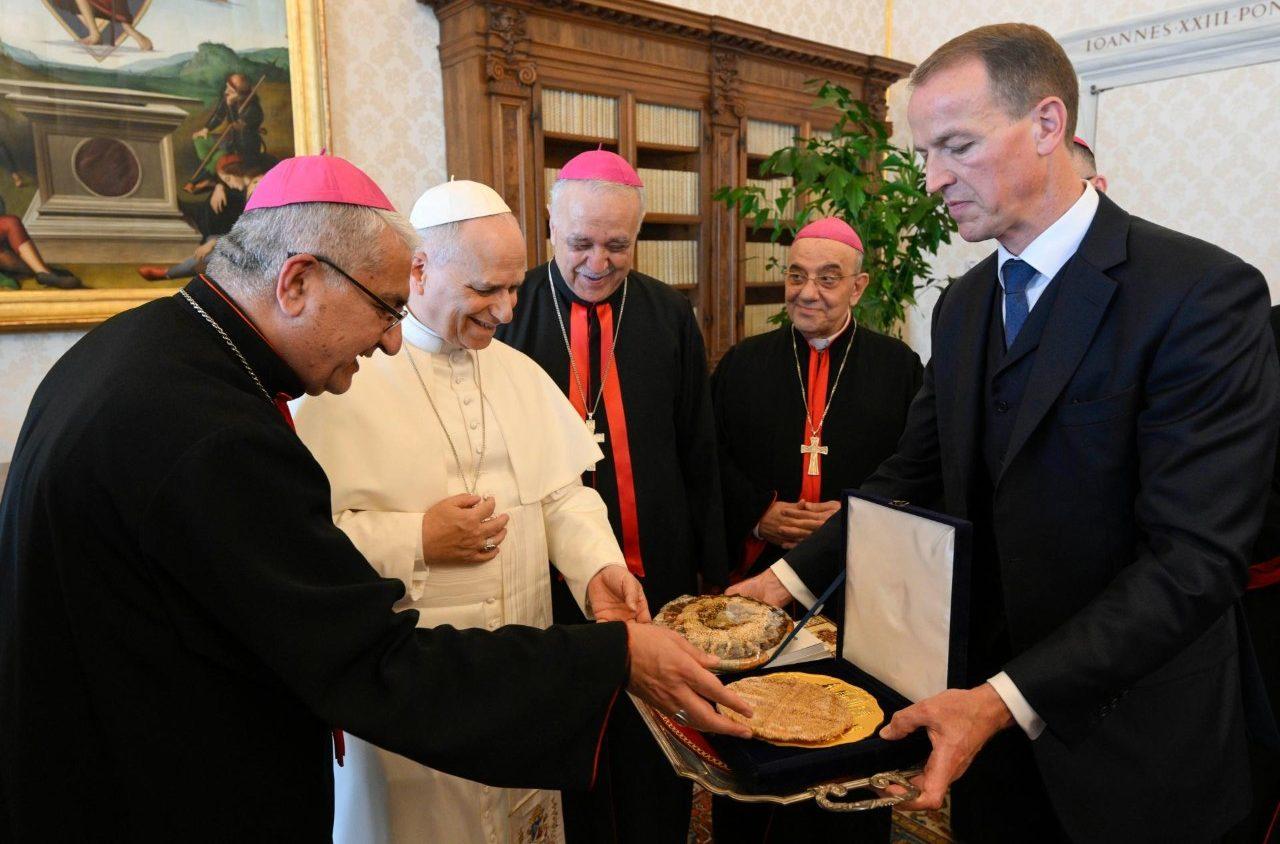
Archbishop Warda calls on Patriarch Nona to defend Ankawa’s rights, identity, and Christian future amid political exclusion and change.
Newsroom (17/06/2026 Gaudium Press ) In a powerful appeal rooted in both pastoral concern and historic responsibility, Archbishop Bashar Matti Warda of the Chaldean Catholic Archeparchy of Erbil has called upon newly installed Chaldean Patriarch Paul III Nona to stand firmly with the Christian community of Ankawa and advocate for its rights before regional decision-makers.
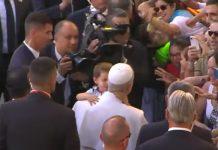
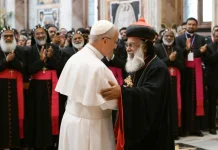
The appeal came during a welcoming ceremony at St. Joseph Cathedral in Ankawa, marking a significant moment in Patriarch Nona’s early leadership following his election in April and formal installation in Baghdad in late May. By choosing Ankawa as the first destination outside his patriarchal eparchy, the patriarch signaled a message of closeness and solidarity. “You are in my heart,” Warda said, interpreting the visit as a gesture of pastoral intimacy with one of Iraq’s most important Christian strongholds.
A Land of Deep Christian Roots
Warda anchored his remarks in the ancient Christian heritage of the region historically known as Adiabene, encompassing modern-day Erbil and its surroundings. This land, he noted, has long been marked by steadfast faith, producing leaders, martyrs, and communities that have endured severe persecution across centuries.
He recalled in particular the massacre at the Erbil Citadel in 1310, a devastating event that forced Christians to flee toward Mosul and the towns of the Nineveh Plain. Yet, as Warda emphasized, such violence did not extinguish the faith. Instead, it became a testimony to the enduring resilience of the Church in the region.
Ankawa: A Living Witness of Perseverance
At the heart of Warda’s message was Ankawa itself — a district that has preserved its Christian character despite centuries of upheaval. By the 16th century, it had become the only village in the area with a substantial Christian population, serving as a refuge in times of crisis.
“In every trial our Church endured, Ankawa was a refuge whose doors were never closed,” Warda said, highlighting its role most recently during the 2014 displacement crisis caused by ISIS.
When the terrorist group occupied Mosul and the Nineveh Plain, tens of thousands of Christians were forced to flee. Ankawa became a sanctuary. Within weeks, more than 13,200 displaced families arrived, finding shelter in churches, schools, parish halls, and private homes. Organized by church-led initiatives such as the Joint Episcopal Relief Committee and the Chaldean Mercy Association, emergency response efforts provided essential aid, including food, water, and temporary housing across more than 26 camps.
Through this extraordinary mobilization, Ankawa emerged as the largest gathering place for Christians in Iraq and a symbol of ecclesial charity and unity in action — a living embodiment of Catholic social teaching on solidarity and care for the displaced.
Mounting Challenges and a Sense of Exclusion
Despite its spiritual vitality and communal strength, Ankawa today faces significant challenges. Residents have expressed growing concern about political representation, public services, and development trends that threaten the district’s demographic and cultural character.
Among the issues cited are the conversion of agricultural land into residential investment projects, perceived to contribute to demographic shifts and environmental loss. Concerns have also intensified over the spread of nightlife and entertainment venues within residential areas, raising questions about preserving Ankawa’s religious identity.
Archbishop Warda addressed a sensitive but critical point: the perception among some young people that the Church bears responsibility for these developments. He firmly rejected this notion, asserting that the Church has been deliberately excluded since 2011 from decision-making processes affecting Ankawa.
“Our exclusion as a Church was deliberate,” Warda stated, suggesting that narrow interests have overridden the common good. He further underscored this claim by pointing to the prolonged absence — nearly a year and a half — of a permanent district mayor, describing it as an unexplained gap in governance that weighs heavily on the community.
“This is my testimony for history,” he declared, placing his words before both God and the people.
A Call to Faithful Perseverance
In a message especially directed toward the youth, Warda offered both encouragement and admonition. While acknowledging their frustration, he urged them to remain rooted in faith and committed to their land.
“You are its hope and its tomorrow,” he said, cautioning that anger alone cannot build a future. Instead, he called for patient perseverance and constructive engagement.
The archbishop expressed confidence that Patriarch Nona would amplify Ankawa’s concerns at the highest levels, and voiced hope that the Kurdistan Regional Government — which he said sincerely desires the flourishing of Christians — would respond with justice and attentiveness.
The Church’s Continuing Mission
Far from being passive, Warda emphasized that the Chaldean Church has actively invested in the well-being of its people. He cited numerous initiatives undertaken despite challenging conditions: catechetical programs for all age groups, vibrant youth ministries, and significant infrastructure development.
These include the construction of four churches — three in Ankawa — along with four schools, a university, a hospital, and the establishment of Radio Maryam. Collectively, these institutions provide more than 800 jobs for local residents and offer essential services to the broader community, particularly the poor and vulnerable.
“Let actions speak for us, not words,” Warda said, highlighting a pastoral approach grounded in tangible witness and service.
Preserving a Christian Presence
Today, Ankawa is home to approximately 75,000 Christians from Catholic, Orthodox, and evangelical traditions. It stands as a rare and vital center of Christian life in Iraq — yet one that faces the pressing challenge of safeguarding its identity amid social, political, and cultural pressures.
From a Catholic perspective, the situation in Ankawa reflects a broader call to uphold the dignity of communities, defend religious identity, and ensure participation in decisions affecting their future. Archbishop Warda’s appeal thus resonates beyond local concerns, echoing the universal Church’s commitment to justice, solidarity, and the protection of persecuted Christians.
As Patriarch Nona begins his ministry, Ankawa’s faithful look to him as both shepherd and advocate — a voice capable of carrying their hopes to the halls of power, and of ensuring that a community rooted in centuries of faith continues to flourish in its ancestral land.
- Raju Hasmukh with files from EWTN News
Related Images: