










Iran’s peace deal with the US faces internal opposition, diaspora divisions, and growing fears of continued repression and instability.
Newsroom (17/06/2026 Gaudium Press ) A tentative agreement between Iran and the United States aimed at ending a recent Israeli-American war is exposing profound fractures within the Iranian political system and across its global diaspora. While the memorandum of understanding (MoU), expected to be formalized on June 19 in Switzerland, signals a potential de-escalation, critics warn it could entrench the very structures many Iranians have long sought to dismantle.
Among the most outspoken skeptics is Attieh Fard, a 44-year-old Iranian-born Christian lawyer and politician now based in the United Kingdom. Drawing on her experience and activism, Fard voices deep concern that the deal risks stabilizing the Islamic Republic at the expense of its citizens.
“Some believe that ending the conflict and engaging in dialogue will ultimately help the regime become more stable over time and continue repression at home,” she said, reflecting a sentiment shared by segments of Iranian civil society and the Christian community.
Radicals Versus Moderates
The agreement has intensified a long-standing internal struggle between Iran’s hardliners and more pragmatic factions. According to Fard, reports from inside Iran point to rising tensions, including attacks against those advocating engagement with Washington.
“The government is focusing on internal security and its survival,” she noted, warning that any concessions offered now could be reversed later. She invoked the concept of taqiyyah, a principle in Shia Islam describing cautious dissimulation in the face of danger, arguing that it may permit strategic flexibility—even deception—if deemed necessary to preserve the state.
Her concerns deepen with reports of hostility toward Iranian Foreign Minister Abbas Araghchi, including calls from hardliners for his execution over the proposed engagement with the United States. For factions that have built ideological legitimacy on opposition to Washington, the deal represents a fundamental contradiction.
Further complicating matters is a clause reportedly affecting Iran’s nuclear investments, which could provoke additional resistance within the ruling establishment. With the MoU not yet signed, Fard cautions that hardliners may still attempt to block it entirely.
Diaspora Divisions on Display
The fractures are not confined to Tehran. They were visibly reflected thousands of miles away during Iran’s World Cup match against New Zealand in Los Angeles. The game, which ended in an energetic 2–2 draw, became a stage for political expression among Iran’s large exile community.
During the pre-match national anthems, some fans sang while others booed. In the stands, symbols of competing visions of Iran were displayed: the current Islamic Republic flag alongside the lion-and-sun emblem associated with pre-revolutionary Iran. Despite strict security checks, both flags were allowed inside the stadium.
For Fard, such scenes underscore the deep polarization among Iranians worldwide, particularly over whether engagement with the current regime represents progress or betrayal.
“I ran a survey for those inside and outside Iran,” she said. “People, mostly Christian I believe, have unanimously voted against the deal.”
Christians Voice Fears of Continued Repression
Iranian Christians—especially converts from Islam—fear that normalization with Washington could reduce international pressure on the regime, leaving vulnerable communities exposed. Fard stresses that under Iran’s legal system, which is rooted in Sharia law, converts often face persecution, including arrests and imprisonment.
“In the view of many, this deal will help the regime continue repression at home,” she said. “Christians in particular will continue to be persecuted.”
Recent arrests and incarcerations have reinforced these concerns, contributing to a broader sense of disillusionment. Many Iranians, both religious and secular, feel that their calls for systemic change have gone unheard.
“They feel sad, angry, and betrayed,” Fard added, emphasizing that the agreement appears to prioritize financial and nuclear issues over human rights and political reform.
A Strategic Pause or a Missed Opportunity?
The timing of the proposed agreement—coinciding with the World Cup hosted by the United States, Mexico, and Canada—has also drawn scrutiny. Fard suggests the deal may offer Washington a strategic advantage, allowing it to maintain stability during a major global event.
“If the agreement is signed, the US will have won a great political game,” she said, adding that Iran could be blamed should it withdraw from the deal later.
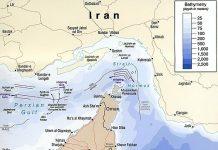
From an economic perspective, the arrangement may facilitate smoother oil flows through the Strait of Hormuz, benefiting global markets. However, Fard warns that increased revenues could strengthen the regime’s capacity to suppress dissent and refine its long-term strategies.
“We are seeing an MoU, not a contract,” she said. “The downside is that the Islamic regime will generate revenue and possibly continue repression at home.”
A Vision for a Different Iran
Despite her skepticism, Fard outlines a roadmap for a future Iran grounded in democratic principles and global integration. Central to her vision is increased international pressure on the regime, including the proscription of the Islamic Revolutionary Guard Corps (IRGC) and the freezing of its assets abroad.
She also calls for technological and legal measures to empower Iranian citizens: expanding internet access through satellite systems, initiating international legal proceedings over past atrocities, and protecting protesters expected to return to the streets.
“Help millions of Iranians to be set free,” she urged. “A free Iran can go back to the world economy and benefit other countries economically and in terms of security.”
As the June 19 signing date approaches, the proposed agreement stands as both a potential turning point and a source of uncertainty. For many Iranians—inside the country and across the diaspora—the question remains whether peace abroad will come at the cost of justice at home.
- Raju Hasmukh with files from Asianews.it
Related Images: