

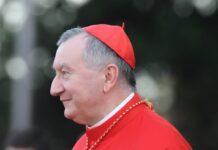







Archbishop Bashar Warda warns Iraq’s Christians face renewed fear and isolation as fighting spreads across the region.
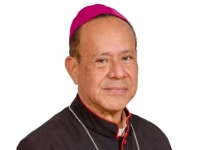
Newsroom (04/03/2026 Gaudium Press ) As regional tensions flare across the Middle East, one of Iraq’s leading Catholic voices says his community is again gripped by fear and uncertainty. Archbishop Bashar Matti Warda of Erbil, located in Iraq’s northern Kurdistan region, described the situation as “quite frightening,” noting that communication with counterparts in Iran has been completely cut off as the conflict intensifies.
“It’s frightening because we are once again asking ourselves—will it reach us? Will we have to really leave again? Will our children have a future?” Warda told EWTN News Nightly. His words echo the collective anxiety of a Christian population that has endured nearly half a century of war, persecution, and displacement.
For Iraq’s Christians, particularly those who took refuge in Erbil after the rise of the Islamic State in 2014, the new crisis feels like déjà vu. Warda traced the roots of this fear to “almost 50 years of continuous violence,” from the eight-year Iran-Iraq war to the Gulf conflicts and waves of sectarian bloodshed that followed. “All of these memories,” he said, “are still there.”
In Erbil, daily life is grinding to a halt. Schools and universities have remained closed for almost a week, and the local economy, long fragile, is now “collapsing,” Warda reported. The archbishop said residents brace for attacks “every three or four hours,” fearing rockets or drones might strike the city. Local reports confirmed that drones have attempted to target Erbil International Airport, though the assaults were intercepted.
“The fear is there,” he warned. “The scope of violence is just getting bigger, because following the news, we see new countries being attacked and new places being attacked.” Erbil, home to Iraq’s largest Christian population, has already been targeted several times, deepening concern that the instability could once again drive families to leave. “This might be another reason for the Christians to say, ‘There is no future,’” Warda said.
The archbishop’s “biggest fear,” he explained, is losing those who had resolved to stay and rebuild. “These types of wars and conflicts will shake everything,” he said, “regardless of what has been done to really build something for the Christian community to stay.”
Adding to this sense of isolation is the silence from across the border. Warda said attempts to reach Archbishop Dominique Joseph Mathieu of Tehran have failed repeatedly. “There is no communication whatsoever,” he lamented. Even those with family in Iran have been unable to make contact due to widespread loss of power and communication lines. “Sadly enough, there is no communication whatsoever with that part of the world,” he said. “We are praying for the community there.”
Despite the mounting tension, spiritual life within Erbil’s Christian community remains steadfast. The archbishop noted that attendance at daily Mass and evening prayer has been “really great,” offering a measure of solace amid the turmoil. Still, the diocese has been forced to cancel weekly catechism classes and the annual Ankawa Youth Gathering—the largest gathering of young Christians in Iraq.
For Warda, the deepening crisis delivers a painful question his community has asked too often: how long can they hold on in their ancestral homeland? In the shadow of war once again, the archbishop’s plea carries both urgency and exhaustion—a call for peace before a fragile faith community fades further into exile.
- Raju Hasmukh with files from CNA
Related Images: