















Prague’s St. Vitus Cathedral inaugurates its new organ, blending faith, music, and centuries of tradition in a profound liturgical celebration.
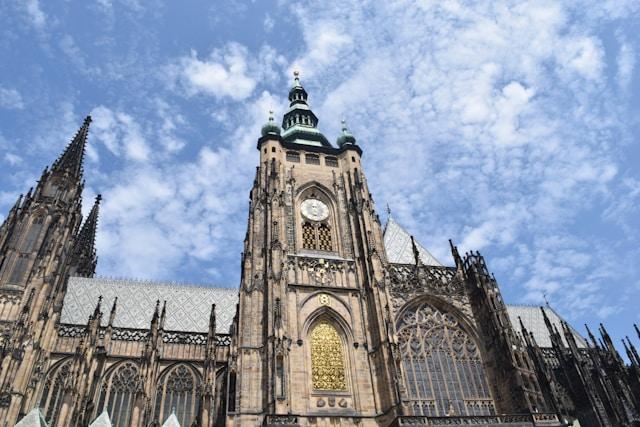
Newsroom (17/06/2026 Gaudium Press ) On the feast of St. Vitus, a moment rich in both historical significance and spiritual symbolism unfolded in Prague as the new organ of the Cathedral of St. Vitus, Wenceslaus, and Adalbert was solemnly inaugurated. The ceremony on June 15 marked not merely the unveiling of a musical instrument, but the completion of a long-cherished vision rooted in faith, tradition, and communal generosity.
The organ, whose construction was initiated under the leadership of former Archbishop of Prague Cardinal Dominik Duka, was blessed by his successor and now-Archbishop Emeritus Jan Graubner. In his blessing, Graubner called the faithful to remember generations past who had contributed to the cathedral’s enduring legacy.
“Remember all those who have built and protected this temple for centuries,” he said, extending gratitude also to the patrons and benefactors of the new instrument, especially those who did not live to witness its completion. Entrusting their efforts to divine care, he prayed that the Lord might grant them “a share in the heavenly harmony that never ceases.”
The solemn ceremony, underscored by the participation of the Czech Philharmonic and broadcast nationwide by public television, reflected the enduring link between sacred worship and artistic excellence in the Catholic tradition.
A Sacred Dialogue in Sound
The current Archbishop of Prague, Stanislav Přibyl—himself an accomplished organist—presided over the accompanying Mass. In his homily, he emphasized the theological and symbolic significance of the organ within the sacred space.
“The organ does not exist independently of the space around it,” he noted. “It is not just the organ playing, but the entire cathedral—literally every stone—playing.”
This perspective reflects a deeply Catholic understanding of liturgical beauty: that material elements, when ordered toward God, become instruments of divine praise. The cathedral, with its centuries-old stones, becomes a living participant in the act of worship.
A particularly striking moment in the ceremony was the ritual known as the “awakening of the organ.” Addressing the instrument directly, Archbishop Přibyl called upon it to “wake up” and fill the sacred space with music. In response, the organist began to play, symbolizing what the archbishop described as a profound dialogue between God and humanity.
“It is the moment when the instrument sounds praise to God the Father, Jesus Christ, and the Holy Spirit,” he explained. “The organ can rejoice, cry, calm down, and stir our hearts.”
This exchange, in which spoken word evokes musical response, mirrors the spiritual dynamic of prayer itself. As Přibyl articulated, when God speaks, the human heart responds—sometimes in words, sometimes in silence, or through the language of music that transcends speech.
Music Beyond Words
In Catholic worship, music has long served as a vehicle for transcending the limits of human language. Archbishop Přibyl highlighted this dimension, noting that the new organ will serve liturgy, prayer, and the uplifting of the human spirit.
Sacred music, particularly when rendered through an instrument as majestic as the organ, becomes not merely an aesthetic experience but a pathway to encountering divine beauty. It invites the faithful into contemplation, drawing them closer to the mysteries celebrated in the liturgy.
A Collective Achievement
The journey toward completing the organ has been decades in the making. Despite several restoration attempts over the past century, earlier efforts failed to achieve the desired result. It was not until 2012 that Cardinal Duka revived the project, securing the support of prominent public figures and launching a public fundraising initiative.
The response was remarkable: approximately 12,000 contributors helped raise 135 million Czech crowns toward the total cost of around 160 million. This widespread participation reflects a shared recognition of the cathedral’s spiritual and cultural importance.
The instrument itself is a masterpiece of craftsmanship. Built by German organ maker Gerhard Grenzing and designed by Slovak designer Peter Olah, the organ weighs 45 tons and contains approximately 6,000 pipes. It stands as a fusion of technical excellence and artistic vision.
Faith Anchored in History
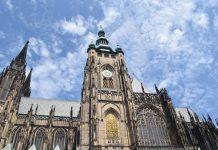
The inauguration of the organ is inseparable from the history of the cathedral itself, one of the most significant religious sites in the Czech Republic. The first stone was laid in the 14th century, though the site had already hosted a church in the 10th century. Over the centuries, it has witnessed the coronations of Czech kings and remained a focal point of national and ecclesial identity.
In this context, the new organ represents not a break with the past but its continuation. It carries forward a tradition in which sacred architecture, music, and liturgy together form a unified expression of faith.
As the cathedral prepares to host upcoming organ concerts and incorporate the instrument into regular liturgical celebrations, the newly awakened organ will continue to fulfill its purpose: giving voice to prayer, elevating the human spirit, and echoing the eternal harmony toward which all Catholic worship is directed.
- Raju Hasmukh with files from EWTN News
Related Images: