









Vatican meets SSPX leadership, warning against unauthorized consecrations and calling for renewed theological dialogue to preserve Church unity.
Newsroom (12/02/2026 Gaudium Press ) In a meeting held this morning at the Palazzo del Santo Uffizio, the Vatican’s Dicastery for the Doctrine of the Faith and Father Davide Pagliarini, Superior General of the Society of Saint Pius X (SSPX), opened a new chapter in longstanding discussions on doctrinal reconciliation. The meeting took place with the approval of Pope Leo XIV and was described by Cardinal Víctor Manuel Fernández, Prefect of the Dicastery, as “cordial and sincere.”
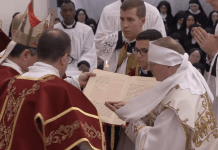
However, the Holy See imposed a clear condition for continuing dialogue: the SSPX must suspend its decision of July 1 to proceed with new episcopal consecrations. Such ordinations, conducted without papal mandate, have been explicitly warned against.
Warning of Schism Without Papal Mandate
In its official statement, the Dicastery reiterated that the ordination of bishops without authorization from the Holy Father “would imply a decisive rupture of ecclesial communion (schism) with grave consequences for the Society as a whole.” The reference recalls the 1988 Apostolic Letter Ecclesia Dei by Saint John Paul II and the subsequent 1996 explanatory note by the Pontifical Council for Legislative Texts, which both reassert the canonical consequences of such acts.
The warning underscores the papal authority defined in canon 331 of the Code of Canon Law and reaffirmed in the dogmatic constitution Pastor aeternus: the Pope holds “a supreme ordinary power, which is full, universal, immediate, and direct.” Any act of consecration outside this authority would therefore constitute a breach of communion with severe canonical repercussions.
Core Doctrinal Issues Under Review
The meeting also revisited doctrinal topics raised by the SSPX in letters exchanged from 2017 to 2019. Notably, discussions addressed the interpretation of the Document on Human Fraternity signed in Abu Dhabi, and the theological distinction between “the act of faith” and the “religious assent of the intellect and will.”
Cardinal Fernández proposed a “specifically theological dialogue” aimed at clarifying “the minimum requirements for full communion with the Catholic Church,” and at drafting a canonical statute for the Fraternity. The approach seeks to employ a precise methodology to address unresolved theological questions, particularly regarding the degrees of adherence required by various texts of the Second Vatican Council.
Next Steps: Conditional Path Forward
Father Pagliarini is now expected to present the Vatican’s proposal to the SSPX Council and respond formally to the Dicastery. Progress will depend entirely on the Society’s agreement to suspend the planned episcopal ordinations. Should the response be positive, both parties will mutually determine the next stages of dialogue, elaborating the framework, timing, and methodology required to move toward reconciliation.
The Dicastery emphasized that these discussions would continue to cover issues previously identified by the SSPX, including those detailed in a letter dated January 17, 2019, to ensure all substantive questions receive thorough examination.
Call to Prayer for Ecclesial Unity
In its concluding remarks, the Dicastery for the Doctrine of the Faith appealed to the entire Catholic Church to accompany this delicate process “with prayer to the Holy Spirit,” described as “the principal architect of the true ecclesial communion desired by Christ.”
This call reflects the Holy See’s hope to achieve full doctrinal and canonical communion without compromising the integrity of faith or the authority of the Roman Pontiff. As both sides navigate a complex path of dialogue and discernment, the Vatican’s position remains anchored in both pastoral solicitude and juridical clarity—a balance it deems essential for the unity of the Church.
- Raju Hasmukh with files from Infocatholica
Related Images: