









Pope Leo XIV urges Sapienza students to pursue peace, resist war culture, and confront AI, inequality, and climate crises with courage.
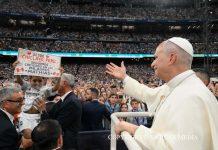
Newsroom (14/05/2026 Gaudium Press ) In a wide-ranging and deeply reflective address at the Sapienza University of Rome, Pope Leo XIV called on students and scholars to reject despair and instead become “artisans of true peace,” while warning of escalating global tensions, the misuse of artificial intelligence in warfare, and the moral challenges facing younger generations.
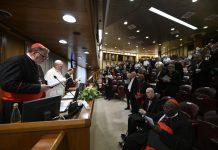
Speaking before a gathering in the university’s Aula Magna, the Pope framed his visit as both a pastoral encounter and a call to action, urging the academic community to embrace responsibility amid what he described as a world “disfigured by wars and by words of war.”
“Be artisans of true peace: an unarmed and disarming peace, humble and persevering,” the Pope said, emphasizing that such peace must actively work toward harmony between peoples and care for the Earth.
A University of Inclusion and Responsibility
Pope Leo XIV praised Sapienza as a center of excellence not only in scholarship but also in its commitment to accessibility. He highlighted initiatives supporting disadvantaged students, including those with disabilities, prisoners, and refugees fleeing conflict zones.
He gave special recognition to a recent agreement between the Diocese of Rome and the university to open a humanitarian corridor for students from the Gaza Strip—an initiative he described as a concrete sign of solidarity in a fractured world.
Having served as Bishop of Rome for just over a year, the Pope noted that meeting the university community was a priority. Addressing students first, he spoke “with a pastor’s heart,” acknowledging both their hopes and their anxieties.
Youth in Search of Truth
Reflecting on campus life, Pope Leo described a generation navigating “contrasting emotions”—joyful experiences alongside the weight of global injustice. Yet he emphasized that education, relationships, and intellectual engagement can transform individuals even before they change society.
“When the desire for truth becomes a search,” he said, “our boldness in study bears witness to the hope of a new world.”
Drawing on the example of Saint Augustine, whom he described as a flawed but passionate seeker of wisdom, the Pope encouraged students not to abandon their pursuit of truth despite personal struggles.
He acknowledged receiving hundreds of questions from students ahead of the visit and pointed to university chaplaincies as vital spaces where faith and inquiry can meet.
“We Are Not an Algorithm”
The Pope devoted significant attention to the pressures facing young people today, describing a “spiritual malaise” driven by performance expectations and a system that reduces individuals to metrics.
“We are not the sum of what we possess,” he said. “We are not an algorithm.”
He warned against a culture that intensifies competition while fostering anxiety and isolation, insisting instead on the inherent dignity of each person.
The question “Who are you?” he added, is central to the human experience—one that cannot be answered in isolation but only through relationships and a deeper engagement with meaning.
A World Shaped by Conflict
Turning to global affairs, Pope Leo issued a stark critique of rising militarization, particularly noting increased defense spending in Europe over the past year.
“Let us not call ‘defense’ a rearmament that increases tensions and insecurity,” he warned, arguing that such investments divert resources from education and health, undermine diplomacy, and benefit narrow elites.
He also raised alarms about the growing integration of artificial intelligence into military operations, stressing the need for vigilance to ensure that human responsibility is not eroded.
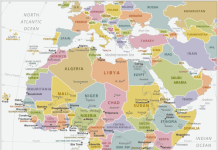
Referencing ongoing conflicts in Ukraine, Gaza and the Palestinian territories, Lebanon, and Iran, the Pope described a dangerous convergence of warfare and emerging technologies—what he called a “spiral of annihilation.”
“Let study, research, and investment move in the opposite direction,” he urged, calling for a “radical ‘yes’ to life.”
Climate Crisis and Moral Urgency
In addition to geopolitical concerns, Pope Leo highlighted the environmental crisis, invoking Pope Francis’ encyclical Laudato si’. He noted that, despite ongoing efforts, the global climate situation has not improved significantly.
Encouraging students to resist resignation, he called on them to “transform restlessness into prophecy,” framing ecological responsibility as a shared moral imperative.
A Call to Educators
Addressing faculty members, the Pope described teaching as “a form of charity,” likening it to acts of rescue and compassion. He urged professors to invest in their students not only intellectually but also morally.
“It is of the utmost importance to believe in your students,” he said, encouraging educators to cultivate trust and inspire responsibility.
He also challenged academic institutions to go beyond technical training, warning that education without conscience risks producing professionals disconnected from justice and human dignity.
Toward a New Educational Alliance
Pope Leo concluded his visit by calling for a renewed partnership between the Church and the academic world—a “new educational alliance” grounded in the pursuit of truth, justice, and peace.
He emphasized that knowledge should serve not only career advancement but also self-understanding and ethical discernment.
“Study, cultivate, safeguard justice,” he said, urging both students and professors to align their work with the fundamental dignity of life.
As he delivered his Apostolic Blessing, the Pope left the university community with a clear challenge: to harness their intelligence and courage in service of a more peaceful and just world—becoming, in his words, true artisans of peace.
- Raju Hasmukh with files from Vatican News
Related Images: