
















Pentagon reduces recognized religious affiliations from 211 to 31, igniting debate over religious freedom and minority representation in U.S. military.
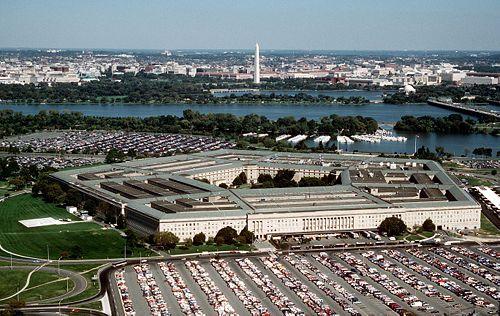
Newsroom (09/06/2026 Gaudium Press ) A sweeping administrative reform within the U.S. Department of Defense has triggered a national debate over religious liberty, military culture, and the place of faith within one of America’s most significant institutions. For the first time in nearly a decade, the Pentagon has significantly reduced the number of officially recognized religious affiliations used across the armed forces, cutting the list from approximately 211 categories to just 31.
The change, implemented through a May 20 memorandum under the authority of Defense Secretary Pete Hegseth, is being presented by military leadership as a pragmatic effort to streamline administrative systems and enhance the delivery of religious support. Yet despite these assurances, the move has quickly become a flashpoint for criticism and concern among religious liberty advocates, former military leaders, and minority faith communities.
A Dramatic Reduction
Under the revised system, the Department of Defense continues to recognize major religious traditions, including Catholicism, various Protestant denominations, Judaism, Islam, Hinduism, Buddhism, Sikhism, and the Bahá’í Faith. It also maintains broader designations such as “No Religion,” “Other Religions,” and agnosticism.
Notably, Catholics remain one of the largest and most clearly identified groups within the military, reflecting their longstanding presence in the armed forces. However, controversy has centered less on who remains recognized than on who has been removed.
A wide array of smaller religious and philosophical communities—such as atheists, humanists, Unitarians, deists, Wiccans, Druids, followers of Asatru, spiritualists, and various New Age movements—are no longer individually identified under the new system. Their removal has raised concerns about visibility and representation within the military structure.
Pentagon’s Rationale
Pentagon officials argue that the previous system had become unwieldy. According to Hegseth, the number of religious codes had expanded beyond 200, many of which were rarely used. From the department’s perspective, consolidating categories allows chaplains and commanders to better anticipate the spiritual needs of service members without navigating an overly complex classification system.
The reform is part of a broader initiative to strengthen spiritual care within military life. Hegseth has repeatedly emphasized that religious freedom and spiritual well-being should be treated with the same priority as physical and mental health. In addition to reducing the number of religious categories, he has introduced changes affecting the military chaplaincy, including adjustments to insignia and the structure of religious support services.
Concerns Over Representation
Despite these intentions, critics warn that the policy may have unintended consequences. Within the military system, religious affiliation codes serve more than a statistical function. They help leaders understand the composition of their units, organize worship opportunities, and provide appropriate pastoral care—particularly for personnel stationed far from home or in deployed environments.
Retired Major General Steve Schaick, former Chief of Chaplains of the U.S. Air Force, has expressed concern that smaller faith communities could effectively disappear from institutional awareness. Without specific identification, these groups may struggle to secure adequate support, and their needs could be overlooked in planning and resource allocation.
Moreover, some critics argue that the reduction may impact the recognition and endorsement of chaplains themselves, particularly those who represent less widely practiced belief systems.
Broader Cultural and Constitutional Debate
The reform has also reignited broader debates about the relationship between religion and the state. Some advocacy groups have framed the changes as evidence of a potential shift toward privileging Christianity within the military, pointing to the prominence of traditional religious categories compared to the disappearance of smaller or non-theistic belief systems.
The controversy is further shaped by Secretary Hegseth’s public emphasis on faith. Supporters argue that his approach represents a reaffirmation of religious freedom after years in which some believers felt marginalized in public institutions. Critics, however, warn that emphasizing faith in institutional policy risks blurring the line between protecting religious expression and favoring specific traditions.
The Principle of Universal Religious Freedom
For many observers, including those within Christian traditions such as Catholicism, the debate underscores a central principle: religious liberty must be universal to be meaningful. This principle holds that protections should extend equally to members of large, established religions, smaller faith communities, and individuals who profess no religion at all.
This understanding, strongly articulated during the Second Vatican Council, emphasizes that human dignity requires freedom from coercion in matters of conscience. In this context, the removal of specific categories raises questions about whether institutional systems can continue to reflect that universality.
Uncertain Outcomes
The Pentagon has maintained that service members will not face restrictions when selecting religious inscriptions on identification tags and that religious support services will remain available throughout the armed forces. However, whether these assurances will satisfy critics remains uncertain.
As the policy takes effect, its real-world impact will likely become clearer—particularly in how well the military can balance efficiency with inclusivity. For now, the reform stands as a significant test of how one of the nation’s most structured institutions navigates the complex intersection of faith, administration, and individual rights.
- Raju Hasmukh with files from Zenit News
Related Images: