











Zimbabwe’s Catholic bishops consecrate the nation to Mary’s Immaculate Heart, calling for hope, unity, and faith amid economic challenges.
Newsroom (12/06/2026 Gaudium Press ) Members of the Zimbabwe Catholic Bishops’ Conference (ZCBC) have formally consecrated the nation to the Immaculate Heart of the Blessed Virgin Mary, marking a significant spiritual milestone aimed at renewing faith and resilience in a country grappling with persistent socio-economic challenges.
The consecration took place on June 10, 2026, during a solemn Holy Mass held at the Sacred Heart of Jesus Cathedral in Harare. The liturgy marked the conclusion of the bishops’ plenary assembly, gathering Church leadership from across the Southern African nation.
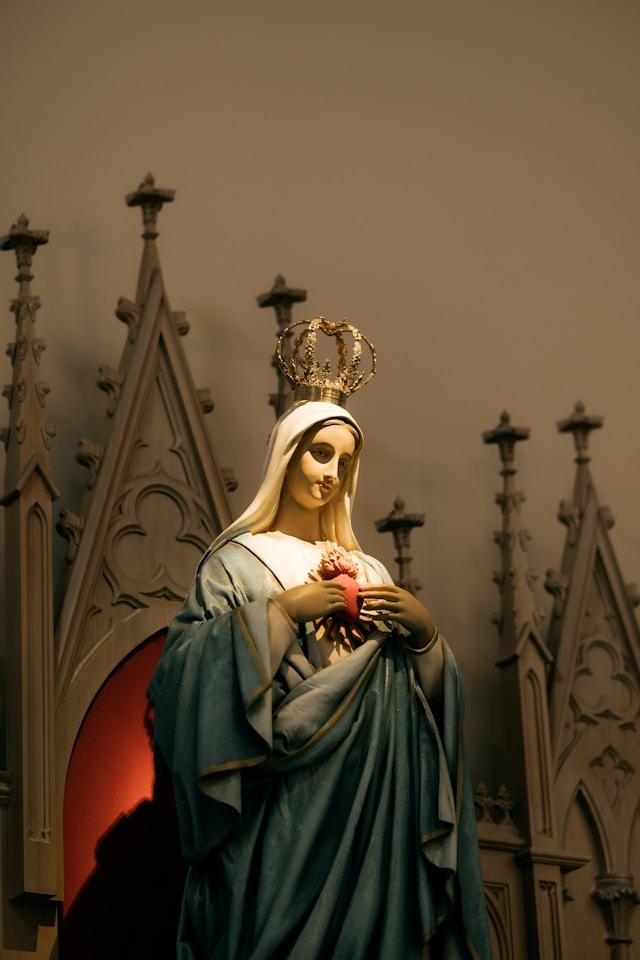
The act symbolically entrusts Zimbabwe to Mary’s maternal protection, presenting her as a spiritual model of unwavering faith, hope, courage, and love in times of adversity.
Mary as a Model for a Nation in Crisis
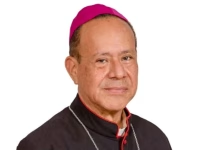
In his homily, ZCBC President Bishop Raymond Tapiwa Mupandasekwa underscored the spiritual rationale behind the consecration, describing the Blessed Virgin Mary as a fitting patroness for Zimbabwe. He called on the faithful to embrace her example of complete surrender to God.
“We gather today to consecrate ourselves to Mary, the Mother of God, whom the Bishops have identified as a worthy patron of Zimbabwe,” Bishop Mupandasekwa said.
He emphasized Mary’s enduring witness as one marked by both faith and resilience, pointing particularly to her presence at the foot of the Cross as a symbol of courage in the face of suffering.
“The act of surrender to God is indeed an imitation of this Holy Virgin,” the bishop explained. “She is a woman of great hope… a great sign of courage in a very difficult moment.”
A Message Tailored to Zimbabwe’s Reality
Bishop Mupandasekwa, who leads the Diocese of Masvingo, drew a direct connection between Mary’s example and Zimbabwe’s current realities. Acknowledging widespread economic pressures and social strain, he stressed that the country stands in need of precisely the virtues Mary embodies.
“In the time in which we are living, we need the courage that comes with hope,” he said. “Indeed, in difficult times, we need the courage to stand.”
The bishop openly addressed the hardships many Zimbabweans face, including unemployment and the daily struggle to meet basic needs. “Life is very hard without jobs, struggling to make ends meet,” he acknowledged, noting that many continue to carry heavy responsibilities despite these burdens.
Rooted in Tradition and Global Marian Devotion
The consecration also reflects deep roots in Catholic tradition. Bishop Mupandasekwa recalled the Church’s long-standing recognition of Mary’s maternal role, beginning with Christ’s words on the Cross entrusting Mary to the beloved disciple.
“The Church remembers that we have a mother,” he said, referencing centuries of theological reflection, including the Council of Ephesus, which formally affirmed Mary as the Mother of God.
He also drew parallels with the Marian apparitions at Fatima, where Mary called for the consecration of nations as a path to spiritual renewal. According to the bishop, such acts are understood as invitations to seek divine grace through Mary’s intercession.
“She asks that we consecrate ourselves… families, countries, and peoples to her Immaculate Heart so that they enjoy the special favor of her intercession,” he explained.
A Journey Prepared in Prayer
The June 10 consecration followed a nine-day novena, during which Catholics across Zimbabwe prayed for protection, guidance, and a path forward amid ongoing challenges.
“We have been praying… that we too may be protected, may be inspired, and may be shown a way out of the many challenges that we face in our times,” Bishop Mupandasekwa said.
This period of spiritual preparation underscores the collective dimension of the act—moving beyond symbolic gesture into a lived commitment by the faithful.
A Prayer for Unity, Peace, and Renewal
During the Mass, the bishops offered a formal prayer of consecration entrusting Zimbabwe’s future to Mary. The prayer expressed a longing for peace, unity, and renewed hope.
“Mother Mary, we now desire to welcome you in our lives and our country,” they prayed. “At this hour, weary and distraught, we stand with you beneath the cross.”
The bishops voiced both the anxieties and aspirations of the nation, entrusting “the needs and expectations of us all, and all our anxieties and hopes” to Mary’s care.
Drawing inspiration from Mary’s fiat—her acceptance of God’s will at the Annunciation—they also prayed for deeper communion among Zimbabwe’s people.
“Our Lady of the Fiat… restore among us the harmony that comes from God,” they continued. “Help us now to foster the growth of communion.”
Establishing a National Marian Feast
In a further institutional step, the bishops designated January 1—the Solemnity of Mary, Mother of God—as the official annual feast day celebrating Mary as Patroness of Zimbabwe.
This move ensures that the consecration is not a one-time act but an enduring element of the country’s spiritual identity, reinforcing annual reflection on the themes of faith, unity, and hope.
A Nation Entrusted to Hope
The consecration of Zimbabwe to the Immaculate Heart of Mary stands as both a spiritual declaration and a pastoral response to national hardship. By invoking Mary as a guiding figure, the country’s Catholic leadership is calling for renewed moral courage and collective resilience.
At its heart, the initiative reflects a belief that even amid economic uncertainty and social strain, faith and unity remain powerful forces for transformation.
- Raju Hasmukh with files from ACI Africa