












Mexico debates euthanasia legalization as Church opposition grows, citing family values, while public support and activist momentum increase.
Newsroom (01/05/2026 Gaudium Press) Mexico is facing a renewed and deeply polarizing debate over euthanasia as a proposed bill gains traction in the Senate, prompting strong opposition from the Catholic Church and mobilization among its followers.
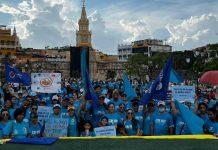
On April 25, at least 2,000 demonstrators gathered in Mexico City for the 15th Mexican March for Life. Participants protested both the decriminalization of abortion in the capital nearly two decades ago and the possible legalization of euthanasia. The Archdiocese of Mexico City had urged Catholics to attend through an editorial in its publication Desde la Fe, framing abortion, euthanasia, and suicide as “plagues” masked as responses to human suffering.
While the Church emphasized compassion for those enduring hardship, it reiterated its stance against ending life. “We do not judge those who resort to any of these options,” the editorial noted, stressing the need to support vulnerable individuals, including the sick and emotionally distressed.
At the center of the legislative push is activist Samara Martinez, 31, who introduced the “Ley Trasciende por una muerte digna en México” in the Senate last year. Martinez, who suffers from multiple incurable illnesses and undergoes daily 10-hour hemodialysis sessions after two failed kidney transplants, has become a prominent voice in the movement.
Her proposal has garnered support from 128,000 citizens and 2,000 healthcare professionals. During an April 23 Senate conference, lawmakers and civil society representatives debated the initiative. Senator Emmanuel Reyes Carmona of the ruling Morena party said that most legislators support the bill and cited research suggesting that 70 percent of Mexicans favor euthanasia.
The proposed legislation would require requests for euthanasia to be submitted jointly by the patient and their family. Each case would then be reviewed by a bioethics committee. Importantly, the bill does not exclude palliative care, allowing it to coexist with assisted death.
Previous attempts to legalize euthanasia in Mexico have failed, most recently in 2023. However, momentum in the region has shifted. Colombia legalized assisted suicide in 2022, and Ecuador approved euthanasia in 2024.
Despite growing political support, Church leaders argue that the cultural reality in Mexico does not align with the bill’s assumptions. Father Alejandro Alvarez of the National Life Pastoral Ministry said that Mexican society traditionally prioritizes caring for elderly and sick relatives.
“The atmosphere in the country is not favorable to it,” Alvarez said, emphasizing that patients who request euthanasia often feel abandoned rather than inherently desirous of death. He questioned the concept of a “dignified death,” arguing that suffering is a natural part of life and that society has failed to instill values that address it meaningfully.
The Church has also called for greater attention to palliative care, which it sees as a humane alternative. Sister Susana Lúa, a physician and palliative care specialist in Guadalajara, highlighted critical gaps in access.
“Only 1.5 percent of Mexicans in need currently have access to palliative care,” she said. Public services often lack sufficient resources, and many facilities claiming to provide such care fall short.
Lúa, a founding member of the Catholic NGO Juntos Contra el Dolor, noted that her organization has treated 12,000 patients over 13 years. She argued that expanding palliative care would not require significant investment but is hindered by a lack of awareness and infrastructure.
She described how untreated pain often drives euthanasia requests. In her experience, patients frequently reconsider once their pain is properly managed. “As soon as they began taking pain medication, they stopped requesting death,” she said.
Lúa warned that the absence of adequate care risks making euthanasia appear as the only solution. She also criticized what she described as a broader “utilitarian” mindset shaping public attitudes, where human worth is increasingly judged by perceived usefulness.
As lawmakers continue deliberations, Mexico’s euthanasia debate reflects a deeper societal divide—between expanding individual autonomy at the end of life and preserving long-standing cultural and religious values centered on care, suffering, and dignity.
- Raju Hasmukh with files from Crux Now
Related Images: