
















Jakarta Cathedral marks 125 years as a symbol of faith, heritage, and interfaith harmony, standing beside Istiqlal Mosque in Indonesia’s capital.
Newsroom (30/04/2026 Gaudium Press) On April 21, the Archdiocese of Jakarta marked a historic milestone: the 125th anniversary of the Cathedral of St. Mary of the Assumption. The celebration unfolded with a solemn Mass and a series of commemorative events, underscoring the enduring significance of the Neo-Gothic landmark in Indonesia’s capital.
Designed by Dutch Jesuit priest Antonius Dijkmans and constructed under the direction of Marius Hulswit, the Cathedral traces its origins to the turn of the 20th century. Its foundation stone was laid in 1899, and it was solemnly blessed in 1901. More than a century later, the structure continues to stand as the spiritual heart of Catholic life in Jakarta.
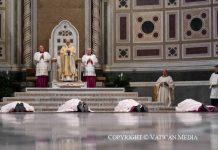
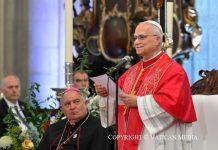
The anniversary Mass was presided over by Cardinal Ignatius Suharyo Hardjoatmodjo, Archbishop of Jakarta. Following the liturgy, a ceremonial cutting of tumpeng—a traditional cone-shaped rice dish symbolizing gratitude and blessing—brought a distinctly Indonesian cultural dimension to the celebration. The event reflected not only religious devotion but also the integration of local traditions into Catholic life.
An exhibition inaugurated alongside the festivities offered visitors insight into the Cathedral’s current condition and ongoing conservation initiatives. The building’s historical and cultural importance was formally recognized in 2018, when Indonesia’s Ministry of Education and Culture declared it a site of historical patrimony.
Standing prominently opposite the Istiqlal Grand Mosque, the largest mosque in Southeast Asia, the Cathedral occupies a unique position in Jakarta’s urban and symbolic landscape. The two houses of worship, separated only by a busy avenue, have come to represent Indonesia’s commitment to religious coexistence.
This connection is set to deepen through the “Friendship Tunnel,” a project approved in 2020 that will physically link the Cathedral and the mosque. The tunnel is envisioned as a powerful symbol of interreligious dialogue in a country that is home to the world’s fourth-largest population.
The Istiqlal Mosque itself carries a parallel narrative of unity. Built between 1961 and 1978, it was designed by Friedrich Silaban, a Christian architect, further reinforcing the shared spirit of collaboration across faith traditions.
The Cathedral’s anniversary celebrations will continue into May, with an architecture seminar titled “Walk and Talk on Heritage: Jakarta Cathedral” scheduled for May 1. Organized in collaboration with the Indonesian Institute of Architects, the event will bring together experts including architect Gregorius Yori Antar and academic Johannes Wibowo to explore the site’s architectural and cultural legacy.
As Jakarta Cathedral enters its second century, it remains more than a place of worship. It stands as a testament to Indonesia’s layered history, its architectural heritage, and its ongoing commitment to fostering dialogue and harmony among diverse religious communities.
- Raju Hasmukh with files from Zenit News
Related Images: