














King Felipe VI assumes the ancient title of Proto-Canon at Rome’s Santa Maria Maggiore, reaffirming centuries of Spain–Vatican ties.
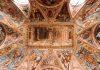
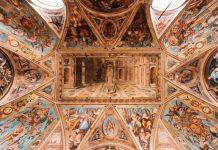
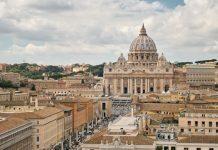
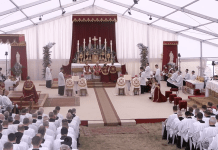
Newsroom (20/03/2026 Gaudium Press )In a ceremony steeped in ritual and history, King Felipe VI of Spain was formally installed on March 20, 2026, as honorary Proto-Canon of the Papal Basilica of Santa Maria Maggiore in Rome — reaffirming a royal prerogative linking the Spanish Crown and the Vatican for more than four centuries. The event, held inside the Liberian Basilica, followed a meticulously traditional protocol of prayer, readings, and symbolic induction.
Presided over by Cardinal Rolandas Makrickas, Archpriest of the Basilica, the ceremony gathered members of the Spanish delegation and numerous ecclesiastical dignitaries. Queen Letizia accompanied the sovereign, underscoring the institutional significance of the visit, which also included an earlier private audience with Pope Leo XIV at the Apostolic Palace.
A bond older than empire
The title of Proto-Canon, although purely ceremonial, carries deep symbolic weight. By ancient privilege, the King of Spain is considered the first canon of Santa Maria Maggiore — a title dating back to 1603, when King Philip III accepted the Chapter’s invitation to be protector of the Basilica. Since then, the Spanish monarchy has endowed the church through artistic commissions and pious works, such as the reliquary of the Holy Cradle given by Queen Margaret of Austria, and the bronze statue of Philip IV sculpted by Gian Lorenzo Bernini, which still greets pilgrims at the portico.
Pope Pius XII’s 1953 bull Hispaniarum fidelitas reaffirmed this centuries-old spiritual alliance, praising “the bonds of piety and devotion” between Spain and the Basilica. To this day, the Liberian Chapter celebrates three annual Masses for the Spanish people and their Head of State — on May 30 (Saint Ferdinand Alfonso), August 15 (Assumption of Mary), and December 8 (Immaculate Conception).
A ceremonial act, a political backdrop
In his address, King Felipe VI called for “clarity, harmony, and commitment to the common good,” aligning his words with the representative nature of his new title. Though solemn and ecclesiastical in tone, the moment unfolded against a nuanced political backdrop.
In recent years, Felipe VI’s reign has been marked by efforts to navigate Spain’s shifting moral and political currents. His endorsement of the 2022 Organic Law 4/2022, which criminalized harassment around abortion clinics, and his 2025 UN speech supporting “sexual and reproductive rights,” reflected his government’s liberal stance on gender and social issues. This mirrors, to some observers, a modern echo of Emmanuel Macron’s acceptance of a similar honorary canonry at Rome’s Lateran Basilica, a French prerogative dating to the reign of Henry IV of Bourbon.
Tradition alive amid modern tensions
Despite political debate at home, the monarch’s Roman ceremony reaffirmed the continuity of a tradition that merges faith, diplomacy, and identity. With this act, King Felipe VI joins his forebears in maintaining a bridge between Spanish monarchy and the Vatican — a symbolic continuity that, amid a rapidly changing Europe, lends the Crown both historical depth and moral gravitas.
- Raju Hasmukh with files from Infovaticana and Vatican.va
Related Images: