








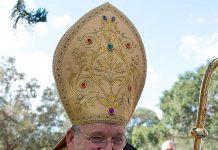
Cardinal Victor Fernández defends Pope Leo XIV’s continuity with Francis’s teachings, urging humility and openness to the Holy Spirit.
Newsroom (16/04/2026 Gaudium Press ) A year after the passing of Pope Francis, the Vatican is not standing still. “It’s dishonest to say Leo wants to erase him,” declared Cardinal Victor Manuel Fernández, Prefect of the Dicastery for the Doctrine of the Faith, speaking to Il Giornale. Fernández’s remarks directly address commentators suggesting that Pope Leo XIV’s leadership signals a departure from Francis’s vision. On the contrary, he insists, Leo is carrying forward that legacy shaped by humility, mercy, and spiritual authenticity.
Every pontificate, Fernández noted, carries its own rhythm and style, yet continuity — rather than rupture — characterizes the present transition. “Leo and Francis have much in common; instead of constructing contrasts, we should recognize their complementarity,” he said.
A Memory of Francis and the Lesson of Humility
Next week marks the first anniversary of Pope Francis’s death, and Fernández recalled a poignant final encounter. “He looked at me, smiled, and repeated a phrase he had said before at decisive moments: ‘Humble yourself and trust.’” That simple exhortation, Fernández explained, captured the essence of Francis’s theological and pastoral approach — to renounce pride and allow God to work through humility.
Reflecting on Francis’s twelve-year pontificate, Fernández remembers their first conversation after Francis was elected: “His first words were: ‘I am Bergoglio.’ It may seem trivial, but it says much about his humility.” That unassuming tone became the thread connecting Francis’s reforms: preaching love from the heart, applying the hierarchy of truths to every act of evangelization, and condemning the death penalty despite resistance from some traditionalist factions.
Pope Leo’s Continuity and Commitment
Far from dismantling Francis’s teachings, Pope Leo XIV has taken deliberate steps to renew them. Before the consistory, Leo asked the cardinals to reread Evangelii Gaudium and reflect on its relevance today. He also convened bishops to revive the pastoral implementation of Amoris Laetitia, a landmark text on family life and mercy. “These are signs that help us realize that Francis is not dead in the water,” Fernández said, emphasizing that the new papacy continues to nurture the seeds Francis planted.
Some voices within the Church have labeled Leo’s pontificate as the end of the “Bergoglian era.” Fernández rejects that claim: “Every new Pope reaps the fruits of his predecessor and works for the good of the Church, moving forward.” His assessment is clear — Leo is not erasing Francis but embodying a different brushstroke on the same canvas.
The Challenges of Faith in a Distracted Age
Amid rapid cultural change, Fernández acknowledges that the Church faces not rejection but irrelevance. “Many do not reject faith but consider it unnecessary,” he said. The solution, he argues, lies in rediscovering meaning through shared human experience — dissatisfaction, emptiness, and the longing for brotherhood — and inviting every person to encounter Christ’s friendship that gives life purpose and love.
Today’s crisis of faith, Fernández observed, is less about doctrine and more about distraction. “We live in a world of excessive noise, but sooner or later, we’ll tire of superficiality.” This is why parish life must become “a community filled with charisms,” where each person finds freedom and joy in diversity and communion.
The Unpostponable Choice: Freedom in the Spirit
As the Church charts its future, Fernández concluded with a call that echoes the very lesson Francis left behind. “We must let ourselves be guided by the Holy Spirit without fear or resistance,” he said. True renewal demands openness from all sides — conservatives and progressives alike — letting go of rigid attachments and ideological patterns. That, Fernández insists, is the real test of Christian freedom.
A year after Francis’s death, his words still resound: Humble yourself and trust. And in that humility, Vatican leaders like Leo XIV and Fernández seem determined to prove that legacy was never buried — only transformed, alive in the quiet work of faith and continuity.
- Raju Hasmukh with files from Il Giornale
Related Images: