










Pope Leo XIV calls Equatorial Guinea’s leaders to uphold justice, reject exclusion, and guide development toward dignity and the common good.
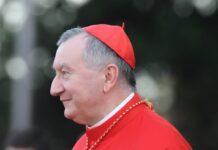
Newsroom (21/04/2026 Gaudium Press )In his first public address during an Apostolic Journey to Equatorial Guinea, Pope Leo XIV delivered a pointed appeal to the nation’s political leadership, urging a renewed commitment to justice, inclusion, and human dignity in the pursuit of development.
Speaking in Malabo before political authorities, civil society representatives, and members of the diplomatic corps, the Pope framed his message as both pastoral and political, rooted in Catholic social teaching and attentive to the realities of a country undergoing rapid transformation.
After a formal welcome from President Teodoro Obiang Nguema Mbasogo, Pope Leo invoked the words of Pope John Paul II, who in 1982 described the head of state as “the symbolic centre to which the living aspirations of a people converge.” That vision, he said, remains a living challenge for leaders entrusted with public responsibility, particularly in fostering a climate of liberty, justice, and respect for human rights.
Drawing from the Second Vatican Council’s Gaudium et Spes, the Pope underscored the Church’s solidarity with the human condition, noting that “the joys and hopes, the grief and anguish of the people of our time” are shared by believers. His visit, he explained, was intended to strengthen faith while offering consolation to a population navigating social and economic change.
A central theme of the address emerged through the thought of Saint Augustine, whose distinction between the “city of God” and the “earthly city” served as a moral lens. The Pope described the former as grounded in unconditional love, while the latter is driven by pride, self-interest, and the pursuit of power—forces he warned ultimately lead to destruction. He challenged his audience to consider which vision should guide both personal conduct and public policy.
The symbolic weight of Equatorial Guinea’s planned capital, Ciudad de la Paz, or “City of Peace,” featured prominently in his remarks. The Pope suggested that such a name should inspire ethical reflection, cautioning that political life must not be driven by “the pursuit of unjust wealth and the illusion of dominion,” but rather by values that endure beyond immediate gain.
While affirming the autonomy of nations, Pope Leo highlighted the role of the Church’s social teaching in offering moral criteria for governance. Each generation, he said, faces new challenges that demand careful discernment and principled leadership.
Turning to global dynamics, the Pope warned that exclusion has become “the new face of social injustice,” pointing to widening inequality between elites and the broader population. He described a stark paradox: the coexistence of technological access—including mobile phones and artificial intelligence—with persistent shortages of land, food, housing, and dignified work.
He called on leaders to dismantle barriers to “integral human development,” emphasizing solidarity and the universal destination of goods. Particular concern was raised over the exploitation of natural resources, where economic and technological advances risk undermining environmental protection, local communities, labor rights, and public health.
Echoing the late Pope Francis, whose death he marked as occurring one year prior, Pope Leo reiterated a stark warning against “an economy of exclusion and inequality,” stating plainly that “such an economy kills.” He also linked contemporary armed conflicts to the exploitation of oil and mineral resources, often in disregard of international law and the self-determination of peoples.
The misuse of technology for military purposes formed another key concern. Without a shift in political responsibility, he warned, “the destiny of humanity risks being tragically compromised.” He urged respect for international institutions and cautioned against invoking God’s name to justify violence or destructive policies.
In closing, the Pope turned his attention to the country’s youth, describing Equatorial Guinea as a young nation with the potential to form “free and responsible consciences.” He encouraged leaders to embrace what he called “countercurrent politics” centered on the common good and to invest in an “educational pact” that offers young people both space and trust to shape the future.
The visit concluded with Pope Leo signing the Book of Honor alongside President Obiang, marking a symbolic gesture at the end of an address that combined moral exhortation with a clear call for structural change.
- Raju Hasmukh with files from Vatican News
Related Images: