










Archbishop Guido Pozzo calls for Gregorian chant’s revival in the Roman liturgy, underscoring Latin, unity, and sacred music.
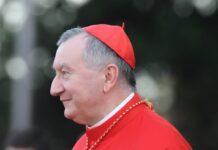
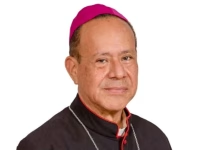
Newsroom (09/06/2026 Gaudium Press ) Gregorian chant, described as “essentially and simply prayer,” must once again occupy the central place reserved for it by the Second Vatican Council in the Roman liturgy. This is the conviction of Archbishop Guido Pozzo, superintendent of the Economy of the Choir of the Pontifical Sistine Chapel, expressed in a recent interview with AdVaticanum.
A veteran of the Roman Curia and former secretary of the Pontifical Commission Ecclesia Dei (2009–2019), Pozzo brings decades of doctrinal and liturgical experience to his reflections. During his tenure, he served as the Vatican’s principal interlocutor with the Society of Saint Pius X, overseeing doctrinal discussions that followed the lifting of excommunications by Pope Benedict XVI in 2009. Though those talks ultimately stalled on key theological questions, Pozzo’s involvement placed him at the center of contemporary debates on tradition and reform within the Church.
A Musical Tradition at the Heart of Evangelization
At the core of Pozzo’s vision lies the role of sacred music in evangelization. He highlights the Pontifical Musical Chapel—commonly known as the Sistine Chapel Choir—as a centuries-old guardian of the Church’s musical heritage, rooted in the ancient Schola Cantorum. Since Pope Francis’ 2019 motu proprio, the choir has operated under the Office for the Liturgical Celebrations of the Supreme Pontiff, with responsibility for overseeing music at papal liturgies.
Beyond the Vatican, the choir performs internationally, bringing Gregorian chant and classical polyphony to diverse audiences. According to Pozzo, this outreach carries the Christian message “even to peoples and cultures far removed from the Christian tradition,” demonstrating how sacred music transcends linguistic and cultural boundaries.
He notes that Pope Leo XIV shares this perspective, showing particular sensitivity to the evangelizing power of sacred music. In continuity with his predecessors, the Pope recognizes its capacity to communicate the faith not only through words but through beauty and contemplation.
Reviving Participation Through Chant
Pozzo also commends contemporary initiatives aimed at reintroducing Gregorian chant to the faithful. Among them is Cantiamo con il Papa (“Let’s Sing with the Pope”), launched in May 2025 by the Pontifical Institute of Sacred Music. Through social media tutorials, the project teaches simple chants of the Mass—such as the Gloria, Pater Noster, and Agnus Dei—to encourage broader participation.
He describes the initiative as “more than commendable,” emphasizing its dual purpose: making the Church’s musical patrimony accessible and fostering active participation in liturgical celebrations. For Pozzo, this effort aligns with the deeper spirit of the liturgy, where participation involves not only external action but interior engagement.
Gregorian Chant and the Sacred Character of Worship
Pozzo is unequivocal about the privileged status of Gregorian chant. Citing Sacrosanctum Concilium (n. 116), he stresses that it is “the proper chant of the Roman liturgy” and must hold the principal place. Its defining quality, he explains, lies in its nature as pure prayer—music directed entirely toward God, expressing adoration and faith.
Alongside chant, he calls for a renewed appreciation of sacred polyphony, whose artistic and spiritual richness remains an integral part of the Church’s heritage. Both forms, he argues, contribute to restoring the liturgy as the highest expression of worship.
Latin as a Sign of Unity
A key element of Pozzo’s vision is the preservation of liturgical Latin. While not advocating its universal imposition, he suggests incorporating Latin texts into parts of Masses celebrated in vernacular languages. More significantly, he proposes that every diocese offer at least one Sunday Mass in Latin, according to the Novus Ordo, accompanied by Gregorian chant.
For Pozzo, Latin serves as a unifying language in a global Church. Drawing on the thought of Father Luigi Taparelli, he argues that abandoning a universal language risks undermining ecclesial unity. Far from being “dead,” Latin continues to provide theological precision and a sense of solemnity that elevates the liturgical experience.
Bridging the Divide Between Liturgical Forms
A substantial portion of the interview addresses the relationship between the Novus Ordo (the post–Vatican II Roman Rite) and the Vetus Ordo (the preconciliar liturgy). Pozzo rejects the notion that these forms are opposed or irreconcilable, urging a departure from what he calls “ideological cages.”
While affirming the Novus Ordo as the Church’s ordinary form, he recognizes the value of the ancient rite in highlighting certain doctrinal aspects that may be obscured in poorly celebrated liturgies. He insists that Vatican II’s reform should be understood not as a rupture but as a renewal in continuity with tradition.
Addressing a “Collapse of the Liturgy”
Invoking the words of Cardinal Joseph Ratzinger, later Pope Benedict XVI, Pozzo points to a broader crisis rooted in what he describes as a “collapse of the liturgy.” He identifies several imbalances in contemporary practice: an overemphasis on the communal meal at the expense of sacrifice, excessive focus on social participation over transcendence, and diminished attention to the ministerial priesthood.
Importantly, he attributes these issues not to the liturgical texts themselves but to their implementation and the formation of clergy and laity. True participation, he emphasizes, is not merely external activity but includes silence and contemplative engagement.
A Call for Unity and Renewal
Pozzo concludes by echoing Pope Leo XIV’s call for unity within the Church. The Pope has urged bishops to avoid marginalizing those attached to the older liturgical form, provided they accept the teachings of Vatican II and remain in communion with the Church.
Ultimately, Pozzo insists that the heart of the matter is not language or ritual form but the capacity of the liturgy to inspire awe before God. The renewal of the Church, he argues, depends on rediscovering the liturgy as a source of faith—an encounter with the divine that leads believers to a deeper, more centered Christian life.
In this vision, Gregorian chant stands not as a relic of the past but as a vital expression of living faith—one that, if restored to its rightful place, could help reawaken the spiritual depth of Catholic worship.
- Raju Hasmukh with files from INfocatholica
Related Images: