

























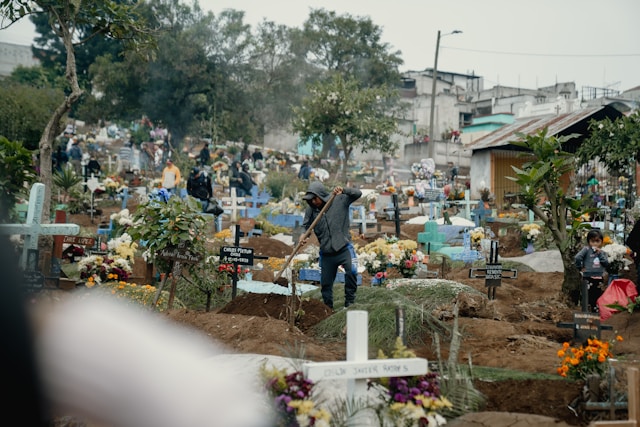
Burial disputes in Odisha raise urgent questions about religious freedom, dignity in death, and whether constitutional rights endure beyond life.
Newsroom (25/07/2026 Gaudium Press ) There is a troubling pattern emerging from parts of Odisha: Christian families finding themselves forced to negotiate for the right to bury their dead.
These are not disputes over land ownership, cemetery capacity, or administrative procedure. Instead, they center on faith itself. Families are reportedly being told they must renounce Christianity before being allowed access to common burial grounds. In some cases, they are instructed to take the body elsewhere. In others, funeral rites are delayed or restricted. Such scenes raise uncomfortable questions about the state of religious freedom and equality in a nation that defines itself as a democracy committed to pluralism.
At its most basic level, a burial asks for relatively little. It requires a place of rest, a moment of communal grief, and the opportunity to honor the beliefs of the deceased. Yet even these modest expectations have become contested in some communities.
One case that drew attention occurred in February in Kapena village in Odisha’s Nabarangpur district. Ayush Santa, a 13-year-old boy who died from kidney failure, became the focus of a dispute after villagers reportedly opposed his burial in the common cemetery unless his family renounced Christianity. Despite the deployment of more than 40 police officers, the standoff remained unresolved. Ultimately, the boy was buried on family-owned land after relatives agreed to forgo a Christian funeral ceremony.
The human reality behind such incidents is difficult to ignore. Legal arguments, political debates, and community tensions can often obscure the personal dimension of these conflicts. In this instance, a grieving family found itself negotiating the conditions under which it could bury a child. That reality transforms an abstract discussion about rights into a deeply personal question about dignity, grief, and belonging.
When families are told they must wait, conceal their religious identity, or surrender important elements of a funeral ritual, the consequences extend beyond the immediate dispute. What is challenged is not merely access to a cemetery but the principle that every individual retains equal worth and respect through life’s final moments.
India’s Constitution does not specifically mention burial rights. However, constitutional protections provide a framework through which such issues can be understood. Article 21 guarantees the right to life, a provision that the Supreme Court has interpreted broadly to include dignity. Over time, that understanding has expanded beyond the circumstances of daily living to encompass dignity in death as well.
Religious freedom protections further strengthen the case. Article 25 safeguards the freedom to profess and practice one’s faith, while Article 26 protects the rights of religious communities to manage their own affairs. Funeral rites are deeply connected to both provisions. For many believers, the manner in which the dead are honored is not a peripheral custom but a central expression of faith.
From this perspective, preventing a Christian family from conducting a burial according to its beliefs is not merely a local disagreement. It becomes a challenge to rights protected under the constitutional framework itself.
Supporters of restrictive practices often point to village traditions or locally adopted resolutions. Appeals to custom are frequently presented as justification for limiting access to communal burial grounds. Yet Indian law has long maintained that customs cannot override statutory protections or fundamental rights. Tradition may carry social authority, but it does not possess unlimited legal force.
The tension between custom and constitutional values therefore lies at the heart of these disputes. While communities have a legitimate interest in preserving local identities and traditions, those interests must be balanced against the rights guaranteed to every citizen. A burial ground maintained for a community cannot become a mechanism for excluding people on the basis of faith.
Beyond the legal dimension lies another issue that is equally significant: the religious meaning of burial itself. For Christians, burial is not simply a logistical necessity following death. It is a deeply symbolic act rooted in spiritual belief. It reflects the conviction that the human body possesses enduring significance and that death is accompanied by hope, including belief in resurrection.
When that rite is interrupted or denied, families often experience more than inconvenience. They may perceive the refusal as a rejection of their identity and faith at their most vulnerable moment. Grief becomes intertwined with exclusion.
Yet the broader debate need not be framed as a clash between constitutional law and religious doctrine. In many respects, the two principles reinforce one another. Constitutional protections create the space in which citizens can freely practice their beliefs, while religious traditions provide meaning within that protected space. Together, they affirm a simple proposition: human dignity should not depend on religious affiliation, nor should it disappear at death.
Addressing these disputes does not require communities to abandon their traditions. Rather, it requires practical measures that ensure equal treatment. Accessible and religiously neutral burial spaces, clear rules prohibiting discrimination in cemetery access, and proactive intervention by civic and religious leaders could help prevent conflicts before they escalate.
The importance of prevention is underscored by experiences beyond Odisha. Last year, a burial dispute involving Chhattisgarh resident Subhash Baghel drew national attention when legal proceedings delayed his burial for weeks. His body remained in a mortuary while family members pursued legal remedies. Ultimately, burial took place at an alternative site some 40 kilometers away.
The case demonstrated a difficult truth: even when legal remedies exist, they often arrive after the most painful moment has already passed. A family may eventually secure a favorable decision, but no court order can restore lost time, alleviate prolonged grief, or undo the emotional damage caused by a dispute over a loved one’s final resting place.
What is ultimately being tested in Odisha is not the claim of any single religious community. The larger question is whether constitutional guarantees remain meaningful when they become inconvenient. Rights are most significant when they protect minorities, unpopular groups, or those with little social power.
A diverse democracy cannot afford to allow its commitment to pluralism to collapse at the graveside. The strength of democratic institutions is measured not by how they treat the powerful but by how they safeguard those at their most vulnerable.
Few moments reveal vulnerability more clearly than the act of burying a loved one.
When a family is allowed to carry out that final act in peace, it affirms a basic promise of citizenship: that dignity and equality endure to the very end. When that opportunity is denied, the promise is weakened.
If India’s constitutional principles and religious freedoms are to coexist as intended, then no family in Odisha, or anywhere else in the country, should have to plead for the right to say goodbye.
- Raju Hasmukh with files from UCA News
Related Images: