

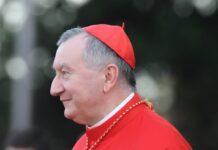





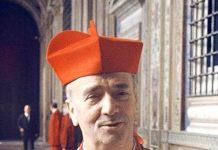

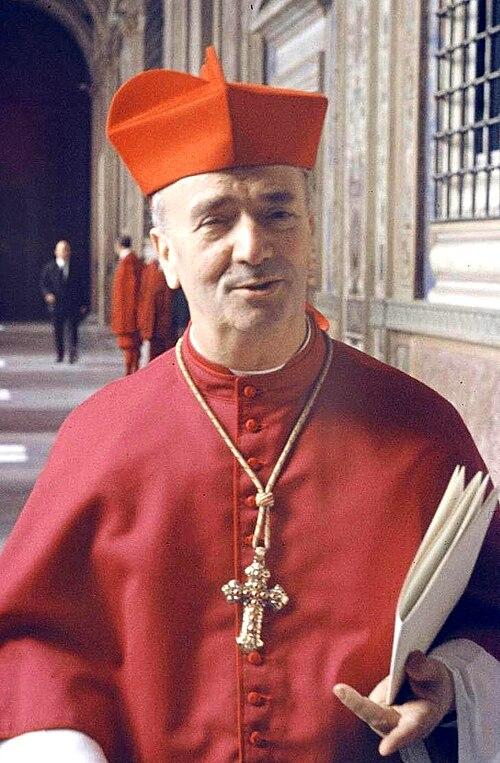
A detailed look at Cardinal Alfredo Ottaviani, his vision of the Church, and his pivotal role in the dramatic tensions of Vatican II.
Newsroom (23/07/2026 Gaudium Press) There are books that deserve to be read, and there are books whose titles encapsulate an entire worldview. Il Baluardo (The Bulwark), published by Cardinal Alfredo Ottaviani in 1961, belonged unmistakably to the latter category. The title itself revealed a vision of the Church as a fortress, tasked with protecting truth against the perceived dangers of the modern age. Within its pages, Ottaviani offered a striking image of the spiritual crisis he believed threatened contemporary society: “The atomic bomb creates a less atrocious desert than the one created by the prevailing doctrine of a godless society: there is a Sahara of the Spirit, as well as a material Sahara.”
The statement appeared just one year before the opening of the Second Vatican Council. In retrospect, it served as both diagnosis and manifesto. For Ottaviani, the Church’s primary mission was not adaptation but defense. Communism, moral relativism, and the currents associated with the “new theology” represented challenges that demanded vigilance. Orthodoxy, discipline, and suspicion of modernist tendencies formed the pillars of his ecclesiastical outlook.
Soon afterward, Pope John XXIII would introduce a dramatically different image for the Church, speaking of opening windows and allowing fresh air to enter. The history of Vatican II can, in many ways, be understood through the tension between these competing visions: walls constructed to preserve certainty versus windows opened to engage the world.
Born in 1890 into a modest family in Rome’s Trastevere district, Ottaviani rose through the ranks of the Church thanks to exceptional intelligence, a remarkable memory, and a formidable work ethic. His abilities earned admiration even from ideological opponents. By 1959, he had become head of the Holy Office, the Vatican institution responsible for safeguarding Catholic doctrine.
To supporters, he was a guardian of the faith. To critics, he represented the embodiment of ecclesiastical control. He became one of the most recognizable faces of the pre-conciliar Church, a Church often characterized by its legal precision, institutional cohesion, and defensive posture toward modernity. Few personal mottos summarized a worldview so completely as Ottaviani’s episcopal motto: Semper idem — “Always the same.” As a statement of fidelity to the Gospel, it possessed a certain nobility. As a historical program, however, it revealed the limits of a vision reluctant to embrace change.
When John XXIII announced the Council, Ottaviani could not stop it. Instead, he sought to shape it before it began. As president of the Preparatory Theological Commission, often referred to as the Suprema, he oversaw the drafting of theological schemas intended to guide the Council’s deliberations. These texts were carefully prepared and reflected the established theological frameworks that had dominated Catholic teaching for decades.
Yet Vatican II was not convened simply to ratify existing positions. In November 1962, many bishops, particularly from Europe, judged the preparatory documents inadequate for addressing the realities of the contemporary world. They argued that the texts were overly defensive and lacked a meaningful capacity for dialogue. Opposition grew so intense that Pope John XXIII ordered the drafts withdrawn and reopened for revision.
The moment marked a turning point. For the Roman Curia, it was an unexpected challenge to its authority. For Ottaviani, it was likely a profound shock. The Council was beginning to move in a direction significantly different from the one he had anticipated.
No episode better symbolizes this transition than the famous incident involving a microphone in the Council Hall. During a particularly passionate intervention, Ottaviani exceeded his allotted speaking time. Cardinal Bernard Alfrink, who was presiding, activated the signal that automatically cut off the microphone.
Unaware that the amplification had ended, Ottaviani continued speaking. The assembly responded with a mix of applause, irony, and discomfort. The scene quickly entered Vatican folklore because it seemed to capture a deeper reality. The voice of the Holy Office was still speaking, but the Council had begun listening elsewhere.
Over time, the story evolved into a narrative of personal humiliation. Yet Ottaviani’s conduct throughout the Council suggests a far more resilient figure. He neither abandoned his convictions nor presented himself as a victim. He continued defending his positions with determination, believing that the stakes were nothing less than the integrity of Catholic doctrine.
His central fear was that modernization could become capitulation. Dialogue, he worried, might dilute doctrine. Religious freedom, in his judgment, risked contradicting earlier teachings. The Council’s majority, however, approached the issue differently. Their objective was not to reject tradition but to free it from what they considered unnecessary defensive barriers. Where many bishops saw an opportunity to renew the Church’s engagement with the modern world, Ottaviani often viewed a threat to continuity.
In that sense, Vatican II represented more than a series of doctrinal or pastoral reforms. It signaled a shift in the Church’s center of gravity. The emphasis moved from defense toward proclamation, from surveillance toward evangelization, and from fear of error toward confidence in the persuasive power of truth. The bulwark was not merely challenged; it was fundamentally reconsidered.
Despite his reservations about certain post-conciliar developments, Ottaviani never placed himself outside the Church’s communion. Unlike other figures who later became symbols of resistance to change, he did not establish protest groups, organize parallel movements, or lead a permanent opposition. He remained loyal to the institution he had served throughout his life, even as it evolved in ways he had strongly questioned.
Stories about him reflected both his reputation and the dramatic changes unfolding around him. One popular anecdote recounts how he fell asleep in a taxi on the way to the Vatican. The driver allegedly passed St. Peter’s and continued into the countryside. When Ottaviani awoke and protested, asking why they had not yet arrived at the Council, the driver reportedly replied: “I am taking you to the Council of Trent.” Whether factual or not, the story captured the widespread perception that Ottaviani belonged more naturally to an earlier era of Catholic history.
Another account, however, is genuine and occurred during tensions surrounding Pope Paul VI’s decision to reserve the question of birth control for his own consideration, removing it from the Council agenda. When an Indian bishop raised the issue nonetheless, Ottaviani intervened firmly. To reinforce his point, he reminded the assembly that he himself was the eleventh child of a deeply Catholic family and remarked that his mother would never have contemplated using the contraceptive pill.
From somewhere in the Council Hall came a single Latin response: Utinam — “If only.”
The remark, half humorous and half cutting, reflected the atmosphere of a Church engaged in one of the most significant debates of its history. At the center of those debates stood Alfredo Ottaviani: brilliant, uncompromising, deeply committed to the faith he believed he was protecting. He may not have prevailed in shaping Vatican II, but his presence illuminated the magnitude of the transformation underway. Through him, the Church’s struggle between preservation and renewal found one of its most memorable protagonists.
- Raju Hasmukh with files from https://www.avvenire.it/
Related Images: