












UN human rights chief Volker Türk urges Nicaragua to reveal Bishop Abelardo Mata’s whereabouts amid growing concerns over repression.
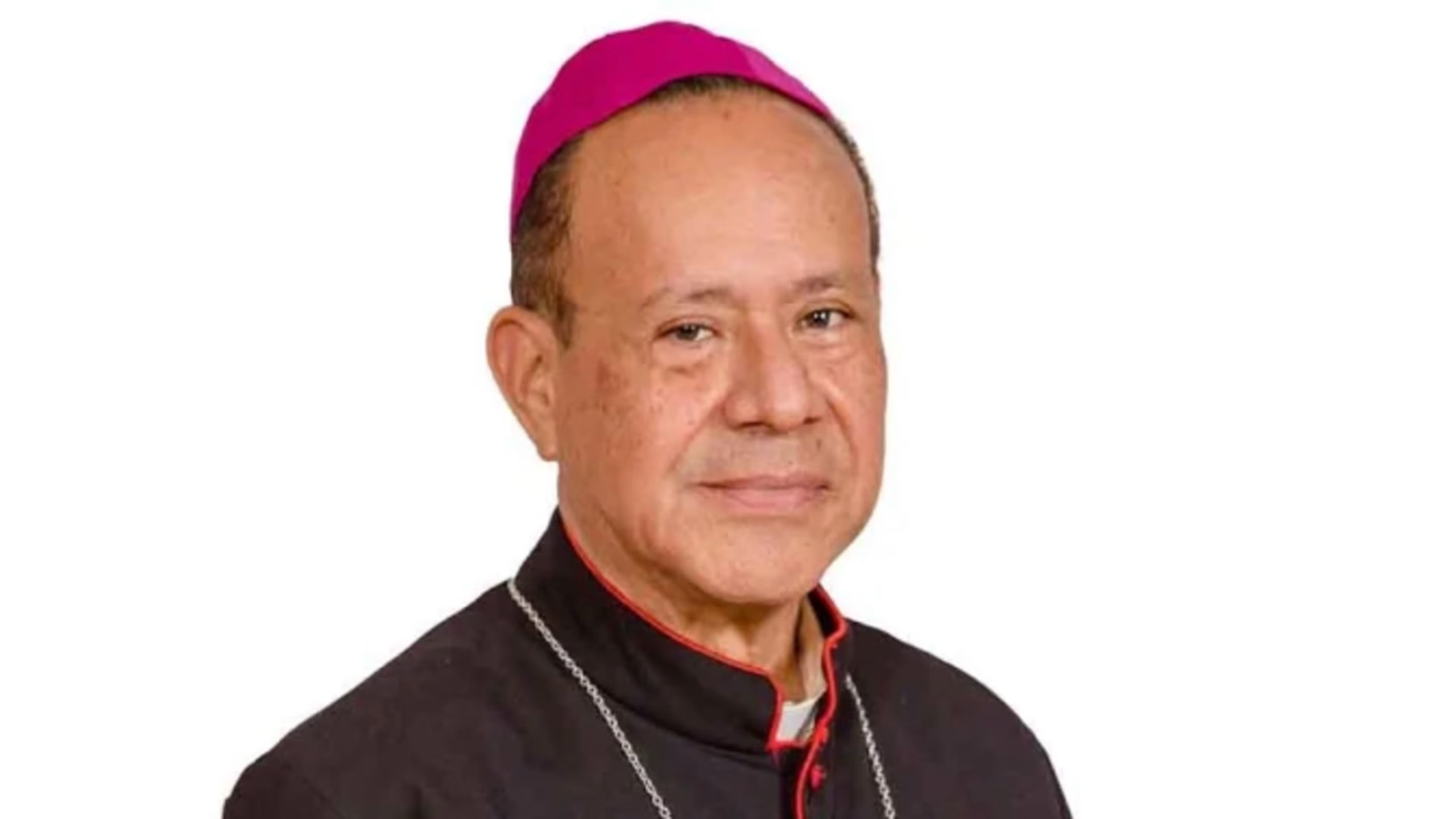
Newsroom (23/07/2026 Gaudium Press) The United Nations High Commissioner for Human Rights, Volker Türk, has called on Nicaragua’s authorities to provide immediate information regarding the whereabouts and condition of Bishop Abelardo Mata Guevara, an 80-year-old Catholic prelate whose location remains unknown following his detention at the end of June.
Speaking on July 22, Türk expressed concern over reports of increasing repression against the Catholic Church and other religious groups in Nicaragua, highlighting the absence of official information concerning the bishop’s fate.
“I am concerned about reports of repression against the Catholic Church and other religious denominations, including the lack of official information about the fate, whereabouts and state of health of Bishop Abelardo Mata Guevara, 80, who was detained on June 29,” Türk said, according to the Office of the United Nations High Commissioner for Human Rights.
The high commissioner also urged Nicaraguan authorities to release individuals who have been arbitrarily detained and to ensure that detainees are treated in accordance with international human rights standards.
“I urge the authorities to immediately release all those who have been arbitrarily detained and to ensure that all detainees are treated with humanity and dignity, in accordance with Nicaragua’s obligations under international human rights law,” he said.
Concerns Over Bishop’s Health and Disappearance
Bishop Mata, the Bishop Emeritus of Estelí, was reportedly arrested twice by police at the end of June after offering prayers for the persecuted Church in Nicaragua during a Mass celebrated on June 28.
Since then, uncertainty has surrounded his situation. Although the Nicaraguan government has indicated that the bishop is at his residence, no verifiable information regarding his condition or circumstances has been made public.
His disappearance has generated concern among regional Catholic leaders and human rights advocates, particularly because of his age and existing health conditions. The Episcopal Secretariat for Central America (SEDAC) has appealed to the government to allow Mata access to medical care.
The bishop suffers from diabetes, vision problems, and relies on a pacemaker due to a heart condition, making concerns over his wellbeing especially acute.
UN Raises Broader Concerns Over Democratic Freedoms
Türk’s remarks extended beyond the case of Bishop Mata, touching on what the United Nations describes as a broader deterioration of democratic institutions and civil liberties in Nicaragua.
The high commissioner referenced comments made by President Daniel Ortega during a public ceremony marking the 47th anniversary of the Sandinista revolution. During the event, Ortega reportedly declared that there would be no further elections in Nicaragua.
Responding to the announcement, Türk called on the government to restore democratic participation and political freedoms.
“I appeal to the authorities to reopen civic space and restore the rule of law,” he said. “People of all political ideologies should be allowed to vote and run for public office, in accordance with the State’s international human rights obligations.”
Reports of Arbitrary Detentions and Restrictions
The UN human rights office also highlighted a series of recent measures that it says reflect a continuing erosion of civil and political rights in the country.
According to the office, Nicaraguan authorities revoked the professional credentials of several lawyers earlier this month without legal justification or official explanation. The agency also reported that at least 46 individuals remain arbitrarily detained for political reasons.
These developments come amid broader concerns over the concentration of political power. The ruling party maintains control over the National Assembly, municipalities, and regional councils, creating what critics describe as a highly centralized political system.
The UN additionally pointed to concerns affecting indigenous communities. Several indigenous territories have reportedly been impacted by mining and extraction concessions granted without meaningful consultation or consent from the affected populations.
Warning of Further Erosion of the Rule of Law
Türk warned that the accumulation of these actions is contributing to a worsening human rights climate in Nicaragua.
According to the UN rights chief, the reported restrictions on religious activity, political participation, legal independence, and indigenous rights are collectively undermining fundamental freedoms and civic space.
He said the developments “further aggravate the severe restrictions on fundamental freedoms, the dismantling of civic space, and the constant erosion of the rule of law” in the country.
The case of Bishop Abelardo Mata has become a focal point in these wider concerns. As calls for transparency and accountability intensify, international attention remains fixed on the Nicaraguan government’s response to demands for information about the bishop’s condition and the broader state of human rights in the country.
- Raju Hasmukh with files from ACI Digital
Related Images: