












Cardinal Pizzaballa’s Easter homily in Jerusalem declares the empty tomb as the only true weapon of peace in a world closed by fear and violence.
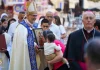
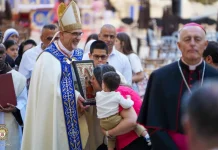
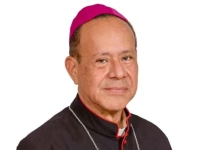
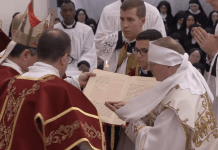
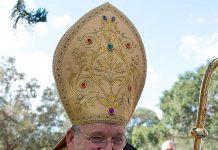
Newsroom (06/04/2026 Gaudium Press )At dawn on Easter Sunday, in the heart of Jerusalem, Cardinal Pierbattista Pizzaballa, Latin Patriarch of Jerusalem, stood before the Basilica of the Holy Sepulchre—the sacred site where Christian tradition places the burial and resurrection of Jesus Christ. Beneath the ancient domes and amidst the flicker of candles, his homily invited the faithful to see the Resurrection not as a consolation but as a radical unveiling of freedom and peace.
“The Risen One is not where we had placed him: he precedes us,” Pizzaballa proclaimed, defining Easter as a defiance of resignation. His words carried profound resonance in a Holy Land marked by conflict. “We have no other weapon than this empty tomb,” he said, calling the Resurrection the only force capable of opening the doors of peace amid hatred, revenge, and despair.
Faith That Begins with an Absence
Drawing from the day’s Gospel texts, the Patriarch reflected on the figure of Mary Magdalene arriving at the tomb “while it is still dark.” Her first words—“We do not know where they have laid him”—became, in his view, the foundation of authentic belief. “That confession is the first word of all true faith,” he said. For Pizzaballa, faith does not begin with possession or certainty but with the humility of not knowing, of running after an absence that becomes a promise.
“God does not allow himself to be possessed,” he reminded those gathered. “The Risen One is not where our certainties had put him.” Faith, therefore, is not control, but pursuit—a movement toward a life that cannot be contained by death.
The Folded Cloths and the Freedom of Life
Pizzaballa turned to a vivid image from the Gospel of John: the folded linens left behind in the tomb. More than a detail of stagecraft, he called them a sign of freedom. “Death is no longer a garment that covers but a habit carefully laid aside,” he explained. “Jesus was not dragged out. He came out. Death is no longer a prison: it is a garment folded, useless.”
In that image, the Patriarch found a mirror for human experience. Every “stone that closes off life,” he said—whether fear, guilt, or failure—echoes the sealed tomb. “Easter doesn’t promise us an easy life. Easter promises us an open life,” he asserted, urging the faithful to confront despair not with denial, but with openness to new beginnings.
A Life Hidden with Christ
Reflecting on the Letter to the Colossians, Pizzaballa spoke of “seeking the things above.” This, he clarified, does not mean escaping the world’s suffering. Rather, it means recognizing that one’s life “is safeguarded elsewhere, with the Risen One, in God.” For this reason, he insisted, life can be reopened “here, now.”
From the Acts of the Apostles he drew a universal vision: “God shows no partiality.” If death has been defeated, he said, “then no life is too lost to be sought.” Easter’s message is not limited by creed or boundary; it is the declaration that every life remains capable of renewal.
The Holy Land’s Unmoved Stones
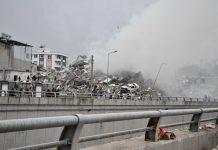
In one of the homily’s most pointed passages, Pizzaballa acknowledged the pain that continues to scar the region. “Around us there are still too many closed doors,” he lamented. “Too many graves have been dug anew by hatred, violence, and revenge.” He posed the haunting question, “Where have you laid him?” reminding the assembly that faith falters every time humanity buries hope beneath conflict or calls a fragile truce “peace.”
His only weapon, he insisted, was the empty tomb. “To announce that nothing is definitive, that the last word belongs not to the one who buries, but to the one who raises,” he declared. This, he said, is the challenge of Resurrection—to refuse resignation and to act as agents of peace even amid ruin.
A Door to Be Crossed
Concluding his homily, Pizzaballa’s tone turned pastoral and urgent. “Easter is not a phrase to be repeated; it is a door to be crossed. The stone has been removed. The way is open. But we must decide whether to stay inside or go out.”
To “go out,” he explained, means choosing forgiveness over bitterness, truth over convenience, and hope against all odds. The Resurrection’s judgment, he said, “does not ask us if we can talk about Easter; it asks us if we live as resurrected people.”
In the solemn stillness of the Holy Sepulchre, his Easter message offered not escape but engagement—a call to walk beyond the tomb’s threshold, carrying peace where stones remain unlifted and doors still closed.
- Raju Hasmukh with files from Infocatholica
Related Images: