













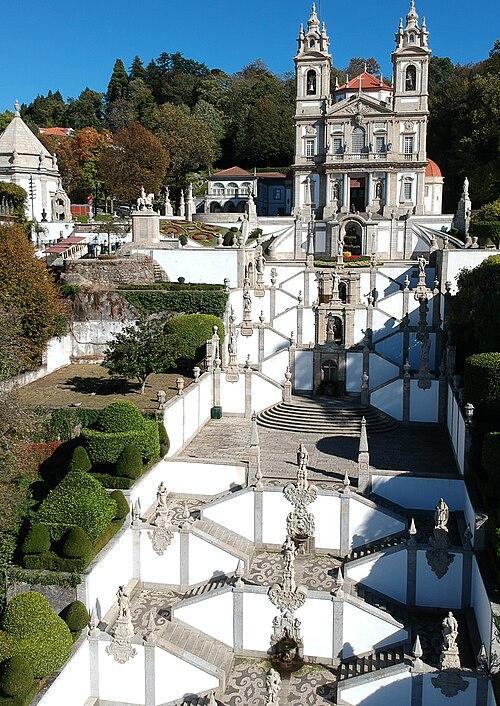
Braga archdiocese defrocks priest as Portugal debates Church accountability, legal hurdles, and limited convictions in abuse cases.
Newsroom (03/06/2026 Gaudium Press ) The Archdiocese of Braga has formally dismissed Father Albino Meireles from the clerical state, bringing to a close one of the most closely watched canonical cases arising from Portugal’s recent reckoning with clerical sexual abuse. The decision, announced last week, marks the final resolution of cases linked to the Independent Commission established to investigate abuse within the Catholic Church in Portugal.
Meireles had already been convicted in a civil court, and, in line with standard practice, the Church’s canonical tribunal waited for the civil judgment before issuing its own ruling. His laicization — the most severe sanction available under canon law — effectively ends his status as a priest. With this, the Church has concluded the last pending proceeding among cases identified in the commission’s report, closing a chapter that began three years ago when Church leaders received a list of 114 alleged abusers compiled during the inquiry.
A Divisive Outcome
Despite the finality of the Meireles decision, the broader outcome of the Church’s response has sharply divided observers. Of the 114 names presented to diocesan authorities, only 10 individuals were ultimately subject to any form of canonical sanction, and the commission’s work directly contributed to just four of those cases.
The disparity between the number of allegations and resulting convictions has drawn scrutiny. Critics argue it reflects enduring institutional weaknesses, while Church representatives point to structural and legal constraints that limited proceedings in many cases.
Carla Rodrigues, a lawyer who leads the National Coordination Team for diocesan commissions on the protection of minors and vulnerable adults, attributes the low number of convictions to “significant legal hurdles.” Among these are statutes of limitations under civil law, the absence of documentary evidence, the deaths of many accused, and the psychological burden on victims required to testify in formal judicial settings.
“This does not mean the testimonies are not credible,” Rodrigues has emphasized, noting the gap between judicial findings and what she described as “historical, human, or moral truth.”
Shrinking Pool of Prosecutions
A closer examination of the figures helps explain why relatively few cases advanced. Of the 114 alleged abusers, 45 had already died by the time the list was compiled, and eight were never identified. Four others were laypeople, placing them outside the jurisdiction of ecclesiastical courts. This left just 57 individuals — exactly half — who could theoretically face canonical proceedings.
Even within that group, some cases had already been adjudicated prior to the commission’s work. At least five individuals had previously been tried and convicted, reducing the number of new cases that could be pursued. In total, 43 cases underwent some form of canonical process, yet at least 29 were dismissed or resulted in acquittal.
At the time the lists were delivered, Church authorities focused on 15 clerics — 14 diocesan priests and one religious — who were removed from active ministry pending investigation. However, most of these cases could not proceed in civil courts due to expired statutes of limitations. Ultimately, only two of those 15 clerics faced canonical sanctions: Meireles and Father Luís Miguel da Costa.
Contrasting Sanctions
The cases of Meireles and da Costa illustrate differing outcomes within the Church’s disciplinary system. Da Costa, from the Diocese of Viseu, had already been sentenced by a civil court to a 23-month suspended sentence for sending explicit messages to a teenager, along with a €10,000 fine and mandatory rehabilitation measures.
The Church imposed a three-year suspension from ministry, along with requirements including psychological counseling, treatment for alcohol dependency, and annual spiritual retreats. Unlike Meireles, however, da Costa was not dismissed from the clerical state.
Additional sanctions were applied to three priests no longer in active ministry due to retirement or illness, bringing the total number of sanctioned clergy from the list to five. Yet even here, gaps in oversight became apparent. In Lisbon, Father José Cruz — initially categorized as inactive due to illness — eventually returned to ministry, only for authorities to later discover no investigation had been opened. A belated inquiry resulted in his removal from public ministry.
Other cases highlight longstanding complexities. Father Frederico Marcos da Cunha, convicted of murder in 1993 and now residing in Brazil, was only formally dismissed from the clerical state in 2024 after intervention by Church authorities.
Survivors Voice Frustrations
For survivors and their advocates, these outcomes fall far short of accountability. António Grosso, a leading figure representing victims of clerical abuse in Portugal, argues that institutional culture remains a central obstacle.
“The silence, the cover-ups, the formalism and the bureaucracy among the hierarchy of the Church is what leads to this statistic of four in 114,” he has said. Grosso contends that the Church continues to prioritize minimizing scandal over addressing victims’ rights, suggesting that earlier action might have allowed more cases to be investigated before the deaths of nearly half the accused.
His criticism reflects broader disillusionment among survivors, many of whom were galvanized by the Independent Commission’s 500-page report documenting 512 validated testimonies. The report shattered long-standing taboos and brought unprecedented public attention to abuse within the Church in Portugal.
Claims of Institutional Change
Church officials, however, maintain that the commission’s work has triggered meaningful reform. Rodrigues points to a “significant shift” in how allegations are handled, citing improved procedures, greater collaboration with civil authorities, and increased emphasis on victim support.
According to her, the Church has adopted clearer protocols for receiving and investigating complaints, invested in training and prevention, and fostered a culture that prioritizes protection and accountability. There is also, she says, a greater willingness to listen to victims and ensure transparency.
“Trust is not rebuilt by decree,” Rodrigues acknowledged, stressing that progress depends on consistent action over time.
An Unsettled Reckoning
While the conclusion of the Meireles case symbolically closes a cycle, it leaves unresolved tensions about the adequacy of the Church’s response. The contrasting interpretations — one emphasizing legal complexity and incremental reform, the other pointing to systemic failure — underscore the challenges facing the institution as it seeks to restore credibility.
What is clear is that the issue of clerical abuse in Portugal is no longer hidden. As Grosso observed, it has moved from the shadows into public consciousness. Whether the Church’s reforms are sufficient to meet the expectations of survivors and the wider public remains an open question, one that will likely shape its future in the years ahead.
- Raju Hasmukh with files from The Pillar
Related Images: