












Benedictine Abbot Primate Jeremias Schröder urges unity and inclusion in debates over the Vetus Ordo, echoing Pope Leo XIV’s call.
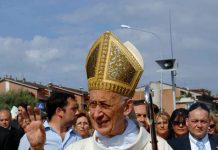
Newsroom (04/05/2026 Gaudium Press) A renewed debate over the place of the Vetus Ordo in the Catholic Church has drawn a significant intervention from Dom Jeremias Schröder, Abbot Primate of the Benedictine Confederation, who emphasized coexistence and mutual respect as essential to ecclesial unity.
The discussion follows a signal sent in March by Pope Leo XIV, who addressed French bishops gathered in Lourdes through a letter penned by Cardinal Secretary of State Pietro Parolin. The message raised concern over the “growth of communities linked to the Vetus Ordo,” referring to the pre–Vatican II form of the Mass, and cautioned against division within the Church. Rather than exclusion, the Pope called for “paths of communion,” warning that tensions surrounding the Eucharistic celebration risk deepening “a painful wound” in the Church.
The letter urged bishops to adopt “a new mutual perspective” marked by greater understanding of differing sensitivities, while seeking “concrete solutions” for the “generous inclusion” of those attached to the older rite, in continuity with the Second Vatican Council’s liturgical principles.
Benedictine Perspective on Coexistence
Dom Schröder, speaking in an interview with the German Bishops’ Conference portal Katholisch.de, offered a perspective shaped by the Benedictine tradition, long central to the Church’s liturgical life. He rejected the notion that the presence of the Vetus Ordo creates internal conflict within his order.
“I don’t see any conflict,” he said. “Among us Benedictines, traditional and modern liturgies coexist harmoniously.”
According to Schröder, approximately ten Benedictine abbeys currently celebrate according to the ancient rite, most of them in France and largely within the Solesmes Congregation. At the same time, the majority of monasteries in that congregation use the reformed liturgy.
He highlighted several communities, including Fontgombault Abbey and its related monasteries, as well as Le Barroux Abbey, which returned to full communion with Rome following the 1988 episcopal consecrations associated with Archbishop Marcel Lefebvre. Schröder also mentioned the monastic community of Norcia.
Despite liturgical differences, he stressed that these communities remain integrated within the broader Benedictine framework. “We all treat each other with respect,” he said, noting that although he personally celebrates only according to the new missal, he has been welcomed in communities that use the older rite.
A Model for the Wider Church?
Schröder suggested that the Benedictine experience could offer a model for the universal Church. “In a certain sense, yes,” he said, pointing to the order’s lived example of peaceful coexistence.
He also indicated that developments under previous pontificates have made a full suppression of the Vetus Ordo unlikely. “After Benedict XVI opened the doors in this area, it’s no longer possible to completely eliminate the ancient rite,” he observed.
For Schröder, the issue is not merely liturgical preference but the spiritual lives of those formed within this tradition. “We have brothers and sisters who have built their religious life on this form of prayer and Mass,” he said, adding that the rite “has found its way into the Church and should therefore be permitted, at least in some areas.”
As Pope Leo XIV considers next steps, the Benedictine leader’s remarks underscore a central tension in the ongoing debate: how to reconcile diversity in liturgical expression with the Church’s call to unity.
- Raju Hasmukh with files from https://www.avvenire.it/
Related Images: