














Senate committee to scrutinize Bill C-9, including repeal of religious speech defence, amid rising concern from faith and civil groups.
Newsroom (04/05/2026 Gaudium Press ) Canada’s Senate is poised to undertake a detailed and potentially contentious review of the federal government’s Combatting Hate Act, as senators from across the political spectrum signal heightened scrutiny of the legislation’s most debated provisions.
Bill C-9 advanced to the next stage of the legislative process on April 30 after five sessions of second reading debate that began April 14. The Standing Senate Committee on Human Rights is expected to lead the study, with its first session anticipated as early as May 11.
Chaired by Ontario Senator Paulette Senior of the Independent Senators Group (ISG), the committee reflects a cross-section of the Senate’s political composition. Its nine members include four from the ISG, two from the Progressive Senate Group, one Conservative, one member of the Canadian Senators Group, and one unaffiliated senator.
At the heart of the legislation are measures to criminalize intimidation and obstruction outside places used by faith-based groups, as well as to prohibit the intentional public display of certain terrorism or hate symbols. Yet much of the attention surrounding Bill C-9 has focused on a controversial amendment adopted in the House of Commons with support from Liberal and Bloc Québécois MPs.
The amendment repeals Section 319(3)(b) of the Criminal Code, a provision that for 56 years has provided a defence for individuals accused of hate speech if their statements were made in good faith on the basis of religious belief.
Conservative Senator David M. Wells, speaking at the close of second reading debate, urged colleagues to subject the repeal to rigorous examination.
“When an amendment removes from the Criminal Code a protection already provided by law, and when that change was not part of the bill as originally introduced, the very least that should be required is a thorough review of that decision,” Wells said, calling for targeted consultations with religious communities and other stakeholders.
Opposition to the repeal has coalesced across a broad coalition of faith groups, civil liberties advocates, labour organizations and legal experts. Cardinal Frank Leo of Toronto, the Canadian Conference of Catholic Bishops and the Catholic Civil Rights League have all issued statements in recent months urging the government to reconsider the change.
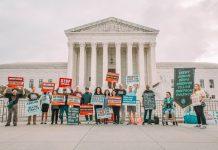
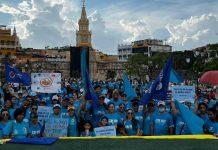
Advocacy has also taken a more overtly political turn. Campaign Life Coalition, a pro-life organization, organized nationwide protests on May 1 outside the offices of Liberal members of Parliament. The group argues that pressure on elected officials in the House of Commons remains strategically important despite the bill’s current position in the Senate.
Campaign Life president Jeff Gunnarson contended that most senators, though formally independent, remain aligned with the Liberal Party and therefore influenced by Prime Minister Mark Carney. He framed the demonstrations as a warning of electoral consequences should the legislation pass without amendment.
The Senate’s forthcoming review could prove pivotal. Should the human rights committee propose changes to Bill C-9 that are adopted at third reading, the legislation would return to the House of Commons for approval or rejection of the revised version.
The political dynamics in the lower chamber have shifted since the bill’s passage there on March 25. At that time, the Liberals governed as a minority and relied on Bloc Québécois support to secure passage, including acceptance of the amendment removing the religious speech defence. The party has since secured a majority following the defection of five MPs, reducing its dependence on opposition parties.
The Standing Senate Committee on Human Rights typically meets on Mondays. With its May 4 session dedicated to studying the implications of artificial intelligence for human rights and economic security, senators are expected to begin their formal examination of Bill C-9 the following week. Witness lists, including potential expert testimony, are expected to be released closer to the meeting date.
- Raju Hasmukh with files from Catholic Register
Related Images: