
















Asian bishops at the FABC Assembly stress faith, human dignity and migration, calling for dialogue, unity and pastoral cooperation.
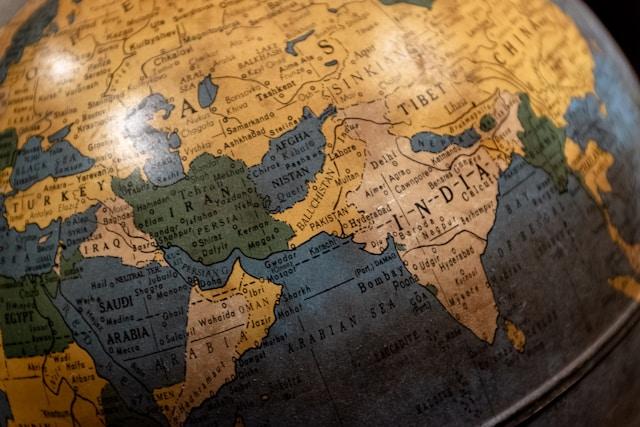
Newsroom (24/07/2026 Gaudium Press ) The diversity of Asia’s cultures, languages, political systems and economies may define the continent’s social landscape, but participants at the Federation of Asian Bishops’ Conferences (FABC) Plenary Assembly say a shared faith continues to unite the Catholic Church across the region.
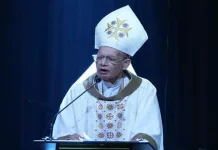
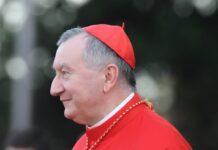
That message was at the center of reflections offered by Cardinal Tarcisius Isao Kikuchi, Archbishop of Tokyo and Secretary General of the FABC, during an interview with Vatican Media as the gathering of more than 120 cardinals and bishops continued in Jakarta. The assembly, which opened on Monday and concludes on Sunday, has brought Church leaders together for prayer, discussion and discernment about the Church’s mission throughout Asia.
Reflecting on the first days of the assembly, Cardinal Kikuchi said participants have gained a deeper appreciation of both the continent’s vast diversity and the unity that exists among local Churches despite differing social realities.
“Through these three days, we had the opportunity to deepen our understanding of our own reality in Asia and our understanding that we exist across really diverse realities but are united in one faith, one Body of Christ,” he said.
The opening phase of the assembly included presentations from delegates, a day of prayer and Conversation in the Spirit led by Cardinal Luis Antonio Tagle, and discussions examining Asia’s changing socio-political environment. Delegates also shared experiences from their local Churches and presented the results of group conversations.
According to Cardinal Kikuchi, one of the clearest themes to emerge from those exchanges has been the importance of dialogue. Although Catholics are a minority in most Asian countries, with the Philippines being a notable exception, Church leaders identified common opportunities and challenges that transcend national boundaries.
The cardinal said bishops are seeking ways not only to become bridges themselves but also to act as bridge-builders among communities. This includes dialogue with people from different cultures, engagement with the poor, cooperation within religiously diverse societies and responses to ecological challenges facing the region.
Migration and human dignity emerged as two particularly urgent concerns during the discussions. Cardinal Kikuchi noted that many countries across Asia are experiencing significant migration flows that require immediate pastoral attention. At the same time, the protection of human dignity remains a pressing priority in numerous national contexts.
While local circumstances vary considerably from country to country, he said the assembly highlighted the need for stronger cooperation among Asian Church communities. Mutual understanding and solidarity were repeatedly emphasized by bishops who, despite different experiences, expressed a common desire for recognition, support and spiritual accompaniment from one another.
The issue of migration has particular relevance for Cardinal Kikuchi’s own ministry in Japan. Although official Church statistics indicate that the country has fewer than 500,000 Catholics, he pointed out that the reality is more complex due to the large number of migrant Catholics living and working there.
According to the cardinal, at least another half million migrant Catholics are present in Japan, many of whom are not fully reflected in official Church registration records. Within the Archdiocese of Tokyo alone, there are an estimated 40,000 Filipino residents, while many young Vietnamese workers on temporary visas are also members of the Catholic faith.
These demographic changes have transformed pastoral discussions within the Japanese Church and figured prominently in conversations with bishops from other Asian nations during the assembly.
Cardinal Kikuchi described migrant Catholics as a significant contribution to local Church life, enriching communities through greater diversity and strengthening the Church’s witness in society. In a country where exclusion and nationalism can present challenges, he argued that the Church can demonstrate Gospel values by embodying “unity in diversity.”
By bringing together people from different nations, cultures and backgrounds in common prayer and mission, the Church offers a visible example of coexistence and solidarity, he said. In that context, synodality remains a key element of the Church’s witness and mission.
The interview also touched on the reception in Japan of Magnifica humanitas, the encyclical issued by Pope Leo XIV. Cardinal Kikuchi said interest in the document has been significant, particularly because of its engagement with artificial intelligence, an issue that has attracted considerable national attention in Japan given the country’s prominent role in technological innovation.
Japanese media have closely followed the new Pope’s words and actions since his election, and several news outlets have already reported on the encyclical. However, Cardinal Kikuchi noted that the official Japanese translation is still being prepared, making it difficult at this stage to assess broader public reaction.
For now, Church leaders and observers in Japan are awaiting the translation’s release before evaluating how the encyclical’s themes will resonate among Catholics and the wider society.
As the FABC Plenary Assembly continues, the discussions in Jakarta have underscored a recurring theme: despite the immense diversity that characterizes Asia, Catholic communities across the continent share common concerns and common hopes. From migration and human dignity to dialogue and synodality, bishops have identified areas where cooperation and mutual support may help strengthen the Church’s mission in one of the world’s most complex and rapidly changing regions.
- Raju Hasmukh with files from Vatican News
Related Images: