



















Cardinal Filipe Neri Ferrão urges Asian churches to make synodality a lived reality, fostering dialogue, discernment, and bridge-building.
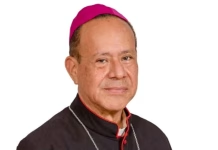
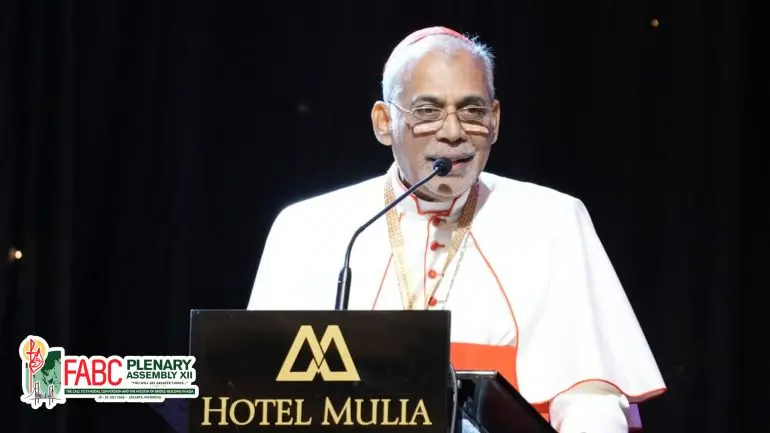
Newsroom (23/07/2026 Gaudium Press ) Synodality must move beyond discussion and become an everyday reality in parishes, dioceses, religious communities, and families throughout Asia, Cardinal Filipe Neri Ferrão said as he opened the 12th Plenary Assembly of the Federation of Asian Bishops’ Conferences (FABC).
Delivering the keynote address at the gathering in Jakarta, Cardinal Ferrão, president of the FABC, framed the weeklong assembly not as an organizational event but as a spiritual process of communal discernment centered on seeking God’s will for the Church in Asia.
“We have not gathered merely to discuss the future of the Church in Asia,” the cardinal said. “Rather, we have come together to seek God’s will for His people.”
His address focused on the assembly’s theme, “A Call to Synodal Conversion and the Mission to Be Bridges and Bridge-Builders in Asia,” highlighting the Church’s commitment to a culture of listening, participation, and shared discernment inspired by the Synod on Synodality.
Cardinal Ferrão stressed that synodality should not be understood as a temporary initiative, pastoral program, or administrative reform. Instead, he presented it as a fundamental way of living and carrying out the Church’s mission.
“The real question before us is not whether synodality is important, but how it can take deeper root in our dioceses, our parishes, our institutions, our religious communities, and our families,” he said.
Throughout the address, the cardinal returned to the theme of encounter as the foundation of evangelization. Reflecting on the Gospel account in which Philip invites Nathanael to “Come and see,” he said the Church’s mission is rooted not in persuasion through argument but in inviting people into a personal encounter with Jesus Christ.
He suggested that the same spirit should characterize the plenary assembly itself as bishops and delegates from across Asia gather to pray, listen, discern, and share the realities facing their local Churches.
Describing prayer, dialogue, and communal discernment as essential expressions of synodality, Cardinal Ferrão emphasized that these elements are more than agenda items. They represent the very method through which the Church seeks guidance and unity in its mission.
The cardinal also reflected on the unique context of Asia, a continent shaped by ancient civilizations, cultural diversity, and major religious traditions. While these realities present significant pastoral challenges, he said they also offer opportunities for deeper dialogue and mutual understanding.
“The Church in Asia is called to be both a bridge and a builder of bridges,” he said, encouraging stronger efforts toward reconciliation, communion, and engagement across cultural and religious divides.
His remarks also addressed the profound social and technological changes affecting the region. Cardinal Ferrão pointed to issues such as artificial intelligence, migration, environmental degradation, inequality, and armed conflict as forces reshaping societies across Asia.
Rather than viewing these developments as reasons for discouragement, he said they challenge the Church to offer a more credible witness through solidarity, compassion, and renewed missionary commitment. In a rapidly changing world, he argued, the Christian response must be rooted in hope and expressed through service to others.
Looking toward the outcome of the assembly, Cardinal Ferrão urged participants to remain attentive to the guidance of the Holy Spirit throughout their deliberations. He expressed the hope that the assembly’s final document would serve not merely as a record of discussions but as a practical resource capable of helping local Churches embrace synodality in concrete and lasting ways.
Before reports are delivered, debates held, and recommendations adopted, he said, the assembly’s central responsibility remains discerning together what God is asking of the Church in Asia today.
In his concluding remarks, Cardinal Ferrão suggested that the true measure of the 12th FABC Plenary Assembly‘s success will not be the document produced at its conclusion. Instead, he said, its lasting impact will depend on whether participants return to their local Churches more attentive to the Holy Spirit, more committed to one another, and better prepared to serve as bridge-builders in a diverse and rapidly changing Asia.
The assembly, he indicated, represents an opportunity not only to discuss synodality but to embody it, transforming it from a concept into a lived experience across the Church in Asia.
- Raju Hasmukh with files from FABC and Radio Veritas Asia
Related Images: