












Cardinal Tagle tells Asian bishops that Christian hope grows through recognizing God’s quiet action in daily life and ordinary acts of love.
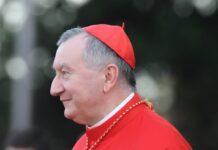
Newsroom (23/07/2026 Gaudium Press ) Authentic Christian hope is not rooted in ambitious institutional programs or grand strategies, but in the ability to recognize God’s quiet presence in the ordinary experiences of daily life. This was the central message delivered by Cardinal Luis Antonio G. Tagle during a spiritual retreat for bishops and delegates attending the 12th Plenary Assembly of the Federation of Asian Bishops’ Conferences (FABC) in Jakarta.
Addressing Church leaders from across Asia, the Pro-Prefect of the Dicastery for Evangelization called for a profound spiritual conversion, urging participants to develop a contemplative way of seeing that recognizes the extraordinary work of God unfolding through seemingly ordinary circumstances.
A Call to See Rather Than Achieve
Drawing from the Gospel of John, Cardinal Tagle emphasized that effective pastoral leadership begins not with action plans or measurable achievements, but with attentiveness to God’s active presence. Rather than placing pressure on the Church to manufacture success through its own efforts, he encouraged leaders to cultivate a spirit capable of pausing, observing, and recognizing what Christ is already accomplishing.
Central to his reflection was Jesus’ encounter with Nathanael. Cardinal Tagle highlighted a distinction he described as essential to understanding Christian mission.
“Scripture does not say, ‘You will do greater things.’ Jesus says, ‘You will see greater things.’ It is Jesus who does the great works. Our task is to see them.”
The Cardinal suggested that this perspective liberates disciples from the burden of self-reliance and redirects attention toward God’s initiative. Christian leadership, he argued, requires a renewed capacity for wonder and gratitude rather than constant striving for visible results.
God Revealed Through Ordinary Realities
Throughout his reflections, Cardinal Tagle pointed to recurring moments in the Gospel where God’s presence is revealed through humble and familiar situations rather than extraordinary spectacles.
He cited the wedding feast at Cana, where Jesus’ first sign emerged from what appeared to be a common social difficulty. He recalled the Samaritan woman’s encounter with Christ during an ordinary conversation at a village well. He also referenced Mary Magdalene, who initially mistook the risen Jesus for a gardener, and the disciples on the road to Emmaus, who ultimately recognized Him in the simple breaking of bread.
“These great works of Jesus come through ordinary things,” Cardinal Tagle told the assembly, stressing that part of Christian conversion involves recovering a sense of amazement at God’s action in everyday life.
The message underscored a recurring biblical theme: divine grace frequently becomes visible through common human experiences, inviting believers to look beyond appearances and recognize God’s presence where it may be least expected.
Witnesses of Grace in Daily Encounters
To illustrate this spirituality of attentiveness, Cardinal Tagle shared personal experiences that had revealed God’s presence through simple acts of human kindness.
One such encounter took place on the streets of Manila, where a traffic vendor unexpectedly offered him food as a gift. Another occurred in Lebanon, where a young refugee child expressed a spontaneous desire to know Jesus after receiving straightforward gestures of charity and care.
For the Cardinal, these experiences demonstrated that the spread of the Gospel often occurs not through elaborate strategies or complex pastoral initiatives, but through authentic human encounters marked by generosity and love.
Such moments, he suggested, serve as reminders that evangelization frequently begins with small, unadorned acts that communicate dignity, compassion, and hope.
Mary Magdalene as a Model of Evangelical Simplicity
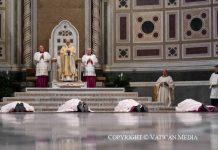
The retreat’s themes culminated during the concluding Eucharistic celebration on the Feast of Saint Mary Magdalene, a figure whom the Church honors as the “Apostle to the Apostles.”
Cardinal Tagle presented Mary Magdalene as a powerful example of how God works through individuals who may be overlooked or undervalued by society. Reflecting on her personal journey, he described her as someone who had endured deep suffering but whose life was transformed after an encounter with Christ.
“Mary Magdalene had a beautiful story. She suffered greatly, yet she was seen by Jesus. She was named, recognized, and transformed by His love,” he said.
The Cardinal also reflected on her steadfast presence at the foot of the Cross, where she remained faithful when many others had fled out of fear. Her quiet perseverance, he noted, became a testimony of unwavering commitment.
He described the women at Calvary as silently proclaiming: “We know Him. We cannot deny Him. Our commitment will not waver.”
The First Witness of the Resurrection
According to Cardinal Tagle, one of the most significant aspects of Mary Magdalene’s story lies in the simplicity of her recognition of the risen Christ. Her sorrow turned to joy when Jesus spoke her name, transforming an ordinary moment into a revelation of the Resurrection.
“A very simple act made her see the greatest event,” he reflected.
Entrusted with the first proclamation of the Resurrection, Mary Magdalene carried a message remarkable for its directness and clarity: “I have seen the Lord.”
Cardinal Tagle observed that Christ’s decision to make her the first witness of the Resurrection carries profound significance. By choosing someone whom society might not readily have embraced as a credible witness, Jesus demonstrated God’s tendency to elevate those often disregarded by worldly standards.
“She was the bridge to the other disciples,” the Cardinal said, noting that the risen Lord ensured that the greatest message in Christian history would first be entrusted to a person on the margins.
A Challenge for the Church in Asia
Concluding his reflections, Cardinal Tagle challenged bishops and Church leaders throughout Asia to embrace the same spirit of evangelical simplicity in their ministries.
He encouraged them to look for the modern-day “Marys of Magdala” present within their parishes, dioceses, and communities, recognizing those whose quiet faithfulness and lived witness reveal the work of God.
“In our parishes and dioceses, there are many Marys of Magdala. It is important to see them,” he said.
His message to the FABC assembly offered a vision of Christian leadership grounded less in prominence and achievement than in attentiveness, humility, and wonder. In a world often focused on influence and results, Cardinal Tagle’s reflections directed attention back to a fundamental conviction of the Gospel: that God continues to perform great works through ordinary people, simple acts of love, and the unnoticed moments of everyday life.
- Raju Hasmukh with files from Fides News
Related Images: