






As the Oct. 7 anniversary nears, Jerusalem’s Archbishop Nahra calls Trump’s 20-pt plan a “first step” to revive Oslo Accords, urging serious talks to end Gaza’s carnage and foster true peace
Newsroom (06/10/2025, Gaudium Press ) As yet another anniversary of the Oct. 7, 2023, Hamas attack on Israel approaches, Archbishop Nahra expressed cautious optimism for renewed peace efforts, describing U.S. President Donald Trump’s proposed 20-point plan as a potential “first step” to relaunch the long-stalled Oslo Accords.
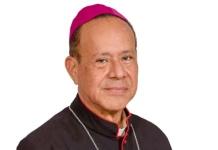
In an interview with AsiaNews, Msgr. Rafic Nahra, auxiliary bishop of the Latin Patriarchate of Jerusalem and patriarchal vicar for Israel since 2021, called for “serious” negotiations to halt the “carnage” in Gaza. “At the moment, any attempt at a solution is welcome as long as it stops this massacre,” Nahra said. “Let us pray that everything stops.”
Nahra’s remarks come amid ongoing mediation efforts in Cairo involving Hamas, Israel, and the United States, aimed at securing a ceasefire and the release of Israeli hostages. At least 20 captives remain in Gaza, according to Israeli officials. The Church of the Holy Land, he added, continues to “hope and pray” despite the dire circumstances, aligning with Pope Leo XIV’s proclamation of Oct. 11 as a day of fasting and prayer for peace.
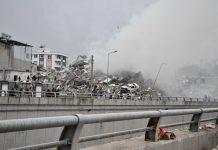
The Oct. 7 assault by Hamas militants killed more than 1,200 people in Israel and triggered a sweeping Israeli military response in Gaza. That campaign has claimed over 67,000 Palestinian lives—predominantly civilians, including women and children—displaced most of the territory’s 2.2 million residents and sparked a humanitarian crisis marked by acute food shortages, aid groups report.
Negotiators from both sides are slated to convene in Egypt’s Sharm el-Sheikh resort in the coming days to hammer out technical details of the White House initiative, which prioritizes ending hostilities and repatriating prisoners. Delays are possible, sources close to the talks indicate.
For the discussions to yield lasting results, Nahra stressed the need for mutual concessions. “Both sides must understand and accept that sacrifices, mediation, and compromises will be necessary,” he said. Among Israelis, he noted, the hostages’ safe return is paramount, though some political factions push to “finish things with Hamas… once and for all,” a goal he deemed “not very realistic.”
On the Palestinian side, Nahra acknowledged the enduring appeal of Hamas as both an ideology and a militant group, which “cannot be eradicated by force” amid widespread death and devastation. “The central issue is to stop the war and move beyond this logic, truly seeking a solution,” he urged.
Looking further ahead, the bishop advocated for a pathway to Palestinian statehood and “true peace,” not merely a temporary truce. “After this war, an end to the conflict is necessary,” he said. “A ceasefire is no guarantee of stability—the war could resume, even more bloodily.” He warned against interference from “extremists on the Israeli and Palestinian sides” who might derail the process.
The upcoming anniversary evokes profound trauma, Nahra reflected, citing a letter from Latin Patriarch Pierbattista Pizzaballa that anticipates a “difficult journey” even if peace is achieved. “So many wounds in hearts… will be very difficult to heal,” he said. Rebuilding Gaza—and Israel—will demand efforts on “material, spiritual, and human” fronts, amid societal fractures in both communities.
Yet, amid the sorrow, Nahra pointed to Oct. 7 as the feast of Our Lady of the Rosary, invoking her intercession. “We pray and invoke support and protection on this journey,” he said.
Trump’s blueprint, while promising, falls short of a comprehensive fix, Nahra cautioned. It addresses immediate recovery and reconstruction but leaves “many unresolved issues,” including the Oslo Accords’ unfulfilled promise of coexistence. Signed in 1993, the agreements faltered due to a lack of commitment from both parties, he observed.
Revitalizing that framework requires “the will of Israelis and Palestinians to move forward,” Nahra said, transforming an externally imposed truce into a homegrown commitment to a “new and different context.”
In this endeavor, the Latin Patriarchate—despite its modest flock—plays a vital role in “dialogue, mediation, openness to others, bridging, and inclusion,” Nahra emphasized. “We are a small number, but we can demonstrate something different through our words and example: the will to live together, the ability to dialogue with everyone without excluding others.”
The Church, he clarified, eschews partisan politics in favor of lived faith. “We want to be witnesses of hope, foster dialogue with everyone, do what we can.”
- Raju Hasmukh with files from Asianews.it
Related Images: