






On Oct. 1, 2025, the 25th anniv. of China’s 120 martyrs’ canonization by John Paul II stirs Vatican-Beijing tensions. A silenced legacy of faith amid diplomacy.
Newsroom (06/10/2025, Gaudium Press ) On October 1, 2025, the Catholic Church quietly marked the 25th anniversary of one of its most politically charged canonizations: the elevation of 120 Chinese martyrs by Pope John Paul II. The ceremony, held on the same date in 2000, not only honored saints spanning three centuries of faith under fire but also ignited a diplomatic firestorm between the Holy See and Beijing, exposing deep fissures in their longstanding tensions.
The event remains a delicate chapter in Vatican-China relations, especially as the Holy See presses forward with a 2018 provisional agreement aimed at unifying China’s divided Catholic community under papal oversight. Yet for the estimated 12 million Chinese Catholics — split between state-sanctioned “patriotic” churches and underground loyalists — the martyrs represent an enduring spiritual legacy, one that advocates say deserves public commemoration, much like the venerated saints of neighboring nations such as Korea, Japan, Vietnam, and the Philippines.
“This anniversary passed in near silence, but its echoes still resonate,” said Father Bernardo Cervellera, a veteran Sinologist and former director of AsiaNews, who witnessed the fallout firsthand while working at Hong Kong’s Holy Spirit Study Centre. “The Chinese faithful have the same right as any other church to honor their heroes of faith — without fear or apology.”
A Canonization Born of Conflict
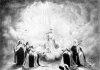
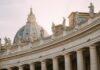
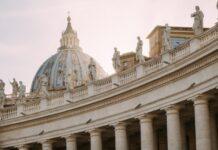
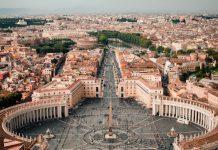
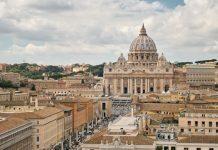
The 120 martyrs, canonized en masse in St. Peter’s Square on October 1, 2000, included 87 native Chinese — among them children as young as 9 — and 33 foreign missionaries, both men and women. Their deaths, from 1648 to 1930, unfolded across eras of imperial persecution, including the brutal Boxer Rebellion of 1900, when anti-foreign fervor claimed thousands of Christian lives.
Among them was Alberico Crescitelli, an Italian priest of the Pontifical Institute for Foreign Missions (PIME), beatified in 1946 and now the order’s sole saint from China. Crescitelli, executed in 1900, embodied the missionaries’ perilous commitment: captured, tortured, and killed for refusing to renounce his vows.
John Paul II framed the canonization as a tribute to “the noble Chinese people,” emphasizing the martyrs’ “courage and consistency” over historical debate. In a post-ceremony letter to then-President Jiang Zemin, the pontiff clarified that the Church sought no political judgment, only to celebrate virtues that transcended borders. Jiang never replied.
Beijing’s response was swift and scathing. State media decried the saints as “unpatriotic” tools of Western imperialism, with missionaries like Crescitelli smeared as criminals. The date itself — coinciding with China’s National Day, commemorating the founding of the People’s Republic in 1949 — was branded a deliberate insult. Vatican officials, including John Paul II’s secretary, Cardinal Stanisław Dziwisz, insisted the overlap was coincidental: October 1 fell on a Sunday during the Jubilee Year and aligned with the feast of St. Thérèse of Lisieux, patroness of missions.
The backlash plunged Sino-Vatican ties to their nadir, coming amid broader strains over religious autonomy. None of the martyrs perished under the communist regime, but their stories — of quiet defiance amid violence — clashed with Beijing’s narrative of foreign meddling. “These were not aggressors but witnesses,” Cervellera noted, drawing from the center’s 2000 dossiers that rebutted the accusations with archival evidence. “They chose faith over survival in contexts far removed from today’s politics.”
Echoes in Exile and Underground
In mainland China, commemoration was confined to whispers. Official and underground Catholics alike lit candles in private, evading surveillance. Across the border in Hong Kong, then-Cardinal John B. Tong led a defiant public Mass, shrugging off Beijing’s envoys’ pleas for restraint.
The canonization’s shadow lingered. It preceded John Paul II’s final olive branch to China: a 2001 message marking the 400th anniversary of Jesuit Matteo Ricci’s arrival in Beijing. Echoing Ricci’s 1595 treatise Friendship, the pope pledged mutual respect and “freedom” for the Church, while expressing regret for past missionary “mistakes” that fueled perceptions of hostility. “For all this, I ask forgiveness and understanding,” he wrote — a rare papal mea culpa.
A Legacy Poised for Reconciliation?
Today, as the Vatican-Beijing pact nears renewal amid reports of uneven implementation, the martyrs’ stories feel both burdensome and buoyant. Critics argue the agreement’s emphasis on unity has sidelined such “divisive” history, but proponents like Cervellera see untapped potential: “These saints are not relics of conflict but bridges of inspiration — for believers and skeptics alike, victims of violence who embodied an ideal worth dying for.”
In East Asia’s vibrant Christian landscapes, martyr shrines draw pilgrims and foster national pride. Could China’s turn come? For now, the 120 remain spectral figures in a dialogue where memory is measured against diplomacy. As Cervellera put it, “Soon, I hope, they will cease to be a problem and become a profound resource of faith.”
- Raju Hasmukh with files from Asianews.it
Related Images: