









Venezuela prepares for canonization of first saints, José Gregório Hernández and María Carmen Rendiles Martínez, amid church-state collaboration and political tensions.
Newsroom (16/10/2025, Gaudium Press ) As Venezuela anticipates the canonization of its first saints, Blessed José Gregório Hernández and Blessed María Carmen Elena Rendiles Martínez, the nation is abuzz with preparations. The Catholic Church and President Nicolás Maduro’s government are collaborating on logistics and infrastructure, but exiled priests warn that the regime may be exploiting the event for political gain.
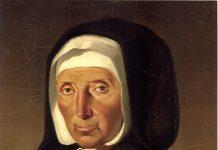
Major celebrations are planned in Caracas and Isnotú, Trujillo province, the birthplace of José Gregório, fondly known as the “physician of the poor.” Born in 1864, Hernández is Venezuela’s most revered popular saint, his legacy enduring since his death in 1919. Pilgrimages to Isnotú and cultural events are already underway, building anticipation for the historic moment.
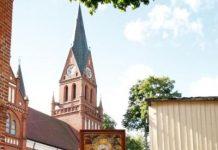
In Isnotú, the government is constructing a front altar at Our Lady of the Rosary church in Rafael Rangel municipality, the epicenter of canonization activities. The sanctuary of the Christ Child of Isnotú is being renovated, with air conditioning installed, and a new park is under development. Trujillo Governor Gerardo Márquez emphasized the goal of enhancing the future saint’s hometown to accommodate religious festivities.
In Caracas, restoration efforts are focused on the church of Our Lady of Candelaria, home to Hernández’s remains. Structural reinforcements and aesthetic upgrades are underway, alongside renovations to the front square and a museum at Hernández’s former residence. The Church is actively coordinating these efforts with government officials, with President Maduro meeting a Church delegation on August 7 to discuss the ceremonies.
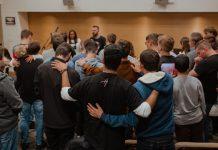
Festivities leading to the canonization included the “Night Route for Peace” on October 4, where thousands, including Caracas Mayor Carmen Melendez, marched from the Divine Pastor church to Hernández’s home, Vargas Hospital—where he once worked—and concluded at the Candelaria church. The route mirrored the doctor’s own daily path.
Hernández’s universal appeal is undeniable. “Every Venezuelan knows Bolívar and José Gregório,” said Francisco González Cruz, a geography professor at the University of the Valley of Momboy and author of several books on Hernández. “Not everybody likes Bolívar, but everybody likes José Gregório,” he told OSV News, comparing the saint-to-be with Simón Bolívar, the liberator of several South American nations.
Yet, the joint efforts of Church and state have sparked concerns among opposition figures, particularly exiled clergy. Father Pedro Freitez, now in the United States, accused the regime of manipulating the canonization for “purely political gains,” predicting “shows and spectacles” to bolster its image. Father José Palmar, also exiled, claimed Maduro’s government seeks to “clean its face stained with theft, fraud, embezzlement, and death.” He urged Venezuelan clergy to resist any “collusion” with the regime.
The Church, while avoiding direct criticism of Maduro’s administration, is leveraging the occasion to advocate for change. On October 7, the Venezuelan bishops’ conference issued a letter urging the government to release political prisoners as a “measure of grace” tied to the canonization.
Amid these tensions, Hernández’s legacy remains a unifying force. Born during a prosperous coffee boom in Isnotú, he was encouraged by his father to pursue medicine and by his mother, who died when he was 8, to serve the poor. A brilliant student, Hernández studied in France, mastering experimental medicine and bacteriology. Returning to Venezuela, he introduced microscopy to medical practice and taught at Universidad Central de Venezuela. Known for treating the poor for free, he earned a reputation as a compassionate diagnostician.
Twice, Hernández attempted to join a monastery in Europe, but illness forced his return to Caracas. His life ended tragically in 1919 when he was struck by a car en route to a patient. A massive crowd attended his funeral, and devotion to him soon flourished, with his name becoming common among newborns and his image ubiquitous.
For González, Hernández embodies virtues all Venezuelans should emulate. “He’s a symbol of what every Venezuelan could be,” he said, citing the saint’s alignment with Pope Francis’s vision of integral human development. “The canonization is only the beginning. We need to know him more deeply and imitate him.”
As Venezuela navigates the delicate balance of faith and politics, the canonization of José Gregório Hernández promises to be a defining moment in the nation’s history, uniting its people in celebration while exposing its deep divisions.
- Raju Hasmukh with files from OSV and UCA News
Related Images: