










Vatican library’s prayer room for Muslim scholars sparks debate over Catholic identity vs. inclusivity, highlighting tensions in interreligious hospitality.
Newsroom (16/10/2025, Gaudium Press ) A modest gesture of hospitality has ignited a firestorm of controversy within the hallowed halls of the Vatican Apostolic Library, where a dedicated room equipped with a prayer rug has been provided for Muslim scholars. The revelation, casually disclosed by Father Giacomo Cardinali, vice-prefect of the library, in an October 8 interview with La Repubblica, has exposed fault lines in the Catholic Church’s ongoing struggle to balance openness with its distinct identity.
“Of course, some Muslim scholars have asked us for a room with a carpet to pray, and we have given it to them,” Cardinali said, framing the decision as a practical courtesy extended to visiting researchers. Yet the setting—a cornerstone of Catholic scholarship founded in the 15th century—has amplified the significance of the act, prompting sharp debate over its implications. For some, the prayer room embodies the Church’s commitment to interreligious dialogue and respect for the diverse scholars who study its vast collections. For others, it risks eroding the institution’s Catholic character, raising questions about the boundaries of inclusivity in a sacred space.
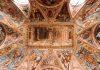
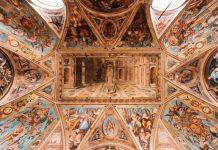
The Vatican Apostolic Library, home to two million printed books, 80,000 manuscripts, 50,000 archival documents, and countless coins, engravings, and medals, is a global treasure trove of knowledge. Its holdings include some of the earliest surviving copies of the Qur’an, alongside rare Hebrew, Coptic, and Chinese texts, reflecting a universal scope that Cardinali proudly highlighted. “We are a universal library,” he told La Repubblica. “We hold Arabic, Jewish, Ethiopian, and Chinese collections of unparalleled richness.” In this context, the prayer room could be seen as a natural extension of the library’s inclusive ethos—a pragmatic accommodation for scholars who travel far to engage with its resources.
Yet critics argue that the move crosses a symbolic line. “A library is for reading, not for worship,” one Catholic commentator wrote, capturing a sentiment echoed in Vatican academic circles. The decision, they contend, risks signaling a kind of religious equivalence that blurs the library’s Catholic identity, particularly given its place within the papal household under the authority of the Holy See. Cardinali’s own description of the library as “the most secular of all Vatican institutions” and a “humanistic institution” has further fueled unease, with some questioning how such a self-definition aligns with providing a space for religious practice—especially for a faith other than Catholicism.
The controversy taps into a broader tension within the Church: how to embody universal openness while preserving its distinct mission. The Apostolic Library’s ethos has long been rooted in the Catholic conviction that faith and reason coexist harmoniously, a principle that has guided its stewardship of texts from every civilization and creed. For critics, however, offering a prayer space to Muslim scholars—however well-intentioned—may inadvertently suggest a dilution of that foundation. “If prayer rooms are offered to Muslims,” one theologian asked, “what happens when Jewish, Hindu, or Buddhist scholars make similar requests? Will the Vatican create spaces for all faiths?”
Inside the Vatican, the response has been notably restrained. Many officials view the prayer room as a minor courtesy unlikely to alter the library’s mission or atmosphere. “It’s a room, not a statement,” said a curator familiar with the situation, speaking on condition of anonymity. “The manuscripts themselves speak louder than any prayer rug.” Supporters argue that the gesture reflects the Church’s commitment to dialogue, a priority emphasized in recent decades as it engages with an increasingly pluralistic world.
Still, the episode underscores the delicate balance the Vatican must navigate as it extends hospitality without compromising its identity. As the debate unfolds, the prayer room—small though it may be—has become a powerful symbol of the challenges facing a Church striving to remain both universal and distinctly Catholic.
- Raju Hasmukh with files from Zenit News
Related Images: