





Cardinal Parolin marks 100 yrs of Shanghai Council, calls Vatican-China pact a ‘seed of hope’ for unity & inculturation amid challenges. Full speech on Chinese Church’s journey.
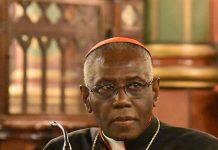
Newsroom (15/10/2025, Gaudium Press ) In a reflection on a century of Catholic mission in China, Cardinal Pietro Parolin, the Holy See’s Secretary of State, on October 10 urged patience and dialogue as keys to the Church’s future there, framing the 2018 Vatican-China agreement as a modest but vital step forward. Speaking at the Pontifical Urbaniana University’s Aula Magna to inaugurate the academic year, Parolin tied the 1924 Council of Shanghai—known as the Concilium Sinense—to ongoing efforts for reconciliation amid historical divisions.
The address coincided with the launch of “100 Years Since the Concilium Sinense: Between History and Present 1924-2024,” a compendium published by Urbaniana University Press and curated by the Dicastery for Evangelization. Drawing from a May 21, 2024, international conference marking the council’s exact centenary, the volume features scholarly contributions and was co-organized by the university, Fides News Agency, and the Pastoral Commission for China.
Parolin, addressing university leaders, students, and guests, described the event as aligning with the Jubilee Year of Hope, while recalling his attendance at the May gathering alongside delegates from mainland China. “This offers an opportunity to reflect once again on the Concilium Sinense and rediscover its relevance today,” he said.
Historical Context and Inculturation
The cardinal structured his remarks around three interconnected themes, beginning with the council’s role in reading the “signs of the times.” Convened by Pope Pius XI, the 1924 assembly aimed to root the Church deeply in Chinese soil, decoupling evangelization from Western colonial influences. Parolin praised the gradual handover of diocesan leadership to Chinese clergy, crediting it with freeing the faith from perceptions of foreign imposition.
He acknowledged the sacrifices of early missionaries—”generations who worked hard and gave their lives”—while critiquing the “heavy burden” of European patronage that hindered Vatican autonomy and tainted local views of Christianity. Highlighting Archbishop Celso Costantini, the first Apostolic Delegate to China, Parolin noted resistance from Western powers that delayed direct Holy See-Beijing ties.
Fruits emerged swiftly: In 1926, Pius XI ordained China’s first modern bishops in Rome; by 1946, Pius XII established full dioceses amid wartime chaos. Inspired by Benedict XV’s 1919 apostolic letter Maximum Illud, which rejected “Occidentalism” and affirmed papal communion as culturally enriching, the council fostered inculturation. Quoting Costantini, Parolin stressed: “The Pope wants Chinese Catholics to love their country and be the best citizens.”
Navigating History’s Turbulence
The second theme addressed history’s “river” of upheaval. China’s 20th-century liberation from colonialism birthed a new order that fractured Catholic unity, leading to unauthorized episcopal ordinations. Cost
Costantini, later a Vatican congregational secretary, counseled Pius XII against Eurocentric interpretations. In the 1958 encyclical Ad Apostolorum Principis, the pope imposed sanctions for non-communion ordinations but avoided labeling them schismatic, urging fidelity to homeland laws aligned with faith.
Contemporary Relevance and Dialogue
Today, Parolin argued, China’s “small flocks” embody the council’s vision: fully integrated citizens contributing through liturgy, sacraments, and charity, no longer seen as alien. Popes from John Paul II onward have preached forgiveness and unity, culminating in Benedict XVI’s 2007 letter to Chinese Catholics, which paved the way for the 2018 Provisional Agreement on bishop appointments.
Signed under Francis and renewed thrice, the pact—initiated under John Paul II and approved by Benedict in principle—addresses episcopal selections and diocesan alignments. “It does not claim to resolve all problems—some might describe results as ‘disappointing,'” Parolin admitted, yet called it a “seed of hope” demanding “realism, patience, and trust” for Gospel proclamation and ecclesial communion.
Concluding with Pope Francis’s words from a video message to the May conference, Parolin invoked divine safeguarding of faith as a “compass” guiding China’s Church pre- and post-Shanghai, uniting believers in peace-building against “inhuman forces” threatening global stability.
The speech underscores the Vatican’s pragmatic diplomacy in a nation where Catholics number about 12 million, amid scrutiny over religious freedoms. Critics question the agreement’s efficacy given reported installations outside its framework, but Parolin’s tone signals enduring commitment to incremental progress, echoing a century-old quest for authentic inculturation. University officials hailed the event as bridging academia and pastoral reality, with the new volume poised for further scholarly debate.
The full speech can be read here
- Raju Hasmukh with files from Asianews.it
Related Images: