
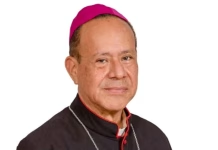


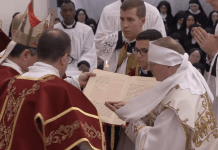
Fr. Wu Jianlin’s ordination as Shanghai’s auxiliary bishop on Oct 15 at Xujiahui Cathedral sparks debate over state influence and Church autonomy in China.
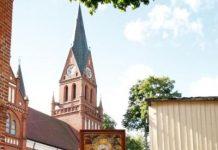
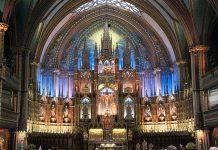
Newsroom (10/10/2025, Gaudium Press )The Catholic Diocese of Shanghai is set to ordain Father Wu Jianlin as its new auxiliary bishop on the morning of October 15 at St. Ignatius Cathedral in Xujiahui, amid growing concerns from clergy and faithful about the politicization of ecclesiastical appointments in China. The official notification was disseminated to priests across the diocese today, confirming the ceremony’s details. However, signs of the event had already emerged earlier this week when the Xujiahui Cathedral parish announced a temporary closure to visitors from October 13 through 15 for “religious events,” with vehicle parking prohibited in the church courtyard until noon on the 15th.
Parishioners and observers quickly deduced that the closure was linked to Wu’s episcopal ordination, a conclusion bolstered by a separate diocesan directive mandating attendance for all priests and nuns at a liturgy on October 15 morning at St. Ignatius Church. The notice emphasized that absences would not be permitted, underscoring the event’s obligatory nature and fueling speculation about its underlying motivations.
Father Wu, a prominent figure in Shanghai’s Catholic community, was elected auxiliary bishop on April 28 of this year by an assembly of clergy. The vote occurred just one week after the death of Pope Francis on April 21 (Rome time, afternoon in China), during the sede vacante period when the Vatican lacked a sitting pontiff. Sources familiar with the process told AsiaNews that Bishop Joseph Shen Bin, the current ordinary of Shanghai, had actively campaigned for Wu’s selection. Prior to the assembly, Shen reportedly visited various vicariates, holding meetings and private discussions to rally support. Additionally, religious affairs officials from local districts had canvassed diocesan priests to assess their voting intentions, a move that raised eyebrows among those advocating for greater Church independence.
In at least two diocesan meetings attended by clergy and laity, Shen was quoted as saying, “All Catholics who participate in the Chinese People’s Political Consultative Conference (CPPCC) are bishops; sooner or later we should also make Father Wu Jianlin a bishop.” This statement, relayed to reporters by participants who spoke on condition of anonymity, highlights Wu’s political credentials. Following the 2012 suspension of Auxiliary Bishop Thaddeus Ma Daqin—after he publicly renounced his membership in the Chinese Catholic Patriotic Association (CCPA)—Wu emerged as coordinator of the diocese’s “Group of Five,” a key administrative body. He was elected to the Shanghai Municipal Political Consultative Conference in 2013 and elevated to the national level in 2018, positions that align him closely with state-sanctioned structures.
The ordination comes at a time when many in Shanghai’s Catholic community express dismay over what they perceive as a shift away from the diocese’s historical emphasis on communion with the universal Church. Once known for its Jesuit-led initiatives and young Catholics who boldly defended papal authority—often at personal risk—the diocese is increasingly viewed by critics as a platform for political theater. “The courageous voices that championed unity with Rome are fading,” one local priest told AsiaNews, requesting anonymity due to potential repercussions. “What we’re seeing now is a Church molded more by bureaucracy than by faith.”
This sentiment is amplified by the diocese’s handling of Pope Francis’s death. While faithful, priests, and nuns across Shanghai gathered commemorative materials and planned mourning events, the diocese issued a swift notice on the afternoon of April 21: “Dear priests and nuns, Pope Francis returned to the Father’s house this afternoon. Commemorative activities will be jointly organized by the Patriotic Association and the Bishops’ Conference. Parishes must not organize private commemorations or publish or comment on online posts. If they have already been organized, they must be deleted immediately. During Mass, no longer mention ‘our Pope’, but rather ‘our bishop’ directly in the Eucharistic Prayer.”
Just three days later, the diocese’s website published an article titled “Pope Francis has returned to the Father’s house,” with a disclaimer noting it was reproduced verbatim from the CCPA and Chinese Catholic Bishops’ Conference (CCBC) official site. In the wake of the papal conclave 15 days later, which elected a new pope, the diocese remained silent, mirroring the CCPA’s lack of coverage beyond a Xinhua News Agency report on a congratulatory message from the Chinese Catholic Church.
Interviewees expressed outrage at this reticence. “After the provisional agreement on bishop appointments, aren’t Chinese bishops in full communion with the universal Church?” one asked rhetorically. “Why this collective silence after the Pope’s death? It’s not just a lack of ecclesiality—it’s a lack of humanity. They see only politics.”
A scholar specializing in Sino-Vatican relations, who spoke on condition of anonymity, acknowledged progress since the 2018 Provisional Agreement between the Holy See and China, which aimed to regularize bishop appointments and foster hierarchical communion. “Many positive changes have occurred,” the scholar said, pointing to the recognition of previously illicit bishops. However, persistent issues undermine these gains. For instance, during elections, Chinese authorities typically present only a single candidate to the Vatican for approval, limiting Rome’s influence. Bishop installations often occur in secular venues like hotels or parish halls, attended by clergy, nuns, CCPA members, and government officials—emphasizing political over spiritual dimensions. Photography and social media sharing are strictly prohibited, with events shrouded in security protocols.
“Having a new bishop should be a joyous occasion for the Church,” the scholar observed. “Instead, these ceremonies feel clandestine, as if they’re something to hide.” He criticized the opacity surrounding liturgical details, which fosters divisions by rank: only select insiders are privy to full information. “This mirrors secular bureaucracy and erodes the sacramental essence of ordination,” he added, noting that Wu’s upcoming ceremony appears to follow a similar pattern.
Historical context further complicates the narrative. The Holy See had long upheld Bishop Ma Daqin as Shanghai’s legitimate ordinary, despite his house arrest and inability to govern following his 2012 defiance. Under government pressure, however, the Vatican acquiesced to Shen Bin’s 2023 appointment as bishop of Shanghai—a move seen by some as a concession. Pro-government factions had floated the idea of rehabilitating Ma as an auxiliary under Shen, but that proposal has not materialized, leaving Ma’s status unresolved.
As the October 15 ordination approaches, it encapsulates broader debates over the Church’s autonomy in China. While the Provisional Agreement has facilitated some normalizations, critics argue it has not fully insulated the faithful from state interference. In Shanghai, a diocese with deep Jesuit roots and a legacy of resilience, the event risks reinforcing perceptions of a Church increasingly aligned with political priorities rather than pastoral ones. Diocese officials did not respond to requests for comment on these concerns.
- Raju Hasmukh with files from asianews.it
Related Images: