












Amid a wave of settler attacks, Father Bashar in Taybeh describes life under daily fear and insecurity as West Bank violence intensifies.
Newsroom (06/02/2026 Gaudium Press ) In the small Christian village of Taybeh, northeast of Ramallah, the smell of burnt rubber still lingers in the narrow streets. Charred cars sit idle beside homes defaced with fresh graffiti — racial slurs and threats painted in thick black lines. For Father Bashar Fawadleh, the Latin Catholic parish priest, this has become the unsettling rhythm of daily life.
“We live in a very stressful environment,” he said, his voice carrying both weariness and quiet resilience. “Even on days when nothing ‘serious’ happens, we live with the expectation that something could happen at any moment. We worry about our homes, our cars, our families, and our future.”
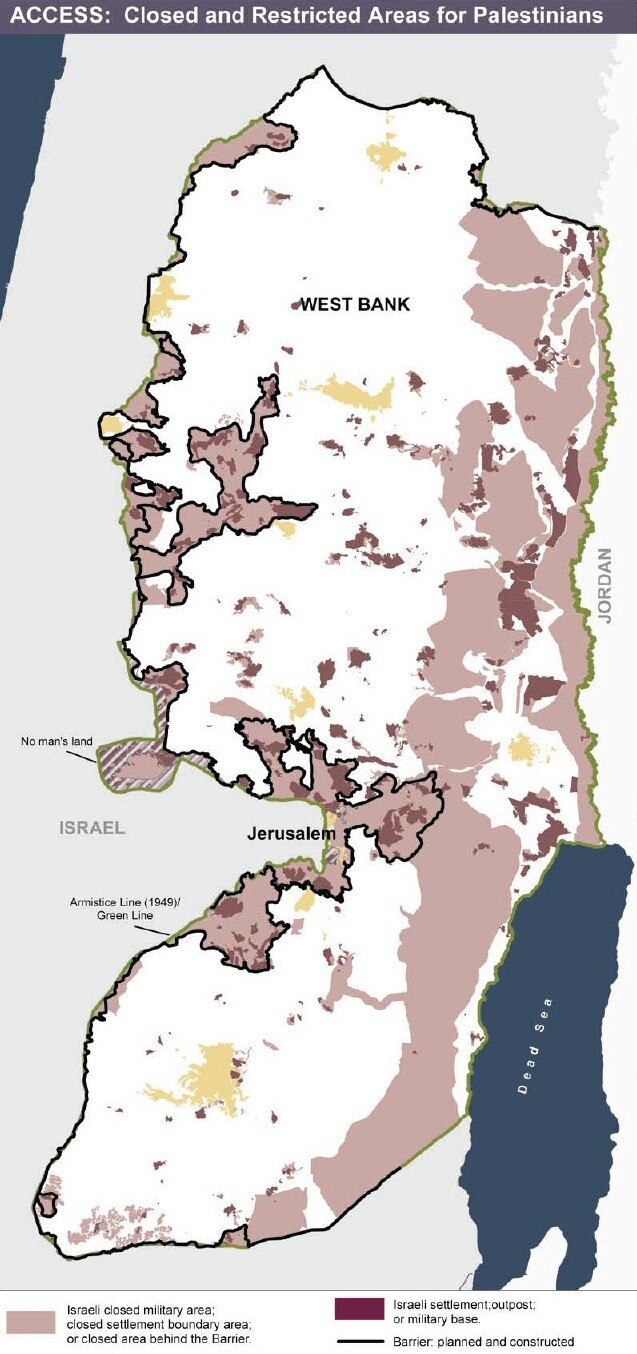
The attacks that struck Taybeh in early February — vehicles torched, anti-Christian insults graffitied on walls, private property invaded — were just one episode in a surge of settler violence sweeping across the West Bank in recent weeks. According to Palestinian records, Jewish settlers, often acting under the protection of Israeli soldiers, have uprooted hundreds of olive trees, assaulted civilians, and raided villages from Nablus to Ramallah.
A Pattern of Impunity
In the Ramallah and al-Bireh districts alone, settlers reportedly uprooted 300 olive trees and vandalized farmland and homes. Further north, in al-Mughayyir, shepherds were assaulted as they tended their flocks. In Nablus, Palestinians were sprayed with pepper gas and beaten as they worked.
These coordinated attacks mark part of a wider pattern. Official Palestinian statistics document at least 349 acts of vandalism and theft by settlers in recent months, including the destruction or poisoning of 1,245 olive trees — vital economic and cultural lifelines for Palestinian farmers.
“Attention only comes when there is a dramatic event,” Father Bashar lamented. “But for us, the situation is difficult every day. Harassment, threats, property damage, and the feeling of being defenseless have become part of our normal life.”
Violence Extending to Classrooms
The wave of aggression has not spared children. On February 4, a group of Israeli students allegedly attacked Palestinian students and teachers from the Ibn Khaldun School in Sakhnin, both Christian and Muslim, during a class trip to Park HaMa’ayanot in Beisan. More than a dozen were hospitalized after being pepper-sprayed and beaten. Three minors and one adult were later arrested, but the school principal, Kamal Abu Younis, described the encounter as “a racist attack.”
This assault highlighted how deeply the climate of hostility is seeping into daily interactions, even among the young. For Father Bashar, the message is chilling: “We don’t ask to be seen only in times of tragedy,” he said. “We want the world to understand our daily reality.”
A Fragile Christian Enclave
Taybeh — home to about 1,500 residents — retains a rare distinction as the last entirely Christian town in the Palestinian Territories. Inside the village stand three churches representing Latin, Greek Orthodox, and Melkite Catholic denominations. Its people preserve proud traditions of coexistence and self-reliance, yet the community is straining under sustained assault.
Both Cardinal Pierbattista Pizzaballa, the Latin Patriarch of Jerusalem, and Theophilos III, the Greek Orthodox Patriarch, have visited in solidarity. Still, there is a growing sense that their visits, while meaningful, cannot substitute for systemic protection.
“Our reality is invisible to the mainstream media,” said Father Bashar. “We continue to live with the same risks and lack of security. This constant pressure affects our mental health, our sense of stability, and our ability to live a normal life.”
Beyond the West Bank: Environmental Tensions in Lebanon
The turmoil is spreading across borders. In southern Lebanon, authorities have accused Israel of spraying herbicidal and toxic chemicals — including glyphosate — on agricultural lands near the frontier. Tests by the Lebanese Ministries of Agriculture and Environment revealed concentrations “20 to 30 times” the acceptable safety limit.
President Joseph Aoun condemned the alleged contamination as both a “violation of sovereignty” and an “environmental and health crime.” The Israel Defense Forces have declined to comment, while the United Nations has begun monitoring the situation closely.
The dual crises — settler violence in the West Bank and environmental upheaval along the Lebanese border — point to a region where escalation feels constant, and accountability elusive.
A Plea for Recognition
In Taybeh, as evening falls over the olive groves, the echo of church bells mixes with the hum of uncertainty. For Father Bashar and his parishioners, the plea is simple but profound: that the world recognize not only their suffering in moments of spectacle, but their quiet endurance every day.
“We are defenseless,” he said softly. “But we still hope.”
- Raju Hasmukh with files from Asianews.it
Related Images:


