














Facing closure in 2028, La Trappe, mother house of the Trappists, reveals a deeper monastic crisis rooted in post‑conciliar reform and lost liturgical identity.
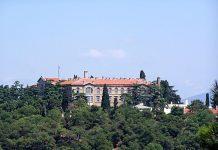
Newsroom (24/03/2026 Gaudium Press ) The announcement landed like a thunderclap in early March: the Trappist monks of the Abbey of La Trappe in Normandy are contemplating leaving their historic home around 2028, effectively bringing to an end the Trappist presence at the very cradle of their own reform. For those who know the history of monasticism, it is as if a great root of the Western Church has begun to wither before our eyes. The abbey long known as “La Grande Trappe” is not just another monastery on a long list of struggling religious houses; it is the mother house of the Cistercians of the Strict Observance, the spiritual hearth from which the Trappist reform of the 17th century blazed across Europe. The idea that its choir stalls might one day fall silent – at least as far as Trappist chanting is concerned – has sent shock waves far beyond the cloister.
The reasons publicly given by the abbot are brutally simple: vocations have dried up, and the cost of maintaining a vast, historic site has become disproportionate to the dwindling community that inhabits it. Even the bare statistics are sobering. The current number of monks and their average age have not been spelled out in detail, but in the weeks following the announcement two further members of the community died, a grim punctuation mark in a story already defined by demographic decline. Behind the terse official language lies a stark reality: an ageing community, no sustained influx of new brothers, and a property whose stones tell of centuries of prayer but now weigh heavily on fragile shoulders.
La Trappe’s crisis, however, is not an isolated incident. Across Europe, the Trappist map is being rapidly redrawn. Over the past decade and a half the order has closed the Abbey of Achelse Kluis in Flanders (2011), Our Lady of Melleray in Brittany (2016), Our Lady of the Snows in the Ardèche (2022), and the Trappe of Oelenberg in Alsace (2024). Three of their five abbeys in Ireland have shut since 2025. The Trappe of Zundert in Holland has gone, as have Notre-Dame du Port-du-Salut near Laval in France (2025) and the Abbey of Bellefontaine near Nantes, which is slated to be taken over this year by the Benedictine monks of Le Barroux, themselves known for celebrating the traditional liturgy. The pattern is clear: communities that once flourished behind austere walls, ordered by silence, work and a demanding liturgical rhythm, are now disappearing with alarming speed.
Nor is this wave of contraction confined to the Trappists. Many Benedictine and Cistercian houses—names that once evoked legions of monks filling ornate choir stalls in historic abbey churches—have quietly retreated into smaller oratories and “chapels of convenience”, praying only such fragments of the Divine Office as their reduced numbers and advanced age will allow. Even at Subiaco, cradle of Benedictine monasticism itself, the two monasteries can muster barely sixteen monks between them, and none of them young. The famed Abbey of Parma now houses barely half a dozen monks. The list of shrinking communities could extend much further, and it does not stop at Europe’s borders. Across the Western “new world” as well, monasteries confront similar demographic and financial pressures; some have already succumbed, their buildings converted, their cloisters left to memory.
How did institutions that survived revolutions, expulsions, and heavy-handed secular persecutions now find themselves collapsing from within? Why does a way of life that outlasted kings, empires, and ideologies now struggle to survive in relative peace and prosperity? The answer, in the view articulated here, lies not in direct persecution but in the long-term effects of the most recent ecumenical council of the Catholic Church—not in its texts, but in its aftermath. It is important to underline that word “aftermath”. The Second Vatican Council did not set out to undermine monasticism; on the contrary, its Decree on the Adaptation and Renewal of Religious Life speaks with reverence of the monastic vocation and calls for its “authentic spirit” to shine forth ever more splendidly in both East and West.
The Council describes the monastic life as a “venerable institution” with notable renown in both Church and human society, and it lays down the principal duty of monks: to offer humble and noble service to the divine majesty within monastery walls, whether they give themselves wholly to contemplative worship or legitimately undertake works of apostolate or charity. It urges monasteries, retaining their proper characteristics, to revive their ancient traditions of service and adapt them wisely to contemporary needs so that they might be “institutions dedicated to the edification of the Christian people.” On paper, this is a ringing endorsement of monasticism as a vital organ in the Church’s body, not a relic to be discarded.
Yet within that same decree runs a refrain that in practice proved destabilising: “update, adapt, update”. Monasteries quite properly improved material conditions—upgrading heating, restoring a more humane standard of hygiene, and recognising the right of monks and nuns to legitimate privacy in personal correspondence and other matters. But too many communities, the argument runs, came to understand “updating” as a kind of standing order to change everything simply because everything could be changed. “We no longer do that,” became a kind of mantra, the self-justifying slogan of a restless age. Long-standing practices, observances, and even the basic structures of daily life were altered or abandoned with dizzying speed.
The social sciences have long warned that rapid alteration of deep-seated habits, without sufficient reflection, reason or time, can destabilise both institutions and individuals. Religious life has offered a dramatic case study. The steep decline of many apostolic congregations of priests, brothers and sisters—once mainstays of schools, hospitals and missions—bears tragic witness to the cost of breaking links with tradition faster than they can be replaced. Monastic communities, grounded more deeply in strict observance and routine, appeared for a time to weather the storm better. But the present crisis suggests that their apparent resilience may only have delayed the reckoning. Now, even they stand on the brink.
At the heart of this diagnosis lies the Council’s own articulation of the monk’s “principal duty”: to offer that humble and noble service of God within the monastery walls, principally through divine worship in the contemplative life. For anyone formed in the Benedictine tradition—including Cistercians and Trappists—this is not a vague spiritual aspiration but a concrete schedule anchored in the Divine Office. St Benedict’s rule famously admonishes his monks “to put nothing before the Work of God,” the Opus Dei, by which he means the daily and weekly chanting of the psalms. He is explicit: those monks are “very slothful in their sacred service” who do not sing the full psalter of 150 psalms and the customary canticles each week. The fact that earlier monastic fathers are said to have recited that much in a single day only heightens his sense that a weekly psalter is the minimum standard, not an heroic ideal.
This is more than a question of pious practice; it is the structural framework of monastic life. Yet, in the rush to “update”, this bedrock principle was often weakened or sidelined. The disruption extended beyond scheduling into language and music, and here an early warning came from the very pope who brought Vatican II to its close, St Paul VI. In 1966 he wrote to superiors of communities bound to sing the Divine Office in choir, expressing a profound fear about what would happen if they abandoned the traditional forms of that prayer. If Latin—the language of “wondrous spiritual power”, transcending national boundaries—were removed from the choir, he warned, and if Gregorian chant—“this melody proceeding from the inmost sanctuary of the soul, where faith dwells and charity burns”—were set aside, then the monastic choir would become like a snuffed-out candle, giving no light and no longer attracting the eyes and minds of men.
In that same letter, Sacrificium Laudis, dated 15 August 1966, Paul VI did more than lament; he issued a mandate. Communities such as Benedictines, Cistercians and Trappists were given a clear charge to preserve the “age-old solemnity, beauty and dignity of the choral office” in both language and chant. They were to be living custodians of Latin psalmody and Gregorian melody, guardians of a spiritual treasure not only for themselves but for the whole Church. Historically, this had been their vocation: monasteries served the wider world precisely by being places where the Word of God, sung in the Church’s own tongue and tones, rose like incense day and night.
What happened in practice, however, was often the opposite. The papal mandate was “quickly set aside” in many, if not most, monasteries. Choirs that once resonated with Latin psalms and Gregorian antiphons increasingly moved to vernacular translations and simplified musical forms, often reduced still further over time. In numerous houses, the full weekly psalter was abandoned or heavily abridged. The structural discipline that had once ordered every hour of the day gave way to a more flexible, and often thinner, liturgical life. The argument presented here is stark: in trying to adapt their ancient traditions, many communities ended up undermining their raison d’être. They did not merely rearrange furniture; they loosened the foundations.
This is all the more striking when one recalls the extraordinary services monasteries have historically rendered beyond the cloister. Long before modern welfare states, monks cared for the sick, the poor, the homeless. They pioneered agricultural techniques, preserved learning through painstaking scholarship, and even played their part in crafting the fermented sparkle of champagne. Yet for the monks themselves these works, however valuable, were always secondary to the Work of God as sung in choir. The weekly chanting of the entire psalter was not an optional devotion but the central obligation around which everything else was organised. Once that framework was disassembled, once the liturgy itself was radically altered, the very identity of monastic life—indeed of the Church’s liturgy as a whole—began to fray. The result has been a disaster of monumental proportions both inside and outside cloister walls.
The abbot of La Trappe has pointed to lack of vocations as a key cause of the community’s predicament. Yet this is not a universal monastic experience. Where communities have maintained, or have returned to, the integral celebration of the traditional liturgy—the full Divine Office, the traditional form of the Mass, the sacraments according to the older books—a different narrative has often emerged. Numbers may still be modest and the road far from easy, but such communities have not, as a rule, seen their vocations completely dry up. Their experience suggests that when God does call young people to the monastic life today, He tends to draw them toward places where the tradition is lived “at full strength”, not thinned out in deference to passing cultural trends.
This does not mean such vocations are plentiful. In an age that sacralises self-will, it is rare for a young man or woman to disentangle themselves from a world in which the individual’s preferences are supreme—even, paradoxically, within self-described “traditional” circles. Some who knock at the monastery door today arrive with their own private idea of what “real tradition” should look like, ready to accept the customs they like and quietly resist those they do not. In this climate of Pelagian self-centredness, God “can often hardly get a word in”, much less mould a person into the monk or nun He calls them to be. True monastic life demands a surrender of self that runs counter to every consumerist and ideological instinct of late modern culture.
Yet there remain those who respond with genuine generosity to the call. When they do, they are not looking for a monasticism neutered by the fashions of the 1960s and 1970s. They seek something far more demanding and, paradoxically, more liberating: a conversion of life according to the Rule of St Benedict lived without dilution, sustained by the unedited riches of the Church’s liturgical tradition. Yes, this must be adapted prudently to modern circumstances—no serious observer proposes turning back the clock to pre-modern sanitation or ignoring legitimate human needs—but adaptation is not the same as capitulation. The heart of the matter is whether the monastic day revolves around the Work of God in its fullness or whether the liturgy has been trimmed and reshaped to fit the attitudes of the modern world or the theological fashions of the moment.
There are, of course, notable exceptions to the pattern of decline, especially among communities heavily engaged in pastoral, missionary or educational work. Their active apostolates place them in close contact with lay faithful, and this visibility often attracts vocations. But a pointed distinction here: such communities, however fruitful their work, live a life more akin to that of apostolic canons than to Benedict’s ideal of enclosed monks. They do good work, but their daily observance stands at some distance from the cloistered stability, silence and liturgical totality that the Rule envisages. In other words, vocational “success” measured in numbers may sometimes be purchased at the price of a shift away from classic monastic identity.
Looking ahead, the prognosis for many established monasteries is sombre. The available statistics and the age profile of numerous communities indicate that further closures—of both small priories and once-renowned abbeys—seem all but inevitable. The decline has accelerated to such a pace in some places that the question is no longer whether certain houses will close but when and how. La Trappe may be emblematic, but it is not unique. Its possible closure around 2028 would be one more chapter in a broader unravelling of centuries-old monastic networks, with consequences not only for the Church’s internal life but also for the cultural landscapes of villages, regions and countries shaped by their presence.
Yet the narrative is not without hope. Even as old trunks hollow out, new green shoots are appearing in scattered but significant places across the globe. These are not the long-heralded “new springtime” promised as the fruit of post-conciliar reforms; they are something quieter and perhaps more organically rooted. They are communities small in size and number, often hidden from public view, but deeply anchored in the monastic tradition. Their founders and members have chosen to begin not with novelty but with the surviving roots: the Rule of St Benedict, the full choral Office, the traditional liturgy lived as a demanding school of the Lord’s service. From these roots, new growth is pushing through scorched earth.
Such communities do not yet offer a grand solution to the monastic crisis, and their fragility should not be romanticised. They are vulnerable to the same cultural pressures and human frailties as their elders. But they embody a conviction that, in God’s providence, genuine renewal comes not from abandoning what made monastic life fruitful in the first place, but from rediscovering it in all its rigor and beauty. If they are faithful to that insight, they may in time grow and bear fruit in ways we cannot yet foresee. For now, the Church is invited to do two seemingly contradictory things at once: to mourn the passing of great abbeys like La Trappe as we have known them, and to give thanks for the hidden beginnings of what might one day be counted among their true heirs.
- Raju Hasmukh with files from Catholic Herald
Related Images: