







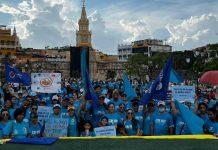


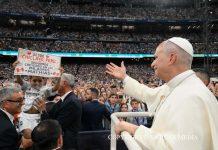

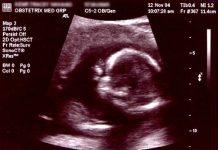

Over 5,000 march in Cañete for the March for Life 2026, celebrating the Day of the Unborn Child and promoting respect for human dignity.
Newsroom (26/03/2026 Gaudium Press )Under the warm sun of the Peruvian coast, more than 5,000 people took to the streets of Cañete on March 21 to participate in the March for Life 2026. The event, organized by the Prelature of Yauyos and led by its bishop, Monsignor Ricardo García, marked an emphatic affirmation of Peru’s deep-rooted cultural and religious respect for life—especially the unborn.
The march was held in anticipation of the Day of the Unborn Child, celebrated nationwide on March 25, coinciding with the Catholic feast of the Annunciation of the Lord. Entire families, groups of young people, parish representatives, and local authorities joined the peaceful demonstration that began at the Church of the Carmelites and concluded in the Plaza de Armas of San Vicente de Cañete.
Provincial mayor José Tomás Alcántara and sub-prefect Maribel Villar were among the notable figures present, marching alongside priests, parishioners, and civic organizations.
A Peaceful Celebration of Human Dignity
According to the Prelature of Yauyos, the march reflected a “peaceful, festive atmosphere deeply committed to promoting respect for human dignity from conception.” Father Alejandro Zelada, president of the organizing committee, described the event as a solemn affirmation: “This march says yes to life at all times, from conception to natural death. Everyone who participated shares that conviction—a desire for life.”
Fr. Zelada emphasized that the message extended beyond moral and religious dimensions, touching on social peace and communal wellbeing. “We want a peaceful Cañete, free from violence and things like hired killings and extortion. I am very grateful for everyone’s participation,” he added.
A Symbol of Hope and Unity
Bishop Ricardo García expressed deep gratitude for the turnout, highlighting the symbolic and emotional significance of the march. “There has been a very significant response from the people. Despite the heat, nearly 6,000 participants joined us. This leaves a mark on people’s hearts—it marks the love of life,” the bishop told ACI Prensa.
He further underlined the connection between defending life and fostering broader social stability: “Loving life, respecting life, brings security in the family, security in society. If life is respected, there is respect for the law, and that is essential.”
Parallel Walk for Life in Lima
That same day, the Pro-Life Youth Network of Peru, led by director Sofía Luque, organized a smaller “Walk for Life” in Lima’s coastal district of Miraflores. Participants recited the Rosary and publicly renewed their commitment to defending life “from conception,” reminding onlookers that “Peru is a Catholic country that defends life and family.”
Luque also addressed current debates about Peru’s limited “therapeutic abortion” protocol, criticizing attempts to broaden its application. “Therapy is meant to heal, not to kill,” she said. “Thank God it’s not widely used. The protocol isn’t necessary—it’s misguided, as ethical doctors affirm.”
The Legal Context
In Peru, abortion remains a criminal offense under the Penal Code, though it is decriminalized when necessary to save a mother’s life or prevent serious harm to her health. Despite efforts by some advocacy groups to expand those provisions, legislative proposals have consistently failed. The last abortion bill, discussed in 2022, received just one vote in favor. An earlier version in 2014 met the same fate.
A Continuing Commitment
As the march in Cañete came to a close, banners and songs filled the plaza, affirming a shared hope for a Peru that continues to value life at every stage. With prayers and chants echoing through the streets, the March for Life 2026 became not only a public statement but a cultural reaffirmation—a message that life, in all its stages, remains sacred and worth protecting.
- Raju Hasmukh with files from ACI Prensa
Related Images: