















Pope Leo XIV praises Italy’s National Transplant Center, urging its members to prioritize patient welfare and uphold dignity in all medical practices.
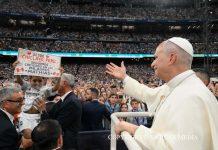
Newsroom (26/03/2026 Gaudium Press ) Standing before an assembly gathered in the Vatican on Thursday, Pope Leo XIV urged members of Italy’s National Transplant Center to build their work on a single moral foundation: the good of the patient must always remain the guiding principle. His address, delivered during the General Assembly of the National Transplant Network, paid tribute to decades of scientific progress and moral reflection that have shaped transplant medicine in Italy and the wider world.
The Pope expressed gratitude to the many healthcare professionals, volunteers, and researchers who serve life “in its most fragile moments,” calling their dedication both a scientific pursuit and a profound act of human solidarity. Their presence, he said, testifies to a tradition of care marked by both competence and compassion.
A Legacy Rooted in Faith and Science
This year marks the 70th anniversary of Italy’s first recorded organ donation — a milestone Pope Leo commemorated by recalling the selfless act of Blessed Don Carlo Gnocchi, who in 1956 donated his corneas after death to restore sight to two young beneficiaries. That pioneering gesture, he noted, predated any legal framework for donation and nonetheless inspired national reflection, ultimately shaping Italy’s path toward today’s ethical and regulated system of organ transplantation.
Pope Leo also invoked the moral groundwork laid by Pope Pius XII, who shortly after Don Gnocchi’s donation affirmed the moral legitimacy of organ removal for therapeutic purposes, so long as it honors the dignity of the human body and respects the rights of donors and recipients alike.
From these early reflections, the Pope said, the Catholic Church’s tradition has walked hand in hand with medical science — recognizing the healing promise of transplantation while consistently reminding practitioners to uphold human dignity and moral responsibility.
The Church’s Ethical Compass
Recalling the teachings of Saint John Paul II, Pope Leo quoted from Evangelium Vitae, emphasizing that organ donation “performed in an ethically acceptable manner deserves special appreciation.” The act of donation, he said, unites the generosity of giving with the deep moral responsibility of care.
He reiterated the Catechism of the Catholic Church, which calls organ donation “a noble and meritorious act” to be encouraged as “an expression of generous solidarity.” Yet, he warned that constant vigilance must be maintained to prevent any form of commercialization or exploitation of the human body.
“Transplant medicine,” Pope Leo stated, “reminds us that the relationship of care, trust, and mutual responsibility is the very condition for transplantation to take place.” Every successful transplant, he added, depends on the generosity and humanity of donors — a gift that should never be reduced to a transaction or measured by efficiency alone.
Upholding a Culture of Giving
Quoting the late Pope Francis, Pope Leo reminded his audience that organ donation transcends its practical benefit. It stands as “an expression of universal fraternity,” a free act that bears witness to a deeper culture of help, hope, and life.
“In a time when everything risks being evaluated according to the logic of price, efficiency, or self-interest,” the Pope said, “this is a particularly valuable reminder.” He urged his listeners to preserve the altruistic spirit that gives transplantation its most human meaning — as a “gift of self” that affirms the inherent worth of every life.
Science with a Conscience
Looking ahead, the Pope voiced his encouragement for continued scientific innovation in the field, noting that progress must remain grounded in ethics. “Research is called to develop ever more effective solutions,” he said, “to meet the growing demand for organs.” Nonetheless, he cautioned that such progress must proceed “together with responsible reflection” so that advances in medicine always serve “the integral good of the person.”
The Holy Father acknowledged the demanding realities of transplant work: complex clinical responsibilities, emotionally charged decisions, and the need for unflinching moral clarity. To that end, he praised the doctors, scientists, and volunteers whose labor often goes unseen but whose impact resonates profoundly.
“Yours,” Pope Leo said, “is a demanding and often hidden work, requiring competence and rigor, as well as conscience, balance, and a deep sense of humanity.” With calm conviction, he offered his closing counsel: “Always keep the good of the patient as your guiding principle.”
In his final appeal, Pope Leo urged Italy’s institutions and volunteers to continue promoting public awareness of organ donation. Only when informed by freedom, generosity, and solidarity, he said, can the culture of donation truly flourish — shining as a sign of hope and a testament to the enduring unity of science and spirit.
- Raju Hasmukh with files from Vatican News
Related Images: