














Jerusalem’s Christian schools delay reopening to protest Israel’s refusal to renew West Bank teachers’ work permits, threatening education continuity.
Newsroom (05/02/2026 Gaudium Press ) When schools reopened after the Christmas holidays, Jerusalem’s Christian Brothers Schools remained eerily silent. On January 10, 10,000 students should have returned to class. Instead, twelve schools—among the Holy City’s most respected—refused to resume lessons. Their protest echoed across Jerusalem’s ancient streets: teachers from the West Bank could no longer reach their classrooms.
At the center of the crisis lie 171 Palestinian educators whose work permits were not renewed by Israeli authorities. These permits—temporary authorizations granted to West Bank residents to enter and work in Israel—are vital for maintaining the city’s mixed Palestinian Christian and Muslim education network. The documents are strictly regulated, tied to employers, subject to periodic renewals, and dependent on security clearances. Following the events of October 7, most such permits were revoked, except for a small number in healthcare and education.
Administrative Strain Deepens Tensions
“The problems began last summer,” explains Brother Daoud Kassabry, Director of the De La Salle Christian Brothers Schools, one of Jerusalem’s most prestigious private institutions. “From July 20 to August 20, the Israeli authorities revoked our teachers’ permits, claiming there were no classes. But we run summer programs and maintenance during that period. It was never idle time.”
After a temporary renewal in late August, the permits expired again at the end of December. Only a few were reinstated—some without coverage for Saturdays, an active school day under the local calendar. “It’s difficult to find qualified teachers in Jerusalem,” admits Brother Daoud. “So we recruit from Bethlehem, knowing everything is more complicated.”
The Stakes for a Fragile System
Christian schools fall under the category of “recognized but unofficial institutions” by both the Israeli Ministry of Education and Jerusalem’s municipal authorities. They welcome Palestinian students—Christians and Muslims alike—teaching a modified version of the Palestinian curriculum (tawjihi), supplemented by international standards. But the bureaucratic paralysis has turned academic planning into a logistical nightmare.
Following a January 10 declaration from the General Secretariat of Christian Schools denouncing the “arbitrary measures” and warning that the semester could not proceed under current conditions, Israeli authorities offered partial relief. Some permits were renewed, but only for five days a week instead of the usual seven.
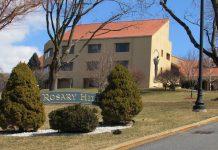
The exceptions were striking. “Our academic coordinator, a sixty-year-old woman, was denied a permit because she’s unmarried and must renew her electronic ID, though it’s valid for six more months,” recounts Sister Lucy Jadallah, who directs the Sisters of the Rosary schools. Her network employs thirty-three teachers from the Palestinian Territories. “We never receive explanations—no one can tell us if these decisions come from the government, the army, or the Ministry of Education.”
Political Pressure on Classrooms
As Sister Lucy notes, the pressure is not just bureaucratic—it is ideological. Israeli authorities have long accused the Palestinian curriculum of inciting hatred and denying Israel’s legitimacy. In response, Christian and private schools face mounting demands to adopt the Israeli bagrut curriculum to receive financial support. Many have resisted, unwilling to compromise the heart of their educational mission. Meanwhile, funding shortfalls deepened under wartime austerity.
An even sharper threat looms in the form of a 2025 bill being discussed in the Knesset, which would bar schools from hiring teachers who studied in the Palestinian Territories. The implications could be devastating: more than 60 percent of East Jerusalem educators hold such qualifications.
“Our schools convey a message of peace, respect, understanding, and acceptance of others,” insists Sister Lucy. “We hope this message will be received with the same spirit and values on the other side.”
For now, the classrooms remain partially empty, caught between political calculation and the unyielding will to educate. In Jerusalem’s Christian schools, the blackboards are ready, but the teachers are still waiting at the checkpoints.
- Raju Hasmukh with files from Zenit News
Related Images: